Thailand faces calls to tighten tourist entry as ex-intelligence chief Nantiwat Samart warns visa-free travel risks crime and illegal stays. Immigration has already stepped up screening, questioning 870 travellers and denying entry to over 30 foreigners.
On Saturday, Thailand’s Immigration Bureau announced ramped-up screening of arrivals to address threats linked to the Middle East conflict. Around 30 people were refused entry over a 30-day period. On Monday, Nantiwat Samart, a former Ministry of Foreign Affairs official and former deputy director of the National Intelligence Agency, urged the government to shift focus from tourist numbers to quality and security. Rising fears persist that a prolonged Middle East war could push Thailand to impose drastic measures despite falling tourist arrivals.
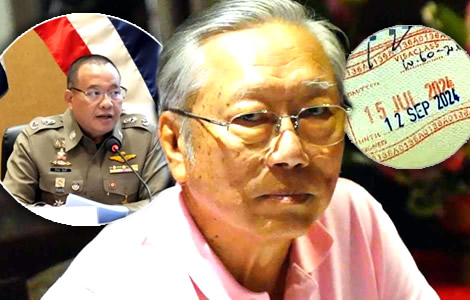
A former senior intelligence official has urged Thailand to tighten entry rules for foreign tourists. His remarks come as immigration authorities intensify screening at border checkpoints.
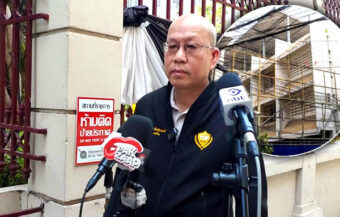
Nantiwat Samart issued the call on March 16 through a post on his public Facebook page. He previously served as secretary to the Minister of Foreign Affairs. He also held the position of deputy director of the National Intelligence Agency.
In his message, he said Thailand must remain open to visitors. However, he warned that the current entry system exposes the country to criminal exploitation. Therefore, he urged authorities to strengthen screening procedures before travellers enter the kingdom.
Former intelligence official warns Thailand’s open tourist entry system risks criminal abuse and security gaps
Mr Nantiwat criticised what he described as a permissive environment for illegality. According to him, weak screening can allow scammers, cybercriminals and foreign mafia networks to enter. Furthermore, he warned that some visitors arrive intending to work illegally or settle in Thailand.
As a result, he said immigration authorities must verify tourist intentions before entry. In particular, he said the visa application process offers the most effective screening mechanism. Applicants, he said, should show a clean personal record. They should also demonstrate sufficient income to support their stay. In addition, authorities should confirm that travellers intend genuine tourism activities.
He also criticised the focus on raw tourist numbers. Instead, he argued that Thailand should prioritise higher-quality visitors. These tourists, he said, should have financial capacity and legitimate travel plans. However, visitors who plan to seek work or residence should use proper visa channels.
Similarly, he warned against foreigners overstaying their permitted time in Thailand. According to Mr Nantiwat, overstaying is illegal and must be addressed firmly. Therefore, tourists who exceed their permitted stay should be required to leave the country. Meanwhile, foreigners wishing to work should apply for appropriate long-term visas.
Pressure grows to review Thailand’s visa-free travel scheme covering nationals from 93 countries
Mr Nantiwat’s comments come as public pressure grows for Thailand’s visa-free travel programme to be reviewed. Currently, nationals from 93 countries can enter Thailand without a visa. They may stay for up to 60 days under the waiver scheme.
In addition, travellers can apply for a further 30-day extension. However, the programme expanded significantly under the Pheu Thai-led government. The expansion occurred during 2024 and 2025. Consequently, larger numbers of travellers have entered under visa-free conditions. Mr Nantiwat said the policy should now be reconsidered. In particular, he suggested scrapping the visa-waiver system if security concerns increase.
Furthermore, the former high-profile civil servant warned that national security must take precedence over tourism growth. “Thailand has treasures,” he wrote in his message. However, he added that access to those treasures should not be unrestricted. “It would be great to show them to the world,” he said. “However, there is an entrance fee. It is not free.”
Tourist arrivals fall as security concerns rise and the Middle East conflict disrupts flights and travel
Therefore, he argued that Thailand should carefully control who enters the country. At the same time, he stressed that genuine tourists remain welcome. Nevertheless, stricter entry controls would reduce the risk of criminal infiltration. Mr Nantiwat urged the government to move away from its focus on numbers of foreign tourist arrivals.
Certainly, these have been plummeting steadily since last year despite free visa access. They fell 7% in 2025, and there are fears that they may fall again by 10% in 2026 as the country reels from disrupted flight networks and high air fares caused by the conflicts that erupted on February 28.
His remarks came as Thai immigration authorities confirmed tighter screening procedures. The Immigration Bureau has increased scrutiny of foreign travellers at entry points. These measures follow rising concerns linked to the ongoing conflict in the Middle East. According to immigration officials, the conflict has created new security risks.
Therefore, authorities are paying closer attention to travellers arriving from affected regions. The bureau said officers now conduct more detailed interviews with incoming visitors. In particular, travellers using visa-free entry face stronger checks.
Thai immigration ramps up screening of visa-free travellers and denies entry to dozens of foreigners
Immigration officers now review travel plans, accommodation bookings and return tickets more closely. Furthermore, travellers may be questioned about the purpose of their visit. If officers detect suspicious behaviour, entry may be refused immediately.
According to the Immigration Bureau, the stricter procedures have already produced results. Over the past 13 days, immigration officers interviewed 870 foreign travellers. These interviews formed part of the intensified screening process. As a result, more than 30 foreigners were denied entry to Thailand.
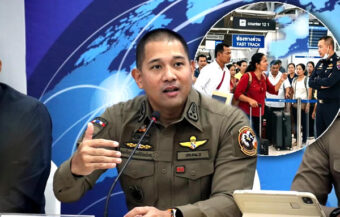
Pol Maj Gen Choengron Rimpadee, spokesman for the Immigration Bureau, confirmed the measures. He said officers are focusing on travellers whose intentions appear unclear. Therefore, anyone unable to explain travel plans may face further questioning. In some cases, entry is refused and the traveller is returned to the departure country.
Meanwhile, the bureau stressed that the policy applies to all nationalities. Authorities said the measures target suspicious behaviour rather than specific countries.
Online rumours about Israeli migration fuel public concern over foreign arrivals in Thailand
However, the bureau also acknowledged rising public concern about foreign arrivals during the Middle East conflict. Some observers fear Thailand could become a relocation hub for people seeking refuge.
Consequently, immigration authorities are monitoring entry patterns more closely. At the same time, officials said misinformation has amplified public anxiety. In recent weeks, social media posts circulated claims about large numbers of Israelis settling in Thailand. One widely shared claim suggested more than 400,000 Israelis had relocated to the kingdom.
Immigration officials rejected the claim as inaccurate. According to the bureau, the figure referred to total Israeli arrivals and departures during 2025. In reality, immigration data indicates that about 30,000 Israelis currently reside in Thailand.
Nevertheless, the online rumours have influenced public discussion in several tourist areas. For example, Pai in Mae Hong Son province has drawn attention due to its popularity among Israeli travellers. Similarly, Koh Phangan in Surat Thani has experienced similar scrutiny.
Tourist hotspots see tensions as Immigration stresses that rules apply equally to all nationalities
Both destinations remain well known among Israeli visitors. Consequently, some backlash has occurred against Israeli tourists in those communities. However, immigration authorities said enforcement actions do not target any particular nationality. Instead, officers assess each traveller individually during the entry process. Therefore, nationality alone does not determine admission decisions.
At the same time, authorities continue monitoring criminal behaviour among foreign visitors. Immigration data shows several thousand visa revocations in recent years. In 2025, authorities revoked 3,249 visas held by foreigners who committed crimes or caused disturbances. Many incidents occurred in major tourist centres.
For example, Pattaya recorded several enforcement actions involving foreign offenders. Similarly, Phuket and Koh Samui saw cases linked to criminal activity. Koh Phangan also experienced incidents involving disruptive behaviour by foreign visitors.
Thai authorities revoke thousands of visas and tighten enforcement across major tourist destinations
Furthermore, enforcement actions have continued during the current year. According to the Immigration Bureau, 972 visas were revoked during the first two months of 2026. These revocations involved foreigners accused of criminal acts or public disturbances. Officials said such actions demonstrate continued monitoring of foreign activity in tourist areas.
Meanwhile, immigration authorities also addressed the situation of travellers stranded by the Middle East conflict. Some foreigners cannot return home because of airspace closures. Therefore, Thai authorities have introduced temporary assistance measures. In these cases, overstay fines may be waived. Travellers may extend their stay by 30 days at a time. However, they must obtain certification from their embassy confirming travel difficulties.
Officials said these provisions aim to assist individuals affected by the conflict. At the same time, they emphasised that immigration laws remain in force. Therefore, foreigners must continue to comply with entry and visa regulations.
Intelligence veteran warns immigration shortages and politics may shape future foreign entry rules
Mr Nantiwat also highlighted operational challenges facing immigration authorities. According to him, enforcement capacity remains limited in some areas. In particular, he noted shortages of personnel and equipment. Therefore, he urged authorities to strengthen operational resources. He said these improvements should occur during the current transition period between governments.
Nevertheless, immigration authorities say stricter border screening will continue. Officials said the measures remain necessary during the current security environment.
As a result, travellers entering Thailand should expect more detailed checks at immigration checkpoints. Meanwhile, policymakers continue debating whether visa-free travel should be reviewed. Mr Nantiwat’s remarks have intensified that discussion within security and policy circles.
The fear among foreign tourists, expats and regular visitors to the kingdom is that the new government being formed in the coming weeks may latch on to this sort of sentiment. Already, the first government of Prime Minister Anutin Charnvirakul has launched robust police campaigns targeting foreigners in the South found abusing Thailand’s business, labour and visa laws.
Ukraine War migration and Iran conflict fears raise the risk of harsh measures hitting Thai tourism
This was aggravated by the 2022 Russian invasion of Ukraine, which drew cohorts of visitors from both countries at war. These foreign tourists have particularly settled in Phuket and the country’s southern islands and provinces. Many have been at the centre of the current police crackdown.
Gulf War on the verge of severely harming Thailand’s economy. Petrol stations’ early 10pm closure planned
Fears Thailand may lose 600k visitors from Europe and the Middle East as Iran war decimates tourism
Immigration Bureau chief explains that there are fewer than 100k Israelis in Thailand at any one time
The fear presently is that an extended US–Iran war may prompt the government to treat the situation as a security emergency, which would indirectly further damage the foreign tourism industry.
Presently, Thailand has never quite recovered from the COVID-19 emergency when it closed its airspace to travellers and deployed drastic measures, which severely harmed the industry long-term.
Join the Thai News forum, follow Thai Examiner on Facebook here
Receive all our stories as they come out on Telegram here
Follow Thai Examiner here
Further reading:
Drug party arrests on Koh Phangan lead to dealer’s capture. Four Israelis detained in police swoops
Russian-Chinese Koh Phangan alliance to sell drugs to foreigners. Accused entered Thailand illegally
Crackdown aimed at upending foreign business trade moves from Koh Phangan to Phuket. Four arrested
Crackdown to wipe out foreign business abuses and ownership on Koh Phangan & Koh Samui intensifies