Thailand moves to halve visa-free stays from 60 to 30 days for 93 countries amid security concerns and falling arrivals. Tourism is down 10% from last year and remains below 2019 highs, even as Chinese New Year travel and shifting Asia routes reshape demand.
Thailand has decided to slash its visa-free entry regime for 93 countries from 60 days to 30 days. The decision was taken on Thursday by a high-powered committee comprising tourism, foreign affairs and Immigration Bureau officials. It remains unclear when the new regime will take effect. The move is being driven by security concerns within the kingdom. It comes as foreign tourism for 2026 is already down more than 10% on 2025. Thailand expects a lift from the Chinese New Year holiday period. However, analysts warn that travel trends in China are fragile, with Beijing deploying its outbound tourism industry as a diplomatic lever.

Thailand’s interim government is moving to shorten visa-free stays for foreign tourists. Currently, nationals from 93 countries receive 60 days on arrival. In addition, they may apply for a 30-day extension.
However, officials now intend to cut the initial stay to 30 days. The proposed rollback follows security and enforcement concerns. At the same time, authorities insist the tourism impact will be limited.
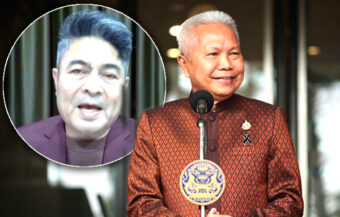
On Thursday, Ms Natthriya Thaweevong confirmed the plan. She serves as permanent secretary at the Ministry of Tourism and Sports. According to her, a high-power committee has agreed in principle to revise the measure.
Prime Minister’s committee reviews visa expansion and security concerns behind proposed 30-day limit
The committee was established by the prime minister. Moreover, it is chaired by the permanent secretary for foreign affairs. The Tourism and Sports Ministry provided research to support the review. Furthermore, discussions included the Immigration Bureau and related agencies.
The visa-free expansion began in mid-2024. At that time, Prime Minister Srettha Thavisin led the government. His administration extended visa-free stays to 60 days. Consequently, visitors from 93 countries could remain for two months without a visa. The policy aimed to revive sluggish tourism. However, officials now say the longer stay created loopholes.
According to the ministry, foreign criminals exploited the liberal regime. In particular, some individuals allegedly used Thailand as a base for illegal activity. Therefore, enforcement agencies recommended tightening the rules. As a result, the committee endorsed a reduction to 30 days in principle. Moreover, officials believe shorter stays will reduce misuse.
Ms Natthriya said the caretaker government can approve the change. Meanwhile, a new government has not yet been formed. Accordingly, the interim administration retains full authority. A final recommendation is expected soon. Implementation details have not yet been released.
Officials and industry say 30-day limit protects tourism while curbing misuse and illegal activity
Importantly, Ms Natthriya stated that the change should not harm tourism. On average, foreign tourists stay about 21 days. Therefore, a 30-day limit exceeds typical travel behaviour. In addition, visitors who wish to remain longer may apply for extensions. She said the system will continue to function as normal.
Industry representatives support the adjustment. Thanapol Cheewarattanaporn, president of the Association of Thai Travel Agents, said operators proposed the reduction last year. According to him, the industry sought to curb foreign criminal activity.
Furthermore, operators aimed to strengthen Thailand’s safety image. He said most tourists do not remain for 60 days. However, those who do often misuse the privilege.
Specifically, Mr Thanapol cited nominee businesses and unlicensed tour operators. In addition, he referred to foreign tour guides working illegally. Therefore, he argued that trimming the permitted stay would close gaps. At the same time, he urged the government to retain visa-free access. Arrivals are contracting, he noted. Consequently, market access remains essential.
Since late last year, enforcement has intensified. The Immigration Bureau has tightened scrutiny of visa-free entrants. In particular, officials are targeting repeated visa runs. As a result, monitoring of long-stay visitors has increased. Authorities view the proposed reduction as a complementary measure.
Arrivals decline from 2019 peak, alongside revenue, with China, Malaysia and Russia leading flows
Tourism figures underscore the pressure facing policymakers. So far this year, arrivals are down 10% compared with the same period last year. In 2025, Thailand welcomed 32.9 million visitors. That marked a 7.2% decline from 2024. By contrast, 2019 recorded 39.8 million arrivals, a record high. Therefore, the sector remains below its pre-pandemic peak.
Despite weaker numbers, the government is targeting 35 million visitors in 2026. However, that goal still falls short of 2019 levels. Thailand has not regained the volumes seen before 2020. In that year, the country imposed a draconian shutdown due to COVID-19. Consequently, tourism collapsed. Recovery has since been gradual and uneven.
Recent data shows both contraction and momentum. From January 1 to February 8, Thailand recorded 4,185,291 foreign arrivals. That figure represents a 10.77% year-on-year decline. Nevertheless, the period generated an estimated 207,066 million baht in revenue. Therefore, visitor spending remains substantial despite lower volumes.
China remains Thailand’s largest source market. During the same period, 569,987 Chinese tourists arrived. Meanwhile, Malaysia contributed 377,860 visitors. Russia followed with 340,618 arrivals. In addition, India sent 285,767 travellers. South Korea accounted for 207,357 visitors. Collectively, these five markets dominate inbound flows.
Chinese arrivals strengthen ahead of Lunar New Year as weekly numbers rise and long-haul markets improve
According to Ms Natthriya, cumulative arrivals surpassed 4 million by early February. Moreover, Chinese arrivals have increased for more than five consecutive weeks. They ranked first among all markets during that period. Government stimulus measures supported the increase. In addition, officials cited changing travel preferences among Chinese tourists.
Notably, some Chinese travellers have reduced visits to Japan. Instead, they have shifted to South Korea and ASEAN destinations. Thailand has benefited from that redirection. Furthermore, long-haul travel from Europe and the Americas has improved. Visitor numbers from those regions have increased.
For the week of February 2 to 8, Thailand recorded 796,978 international arrivals. That was 34,586 more than the previous week. Consequently, weekly arrivals rose 4.54%. Average daily arrivals reached 113,854. Therefore, short-term momentum has strengthened.
Attention is now focused on the Lunar New Year period. This year, the Chinese government declared a nine-day holiday starting February 15. The break is one day longer than usual. As a result, travel companies expect a surge in outbound tourism. Chinese authorities forecast 9.5 billion passenger trips during the 40-day travel season. Last year, the figure stood at 9.02 billion.
Russia and Australia gain as Japan routes fall sharply amid tensions and security warnings
Travel executives report robust booking trends. Thailand has regained its position as the most popular destination for Chinese travellers. Zhou Weihong of Spring Tours in Shanghai cited Thailand’s warm climate as a key factor. Many tourists seek to escape winter conditions. Therefore, seasonal demand is reinforcing Thailand’s appeal.
Bookings to Russia have also surged. Compared with last year, reservations have more than doubled. That increase followed Russia’s December announcement of visa-free entry for Chinese citizens. Similarly, Australia has recorded a strong rebound. Trip.com reported that tourist arrivals to Australia rose by more than 100%.
However, Japan has experienced a sharp decline. Political tensions between China and Japan have escalated. In addition, Chinese authorities issued security warnings. According to Flight Master data, flights between China and Japan fell 49.2% in the week of February 2. Compared with the same period last year, more than 58 routes were cancelled.
Airlines expanded refund and ticket change options for Japanese routes. Consequently, capacity shifted to alternative destinations. Some travellers redirected plans to South Korea and Southeast Asia.
Thailand weighs security risks as China’s travel diplomacy shapes flows and visa policy debate
Thailand stands among the principal beneficiaries of that shift. Nevertheless, outbound travel patterns remain sensitive to diplomatic developments. Most travel industry analysts now warn that China is using its foreign tourism industry as a diplomatic tool.
Consequently, Thai planners should be wary of relying on the market if they plan to develop a sustainable foreign tourism base. Certainly, it is a message that Thailand has not yet learned. Thailand’s visa waiver agreement has long been linked with a deterioration in security within the kingdom.
60-day visa regime to be ended confirms Minister responding to rising industry security concerns
Visa waiver scheme questioned with another China Crisis for foreign tourism driven by security fears
Questions asked about the Thai Chinese visa waiver scheme ahead of high profile visit to Beijing to sign the deal
Foreign Minister comes out strongly against visa waiver proposals for China and India at cabinet
Within China, domestic tourism remains strong. Travellers favour Hainan Island for beach holidays. Others choose the Changbai Mountains for snow tourism. Therefore, outbound destinations compete with domestic options during peak periods.
Against this backdrop, Thailand is recalibrating its entry policy. On one hand, visa-free access remains crucial as arrivals contract. On the other hand, authorities cite enforcement and security concerns. Therefore, the proposed 30-day limit seeks to tighten oversight while preserving competitiveness.
Officials maintain that genuine tourists will not be affected. Average stays remain below one month. Moreover, extension mechanisms remain in place. At the same time, enforcement agencies continue to monitor visa use closely.
The caretaker government is expected to formalise the decision soon. Consequently, Thailand’s tourism framework is entering another phase of adjustment as it balances recovery targets with the country’s security.
Join the Thai News forum, follow Thai Examiner on Facebook here
Receive all our stories as they come out on Telegram here
Follow Thai Examiner here
Further reading:
60-day visa regime to be ended confirms Minister responding to rising industry security concerns
Tourism boss warns Thailand it is facing a Chinese blacklist if another security controversy erupts
Visa waiver scheme questioned with another China Crisis for foreign tourism driven by security fears
Tourism cryptocurrency sandbox payment plan is bound to face stiff opposition from the central bank
Thaksin calls for crypto-based bonds. Notes success and beauty of Isan women who marry foreigners
Future Bank of Thailand Chairman Pick warns that the Thai economy faces ‘disaster’ without rate cuts