Tourism officials in turmoil after a viral video shows an elderly shop owner accused of racist gestures towards a Chinese tourist. A row over a 40-baht entry fee and alleged racial abuse explodes on Douyin, fuelling a backlash in China. There are fears it could damage Thailand’s foreign tourism prospects. Certainly, it places fresh pressure on Thailand’s efforts to win back its damaged standing.
Thailand’s foreign tourism planners and the Tourism Authority of Thailand (TAT) face another setback this week after a viral video swept Chinese social media showing a Chinese tourist being mocked and racially abused by a Thai shopkeeper in Phuket Town. The footage triggered a visit by local officials. However, they later confirmed that the shop’s admission charge and the woman’s actions do not violate Thai law. The incident comes as Thailand seeks a surge in Chinese visitor numbers for the Chinese New Year, which this year marks the Year of the Horse.
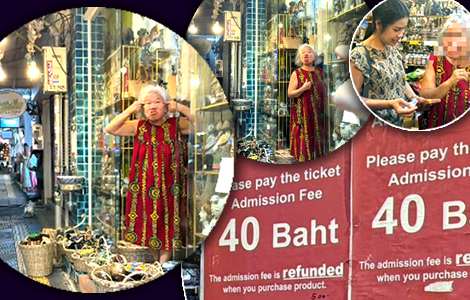
An online controversy has erupted in Phuket after a confrontation between an elderly shop owner and a Chinese tourist went viral. The dispute was recorded on video and posted to Douyin, owned by TikTok operator ByteDance.
Within hours, the clip spread rapidly across Chinese social media. Subsequently, it was shared widely by Thai users and picked up by local media outlets. As a result, a brief street argument in Phuket Old Town escalated into an international online incident.
The altercation took place outside a ceramic and souvenir shop called “Positive Thinking.” The store has operated for a long time in Phuket Old Town. However, it enforces a 40-baht entry fee under certain conditions. According to reports, the fee applies to visitors who enter but do not make a purchase. Moreover, signage in Thai, English and Chinese is displayed at the shop. The signs state that the 40-baht charge will be deducted from any purchase.
Tourist alleges racist gestures and insults during confrontation outside Phuket souvenir shop
According to the Chinese woman who filmed the encounter, she never entered the shop. Instead, she said she was walking past while the owner spoke with an Indian couple outside. During that exchange, the couple reportedly asked about her nationality.
In response, the tourist alleged that the shop owner made a pig nose gesture and said she was Chinese. Therefore, the tourist considered the conduct inappropriate and told the owner to stop.
However, the situation escalated quickly. The video shows the elderly Thai woman in a red dress shouting. She is also seen sticking out her tongue. In addition, she pulls at the corners of her eyes. Online users widely described the gesture as racist.
The motion appeared intended to mimic single eyelids. Furthermore, the Chinese tourist alleged that the owner said, “Why can’t I do this? Chinese people are ugly!”
Video spreads rapidly on Douyin as Thai and Chinese users debate the entry fee and conduct
Although the tourist said she wanted to avoid a public confrontation, she began recording. She later uploaded the footage to Douyin. In the caption, she wrote, “We are both Asians.” Consequently, the clip attracted strong reactions from Chinese netizens. Many users condemned the gestures shown in the footage. At the same time, Thai users began debating the incident online.
Meanwhile, attention shifted to the shop’s entry policy. The Phuket Times news Facebook page reported that the owner regularly demands a 40-baht entry fee.
According to the page, tourists who refuse to pay are mocked. Some commenters claimed that discriminatory behaviour had occurred before. Moreover, several netizens alleged that the conduct had continued for years without action from authorities.
In addition, some users said the shop had placed a clear sign in front of the premises. The sign reportedly informs customers of the entry fee. It also explains that the amount is deducted if a purchase is made. Therefore, some argued that the policy is transparent. However, others described the practice as unfair, especially when applied to foreign tourists.
Commerce office confirms entry fee lawful but warns gestures harm Thailand’s tourism image
As criticism intensified, officials from the Phuket Provincial Commerce Office intervened. On February 15, they visited the shop and spoke with the elderly owner. They reviewed the case and examined the entry fee policy. Subsequently, the office issued a public clarification.
Officials confirmed that collecting an entry fee is legally permitted. However, they stressed that clear signage must outline the amount and conditions. According to the commerce office, the shop complied with these requirements. The signs are displayed in three languages and specify the 40-baht charge. Therefore, officials ruled that the entry fee itself is lawful.
Nevertheless, authorities addressed the conduct seen in the video. They stated that the gestures were inappropriate. Furthermore, they warned that such behaviour could damage Thailand’s tourism image. Consequently, they urged local business operators to exercise greater care when dealing with foreign visitors. The owner reportedly agreed to comply and avoid similar actions in the future.
However, officials did not confirm that any laws were broken. It remains unclear whether legal action will follow. Therefore, no charges have been announced. At this stage, the matter appears limited to administrative guidance and public warning.
Ongoing China backlash and security fears weigh on arrivals and Chinese New Year hopes
Meanwhile, the incident has unfolded against a wider backdrop. Over the past four years, Thailand has faced sustained criticism on Chinese online platforms. As a result, perceptions among Chinese travellers have shifted.
The Ministry of Tourism and Sports has attempted to counter negative narratives. Likewise, Thai Embassy officials in China have engaged in outreach efforts. However, officials acknowledge that these efforts have achieved limited success.
Chinese visitor numbers have declined in recent years. In particular, Chinese tourists have expressed concerns about security and safety in Thailand. These concerns have circulated widely on social media. Therefore, incidents such as the Phuket dispute receive heightened scrutiny. In addition, some online discussions have referenced Beijing’s foreign policy and government control over outbound tourism.
Thailand had hoped for stronger arrivals during the Chinese New Year period. However, reports from the southern city of Hat Yai are troubling. Bookings by Chinese visitors to Hat Yai have reportedly collapsed this year.
Flood disaster, visa scrutiny and continued circulation of viral clip intensify pressure
This decline follows severe flooding in November. During that disaster, some tourists perished in catastrophic conditions. Consequently, confidence in travel to parts of southern Thailand weakened.
In response to the Phuket controversy, the commerce office announced further measures. Inspections of local businesses will increase to three days per week. Additionally, officials will provide guidance on appropriate conduct when serving foreign tourists. Training sessions on business practices and customer relations are also expected. The aim is to prevent similar incidents from recurring.
Visa entry period to go from 60 to 30 days. Agreement in principle as foreign tourism numbers fall by 10%
Visa waiver scheme questioned with another China Crisis for foreign tourism driven by security fears
Questions asked about the Thai Chinese visa waiver scheme ahead of high profile visit to Beijing to sign the deal
For now, the Douyin video continues to circulate widely. The footage remains accessible to users in China and Thailand. As online debate persists, the case remains under public scrutiny. Meanwhile, authorities maintain that the 40-baht entry fee is legal, but the behaviour captured on video was inappropriate.
Join the Thai News forum, follow Thai Examiner on Facebook here
Receive all our stories as they come out on Telegram here
Follow Thai Examiner here
Further reading:
60-day visa regime to be ended confirms Minister responding to rising industry security concerns
Tourism boss warns Thailand it is facing a Chinese blacklist if another security controversy erupts
Visa waiver scheme questioned with another China Crisis for foreign tourism driven by security fears
Tourism cryptocurrency sandbox payment plan is bound to face stiff opposition from the central bank
Thaksin calls for crypto-based bonds. Notes success and beauty of Isan women who marry foreigners
Future Bank of Thailand Chairman Pick warns that the Thai economy faces ‘disaster’ without rate cuts