Thailand closes 2025 stronger than forecast with 2.4% growth as investment jumps and services rebound. Yet, early 2026 tourism slides 7.6%, election lawsuits threaten delays and debt stands at 65.6% of GDP. Exports recover, but political risk now shadows the outlook.
Thailand’s economy outperformed expectations in the final three months of 2025. However, leading economists such as Danucha Pichayanan of the National Economic and Social Development Council (NESDC) warn of a hiatus after the February 8th General Election. A second concern is the fall in foreign tourist arrivals from January 1st to February 15th, with just 5.07 million recorded. That is down 7.59% year-on-year. The government is targeting 35 million foreign tourists this year, a 6% rise. Meanwhile, exports may grow by 3% in 2026 after earlier projections of contraction.

Thailand’s economy closed 2025 with stronger momentum despite persistent structural weaknesses. This assessment came from the National Economic and Social Development Council and the University of the Thai Chamber of Commerce after reviewing fourth-quarter data.
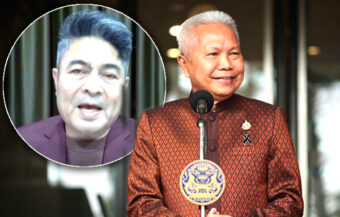
On February 16, 2026, Danucha Pichayanant presented the official figures. According to the council, fourth-quarter GDP expanded 2.5% year-on-year. Moreover, quarter-on-quarter growth reached 1.9%. As a result, full-year growth for 2025 is projected at 2.4%. This exceeded the earlier consensus of 1.8% to 2.0%.
Previously, internal estimates suggested only around 1% growth for the quarter. However, final data showed a sharp acceleration. Consequently, the year ended stronger than expected.
Investment surge and services rebound drive fourth-quarter acceleration across key sectors nationwide
The acceleration was driven primarily by investment. In particular, government budget disbursement increased significantly. Public investment in construction projects expanded in the final months.
At the same time, regional stimulus measures supported local economies. Meanwhile, private sector investment rose 6.5% in the fourth quarter. Industrial factory construction surged 12% following facilitation measures. Therefore, construction became a central pillar of growth. In addition, new investment projects gained traction before year-end. Although the “Half-Price” scheme lifted informal spending, officials stated that investment drove the expansion.
The trade and service sector also strengthened. It expanded 6.8% in the fourth quarter. Notably, wholesale and retail activity improved.
Furthermore, automotive repair services rose sharply. Motorcycle and car repairs increased 31.6%, partly due to post-flood damage. Consequently, service output provided additional support. Private consumption rose alongside investment. Government spending also reinforced domestic demand. As a result, multiple sectors contributed to the rebound.
Stable labour market and low inflation offset by political risk and mounting legal challenges
Macroeconomic indicators remained stable entering 2026. The unemployment rate stood at 0.71% in the fourth quarter. Previously, it was 0.76% in the third quarter. Moreover, it was 0.88% in the same quarter of 2024. Therefore, labour conditions showed gradual improvement. Inflation remained subdued. Headline inflation was negative for a third consecutive quarter at -0.5%.
Meanwhile, core inflation averaged 0.6%. Thus, price pressures were contained. Externally, the current account recorded a surplus of US$0.9 billion, or 27.4 billion baht. In addition, international reserves stood at US$281.9 billion at year-end. Public debt totalled 12.45 trillion baht, representing 65.6% of GDP.
Despite the stronger data, risks were clearly identified. Political uncertainty followed the February 8 General Election. According to Danucha Pichayanant, forming a government may take time.
If formation occurs by March or early April, budget delays may be limited. However, a longer delay would affect the 2027 fiscal process. A source of worry is the present barrage of lawsuits challenging the validity of the poll due to the use of barcodes on ballots. The situation has the potential for political turmoil.
Fiscal timing critical as 2026 growth outlook hinges on exports, spending and fast-track reforms
Consequently, new spending could be postponed beyond two months. In that case, liquidity entering the system would slow. Therefore, fiscal timing remains critical. State enterprise investment is positioned as a buffer. Approximately 92 billion baht is projected for the fourth quarter of 2026. As a result, late-year disbursement could support activity if needed.
Looking ahead, the council projects 2026 growth between 1.5% and 2.5%, with a median of 2.0%. Private consumption is expected to rise 2.1%. Moreover, exports are forecast to expand 2.0%. Previously, exports were expected to contract 0.3%.
However, the forecast was revised upward due to the electronics product cycle. Therefore, external demand assumptions improved entering the year. Budget expenditure is also set to expand 7% to 8%.
Meanwhile, the “Thailand Fast Pass” system aims to accelerate private investment approvals. Specifically, it targets capital goods and machinery. Permission to use land in industrial estates has increased. In addition, reservoirs remain near full capacity, supporting agriculture.
Tourism outlook tested as early 2026 arrivals fall despite revenue and spending projections
Tourism, however, presents a conflicting signal. The council anticipates 35 million foreign tourist arrivals in 2026. Furthermore, tourism revenue is projected at 1.65 trillion baht. Revenue is expected to exceed 2025 levels. Authorities also expect higher per capita spending from high-income visitors.
Average spending per trip is projected at 47,000 baht. Additionally, incoming flights are expected to increase. However, early-year data show contraction. From January 1 to February 15, 2026, arrivals totalled 5.07 million. That represents a 7.59% decline year-on-year. Consequently, the opening period contradicts full-year recovery assumptions.
If this trend continues, revenue targets may come under pressure. Therefore, tourism becomes a decisive variable in the 2026 outlook. However, this year’s fall may well be due to a higher base from 2025. In February 2025, the kingdom’s foreign tourism numbers plummeted after a security crisis linked to Burmese scam centres and the disappearance of Chinese nationals.
Global and domestic risks remain present. Economic volatility persists across major markets. Moreover, geopolitical tensions remain elevated. Rising debt-to-GDP ratios in several countries may affect trading partners. Domestically, household debt remains high. Consequently, financial institutions are cautious in lending.
Regulatory pressure, climate risk and export rules add strain as Chamber backs growth rebound
In particular, auto and SME loans face tighter scrutiny. Extreme heat also threatens agricultural output. Meanwhile, the European Union’s Carbon Border Adjustment Mechanism will affect steel, aluminium, and cement exports. As Thailand exports these products, compliance will be required to maintain access.
The Thai Chamber of Commerce endorsed the fourth-quarter data. On February 16, Dr. Poj Aramwattananon cited the 2.5% year-on-year expansion. He also noted the 1.9% quarter-on-quarter increase.
Previously, third-quarter growth stood at only 1.2%. Therefore, the final quarter marked a clear acceleration. The chamber projects full-year growth at 2.4%, above earlier expectations of 2.0% to 2.2%. It attributed the rebound to stimulus measures and expedited disbursement.
Government policy drive credited as debt, visas and election disputes shape this transition period
The administration of Prime Minister Anutin Charnvirakul was credited with overseeing these measures. Deputy Prime Minister and Finance Minister Dr. Ekniti Nitithanprapas advanced key policies.
These included the “Half-Price Plus” project and accelerated investment approvals through the Board of Investment. Moreover, trade negotiations were expanded with the United States and China. Foreign economic diplomacy was also cited as supportive. Production in the industrial and service sectors expanded accordingly.
Incoming government must tackle the country’s rising public debt level and keep foreign funding open
Visa entry period to go from 60 to 30 days. Agreement in principle as foreign tourism numbers fall by 10%
People’s Party and Pheu Thai Party call for Election Commission to back up Sunday’s election outcome
In sum, Thailand entered 2026 with stronger investment momentum and stable macro indicators. However, political uncertainty and weaker early tourism data introduce measurable risk. Consequently, the growth path depends on fiscal execution, export performance, and whether tourism stabilises in the coming quarters.
Join the Thai News forum, follow Thai Examiner on Facebook here
Receive all our stories as they come out on Telegram here
Follow Thai Examiner here
Further reading:
Incoming government must tackle the country’s rising public debt level and keep foreign funding open
Commerce Minister meets US trade boss Jamieson Greer in Korea. Paul Chambers case still dogs talks