Three Thai engineers remain trapped aboard the damaged cargo ship Mayuree Naree after an attack near Oman. Gunfire blocks rescue efforts in the conflict zone as the Royal Thai Navy coordinates internationally, while the Middle East war spreads across the Gulf.
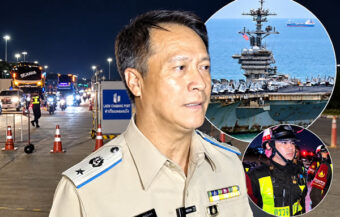
The Royal Thai Navy delivered good news on Friday when Chief of Staff Admiral Thadawut Thadpitakkul confirmed that three missing crew members from a Thai cargo vessel struck in an Iranian attack last Wednesday are alive and aboard the ship. At the same time, the navy is coordinating with Thai vessels near the conflict zone to prevent another incident. The Middle East war has now entered its third week. However, many Iranians who oppose the regime fear it may survive despite widespread expectations of collapse during the war’s opening hours. Meanwhile, the US is deploying more aircraft, ships and, significantly, marines to the war zone.
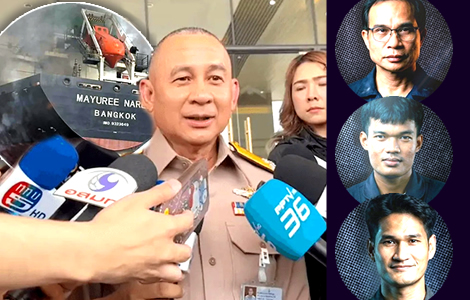
On Friday, the Royal Thai Navy confirmed that three missing crew members from the Thai cargo vessel Mayuree Naree remain alive. However, they are still trapped aboard the damaged ship after an attack near Oman earlier this week.
The vessel was struck on Wednesday in international waters between Bahrain and Oman. As a result, the ship was left partially disabled in a dangerous conflict zone.
Earlier, 20 other crew members had already been evacuated from the vessel. They were rescued at sea by the Oman Navy and taken safely ashore. However, three engineers remained aboard the vessel following the attack.
Three Thai engineers remain trapped aboard damaged cargo ship after Iranian attack near Omani waters
According to naval officials, the men survived the incident but could not leave the ship. Nevertheless, rescue operations remain extremely difficult. Ongoing gunfire in the surrounding waters has prevented immediate access to the vessel. Therefore, rescuers cannot safely board the ship at this time.
The Mayuree Naree carried 23 crew members when the attack occurred. Twenty were evacuated shortly afterwards during a maritime rescue operation. Meanwhile, the three engineers remained inside the damaged vessel. Initial communications confirmed they were still alive.
However, the situation at sea remains volatile. Gunfire continues in nearby waters. As a result, rescue teams have not yet boarded the vessel. Naval authorities say conditions must improve before any boarding attempt.
On March 13, Admiral Thadawut Thadpitakkul spoke at Royal Thai Navy Headquarters in Bangkok. He provided an official update on the operation. According to the admiral, the three engineers remain alive aboard the ship. However, they remain trapped inside an active conflict zone. Therefore, immediate rescue attempts remain limited. Ongoing maritime hostilities continue to prevent safe access.
Thai navy begins urgent international coordination as gunfire blocks rescue of trapped crew at sea
Meanwhile, the Royal Thai Navy has launched urgent coordination with international partners. First, liaison officers were dispatched to the Combined Maritime Forces coordination centre. This multinational naval command oversees maritime security across the Gulf region.
In addition, Thai authorities are working closely with diplomatic missions abroad. Thai embassies in Manama, Bahrain and Muscat, Oman are assisting with communications and logistics.
At the same time, the Royal Thai Navy is coordinating with neighbouring naval forces operating in the region. Consequently, officials are assessing when conditions may allow a safe rescue operation.
According to naval leadership, the protection of Thai citizens remains the highest priority. This directive has been emphasised by the Commander-in-Chief of the Royal Thai Navy. Therefore, naval authorities continue monitoring the situation continuously. Officials say they will act immediately once conditions allow safe access to the vessel.
Thai authorities warn shipping operators after attack exposed dangers facing vessels in the Gulf region
Meanwhile, Thai maritime authorities confirmed that four Thai-flagged vessels were operating in the wider high-risk maritime zone. The Mayuree Naree was one of those vessels. However, the other three ships have since docked safely in regional ports. As a result, their crews are no longer exposed to immediate danger.
Nevertheless, Thai authorities remain concerned about maritime security in the region. Consequently, several warnings have been issued to commercial shipping operators. In particular, ship operators have been told to exercise extreme caution in the Gulf region. Officials described the surrounding waters as highly dangerous due to the ongoing conflict.
Furthermore, naval authorities reminded shipping companies that the affected waters lie outside Thai territorial jurisdiction. Even so, Thailand continues to assist its nationals under international maritime regulations.
Meanwhile, the Marine Department has contacted the owner of the Mayuree Naree. Officials said close coordination with the shipping company is essential. Therefore, the ship owner is expected to cooperate fully with rescue planning and logistics.
Royal Thai Navy expands surveillance as fears grow over the safety of regional shipping routes
At the same time, the Royal Thai Navy continues monitoring conditions at sea. Officials say assistance will be provided wherever Thai nationals are at risk. This policy also applies to foreign-flagged vessels carrying Thai crew members. Consequently, naval surveillance now extends across a wider operational area.
However, the attack has also raised broader concerns about security in the Persian Gulf region. Therefore, the navy has issued an urgent maritime advisory to Thai shipping companies.
On March 13, the Maritime Traffic Control Centre released a security alert under the Naval Operations Centre. Rear Admiral Parach Rattanachaiyaphan confirmed the warning publicly on March 14.
According to the Navy, the advisory reflects new threat assessments across several key waterways. Specifically, intelligence assessments indicate that sea mines may be present in the Persian Gulf, the Gulf of Oman and the Strait of Hormuz. Consequently, commercial vessels face serious navigational risks in the region. Sea mines can cause catastrophic damage to shipping traffic.
Thai Navy warns vessels of possible sea mines across Persian Gulf and Strait of Hormuz shipping lanes
Furthermore, naval officials believe mines may have been deployed deliberately in the area. Authorities say the potential deployment may involve the Iranian Revolutionary Guard Corps. Therefore, the Navy has urged vessels to avoid high-risk areas whenever possible. Shipping companies must conduct detailed risk assessments before entering these waters.
In addition, ships have been instructed to strengthen onboard security procedures. These measures must comply with the International Ship and Port Facility Security Code.
The Navy also recommended best management practices for maritime security operations. Meanwhile, crews have been instructed to maintain constant radio monitoring on maritime channel 16. This channel is used globally for maritime safety communications.
Furthermore, vessels must remain ready to respond to contact from regional maritime security authorities. Naval patrol forces operate across the Gulf to monitor threats to shipping. If suspicious objects are observed, crews must report them immediately. Naval authorities stressed that rapid reporting could prevent further incidents.
Thai Navy issues reporting rules and mine safety guidance to ships navigating high-risk Gulf waters
Reports should be sent to the Royal Thai Navy’s Maritime Traffic Control Centre. In addition, crews should contact international maritime safety organisations. These include the United Kingdom Maritime Trade Operations centre. Other regional authorities should also be notified of suspicious activity.
Meanwhile, the Navy has issued operational guidance for crews who encounter possible sea mines. These instructions aim to reduce risk to vessels and their personnel. The guidance explains how to identify suspicious floating objects at sea. It also outlines safe response procedures for ships navigating mined waters. Therefore, shipping operators have been urged to brief crews before entering the region.
Nevertheless, Thai naval authorities say the situation remains under continuous review. Updates will be issued if the security environment changes. The navy has emphasised that vigilance is essential for vessels passing through the Gulf.
These maritime warnings come as the wider Middle East conflict enters its third week. Military operations involving the United States, Israel and Iran continue across several countries. The conflict began after US and Israeli missile strikes targeted Iran in late February. Those strikes followed weeks of failed negotiations over Iran’s nuclear programme.
Iranian leadership targeted in opening strikes as wider regional conflict spreads across Gulf states
As a result, Iranian leadership positions were heavily targeted during the opening attacks. Iran’s supreme leader, Ayatollah Ali Khamenei, was killed in the initial strikes. Consequently, the country entered a period of leadership transition. His successor, Mojtaba Khamenei, assumed the role of supreme leader soon afterwards.
However, reports suggest Mojtaba Khamenei was seriously injured during the opening attacks. Several members of his family were reportedly killed in the same strike. Meanwhile, Iranian forces launched retaliatory attacks across the region. These included missile strikes against Israel.
In addition, Iranian forces targeted US military installations in neighbouring Gulf states. Attacks were reported in Bahrain, Saudi Arabia, Kuwait and the United Arab Emirates. Further incidents occurred in Iraq, Jordan and Cyprus. Consequently, the conflict has spread across multiple strategic locations.
As a result, maritime security in the Gulf region has deteriorated sharply. The Strait of Hormuz has become a central strategic focus. This narrow shipping lane carries a large portion of global oil exports. Therefore, disruptions in the strait have immediate global consequences.
Iranian attacks and air strikes disrupt oil routes as global shipping faces new dangers in the Gulf
Iran has threatened to restrict shipping through the waterway. Consequently, global energy supply chains face continued uncertainty. Air strikes have also damaged infrastructure inside Iran. Oil facilities and storage installations have been repeatedly targeted.
In Tehran, fires and heavy smoke have been seen rising from damaged facilities. Several storage sites were hit during aerial attacks. According to the Iranian Red Crescent Society, more than 1,300 people have been killed since the conflict began. The casualty figures include many civilians.
Early in the war, a girls’ school in the Iranian city of Minab was bombed. At least 160 people were killed in that attack alone. Many of the victims were children. Meanwhile, civilians across Iran face ongoing uncertainty as air strikes continue.
Some residents initially believed the attacks might weaken the Islamic regime. However, expectations of rapid political change have faded. Many Iranians now fear the conflict could end with the regime still in power.
Iranian civilians fear regime survival despite early hopes that war might trigger political collapse
One Tehran resident described this fear clearly. She said that outcome would be more frightening than enduring the current air strikes. According to her account, citizens fear renewed repression if the government survives the war.
However, widespread protests have not yet emerged. Citizens remain cautious about confronting the authorities. Security forces continue heavy patrols across major cities. Meanwhile, officials warn that demonstrations will be treated as hostile acts.
Iran’s national police chief issued a direct warning to potential protesters. He said security forces stand ready “with their hands on the trigger.” Therefore, many citizens remain inside their homes.
At the same time, the government has tightened control over communications. Internet access and digital messaging services have been restricted. As a result, citizens find it difficult to organise protests or share information.
Iranian authorities tighten security and surveillance as protests remain limited during war
In several cities, authorities have banned filming in public areas. Officials warn that recording video may be treated as cooperation with hostile forces. Meanwhile, loudspeaker broadcasts from mosques continue across neighbourhoods. These announcements call on citizens to support the state.
Despite the war, large public demonstrations supporting the government have taken place. On Friday, crowds gathered across Iran for the annual Al-Quds Day protests. These demonstrations traditionally express opposition to Israel.
However, they also allowed the government to demonstrate political control during wartime. Large crowds were reported in several Iranian cities. Authorities highlighted the turnout as evidence of national unity.
The government has also organised mourning ceremonies for the late Ayatollah Ali Khamenei. These events were widely broadcast by state media. Meanwhile, opposition figures abroad continue issuing messages to supporters.
Exiled opposition urges patience while Iranians remain cautious after previous deadly crackdowns
Reza Pahlavi, the exiled son of Iran’s last monarch, released a video message this week. He urged opponents of the regime to remain at home for now. Instead, he asked them to show unity by chanting from windows each night.
He said supporters should wait for a future signal before taking to the streets. However, it remains unclear how many citizens would follow that call. Inside Iran, many people remain cautious after previous crackdowns.
Earlier protests were violently suppressed by security forces. Thousands of people were killed during those confrontations. Consequently, widespread mobilisation appears unlikely in the immediate future.
Meanwhile, reports have emerged of defections among Iranian military personnel. Some individuals formerly loyal to the regime are believed to have abandoned their posts. However, the scale of these defections remains unclear.
Iranian Revolutionary Guard remains central to power as war continues and military tensions rise
The Iranian Revolutionary Guard Corps remains one of the most powerful forces in the country. It continues to play a central role in maintaining state authority. Some observers believe it is attempting to consolidate power during the conflict.
However, independent information from inside Iran remains limited due to strict state controls. Across the region, military operations continue daily. Air strikes and missile exchanges remain frequent.
Ministers scramble to secure oil supplies due to Middle East War. Rationing at petrol stations starts
Gulf War on the verge of severely harming Thailand’s economy. Petrol stations’ early 10pm closure planned
Consequently, maritime security across the Gulf remains fragile. Shipping companies now face growing operational risks. For Thailand, however, the immediate concern remains the safety of its citizens at sea.
The three engineers aboard the Mayuree Naree remain stranded in a conflict zone. Therefore, the Royal Thai Navy continues monitoring the situation closely. Rescue teams remain on standby. However, officials say the operation will proceed only when conditions allow a safe approach to the vessel.
At the end of the week, the United States announced that F35 aircraft, more naval vessels and 2,500 marines from Japan were heading to the war zone.
Join the Thai News forum, follow Thai Examiner on Facebook here
Receive all our stories as they come out on Telegram here
Follow Thai Examiner here
Further reading:
US Ambassador Seán O’ Neill briefed Prime Minister Anutin Charnvirakul at Government House on War
Visa waivers, discounted hotel stays and 2,000 baht a person per day for stranded tourists announced
Liquidity crisis or shortage of cash on the ground is shrinking Thailand’s economic growth prospects