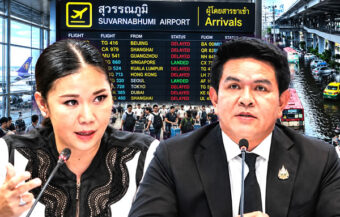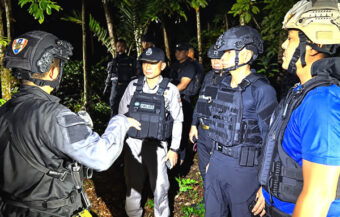
Thailand’s new cabinet takes power as US-Iran tensions surge within 24 hours of a possible escalation. PM Anutin warns fuel prices will rise and shortages may hit. Global oil supply tightens, while a missing oil scandal deepens pressure on the new government.
Thailand has sworn in a new government, the second cabinet led by Prime Minister Anutin Charnvirakul, on Monday evening. The new administration takes power amid a growing energy and economic crisis driven by the US-Iran war, set to escalate on Tuesday despite last-minute talks led by Pakistan. American President Donald Trump is promising strikes on Iran’s energy and transport infrastructure in attacks aimed at crippling the regime in Tehran. On Monday evening in Bangkok, Prime Minister Anutin struck a cautious tone, warning the public to expect higher fuel prices and acknowledging that shortages may occur.
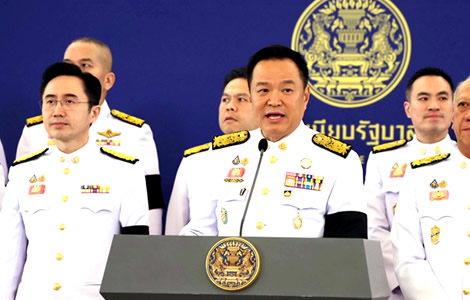
Thailand swore in a new cabinet on Monday evening at Dusit Palace in Bangkok. Immediately afterwards, the administration assumed office following the formal swearing-in ceremony. The ceremony took place at Amporn Sathan Throne Hall before King Maha Vajiralongkorn and Queen Suthida. Anutin Charnvirakul led the new government.
Earlier, the cabinet had been formally appointed on March 30, 2026. Subsequently, ministers proceeded directly to Government House for their first meeting. Thereafter, the Prime Minister addressed the media late in the evening.
However, the timing is critical, as the government took office just 24 hours before a potential escalation in the Middle East. Specifically, tensions are rising between the United States and Iran, placing global markets under pressure.
Trump’s warning on Hormuz blockade raises fears of escalation and tighter global oil supply chains
On Sunday, Donald Trump issued a direct warning in an exclusive interview. He stated that the United States would act if a blockade continues in the Strait of Hormuz. Notably, the strait remains a critical route for global oil shipments. Therefore, any disruption immediately affects the international energy supply. Trump set a deadline for Tuesday. If unmet, he warned of severe retaliation targeting infrastructure. Consequently, fears of escalation intensified across global markets.
At the same time, the new Thai government faces immediate external pressure. The conflict has already disrupted oil production and transport systems. In particular, refineries, pipelines, and gas facilities have been damaged. As a result, global supply has tightened significantly.
At Government House, the Prime Minister spoke after the cabinet’s first meeting. He adopted a cautious and measured tone. He confirmed that fuel prices would remain high in the near term. In addition, he warned that shortages may occur. “Fuel and related products may remain expensive and insufficient,” he said.
Prime Minister warns fuel prices will stay high and shortages are possible as crisis deepens in markets
Furthermore, he stated that the government would act to limit the impact on the public. However, he acknowledged that supply constraints are ongoing. The Prime Minister directly linked the crisis to the Middle East conflict. He said the region is a major source of global oil and gas. Therefore, disruptions there are driving price increases worldwide. Thailand remains highly exposed to these developments.
In fact, about half of Thailand’s oil imports originate from the Middle East. As a result, supply shocks have an immediate domestic impact. Prices for fuel have risen sharply in recent days. Meanwhile, fertiliser and plastic pellet costs have also increased. Consequently, agriculture and industry are both under pressure.
At the same time, consumers face rising living costs. The Prime Minister confirmed that the government will adjust energy pricing structures. Specifically, fuel and electricity prices will be reviewed to reduce costs where possible. However, no immediate reductions were announced. In addition, further measures will be introduced to support the public.
These measures include a co-payment scheme for consumers. Furthermore, discounted consumer goods will be made available nationwide. Soft loans will also be extended to farmers and businesses.
PM outlines relief measures, including co-payments, soft loans and budget changes to cushion impact
In particular, small and medium-sized enterprises will receive targeted support. Likewise, industrial sectors will be included in relief efforts. Therefore, the measures aim to sustain economic activity during the crisis.
At the same time, the government will reduce public spending. Budget cuts will redirect funds toward relief programmes. According to the Prime Minister, this approach will help cushion the impact on households. However, key tax decisions remain under review.
Questions were raised about refinery margins and excise taxes on fuel. In response, the Prime Minister said the Finance Ministry is examining these options. Ekniti Nitithanpraphas is leading that process. Further announcements are expected after the government presents its policy to Parliament.
Until then, decisions remain pending. Nevertheless, the government has signalled urgency in addressing the crisis. The Prime Minister also referred to legal measures available to the administration. He cited the Fuel Shortage Prevention and Mitigation Act of 1973. If necessary, powers under the law may be used. He confirmed readiness to act within his authority.
Government warns supply constraints worsening as global shortages deepen and recovery may take time
Meanwhile, the government emphasised transparency in its approach. Officials disclosed supply risks to the public without delay. The aim is to prepare citizens for possible disruptions. Accordingly, warnings were issued regarding shortages and price increases.
The Prime Minister stated that global supply constraints are worsening. As Middle Eastern output declines, alternative sources remain limited. Therefore, sourcing fuel is becoming increasingly difficult. This trend is expected to continue in the short term. Even if the conflict ends, recovery will take time. Damaged infrastructure cannot be restored quickly. Refineries and gas facilities require extensive repairs.
Consequently, shortages may persist beyond the end of hostilities. In addition, petrochemical production has been disrupted. This includes fertilisers and plastic materials essential to industry. Therefore, supply chains remain under sustained pressure.
The Prime Minister warned that oil and industrial products may be scarce. At the same time, prices will likely remain elevated. He stated that the government will manage the situation carefully. However, constraints are unavoidable under current conditions. He called for cooperation from the public. Moreover, he emphasised that national unity is critical during this period.
King urges cabinet to prioritise people’s democracy and nation as new government faces mounting crisis
Earlier, the King addressed the newly appointed cabinet. He outlined three key priorities for governance. These were the people, democracy, and the nation. According to the royal address, these principles must guide all decisions.
Furthermore, the King emphasised the consequences of government actions. He noted that policies directly affect public welfare and stability. Therefore, ministers were urged to act responsibly and effectively. The address also highlighted the importance of sustainable development. It called for unity and resilience in the face of challenges.
The cabinet includes several senior political figures across key ministries. Pipat Ratchakitprakarn serves as Deputy Prime Minister and Minister of Transport. Meanwhile, Songsak Thongsri holds another Deputy Prime Minister role. Sihasak Phuangketkaew leads foreign affairs. At the same time, Suphajee Suthumpun oversees commerce. In addition, Pakorn Nilapraphan serves as Deputy Prime Minister. Yotsanun Wongsawat leads higher education and research policy.
Several ministers are attached to the Prime Minister’s Office. These include Suphamas Isarabhakdi and Napinthon Srisarppang. Others include Paradorn Prisnanantakul and Sukhsomruay Wantaniyakul. Meanwhile, Adul Boonthamcharoen leads the defence ministry. Surasak Panjaroenvorakul heads tourism and sports. Nikorn Somklang oversees social development and human security.
Cabinet line-up confirmed as government mobilises to respond to energy and economic crisis
Suriya Jungrungreangkit leads agriculture and cooperatives. Deputies include Wacharaphol Khaokham and Piyarat Tiyapairat. Meanwhile, the transport ministry includes several deputies. These include Siripong Angkasakulkiat, Phatarapong Phatprasit, and Sanphet Bunyamanee. In addition, Chaiyanok Chidchob leads the digital economy ministry. Nan Bunthida Somchai serves as deputy.
Meanwhile, Suchart Chomklin oversees natural resources and the environment. Ekanat Promphan serves as energy minister. The Prime Minister also holds the interior portfolio. Interior deputies include Peerapong Suwanchawi, Jetseth Thaiseth, and Worasit Liengprasit. Ruddhapol Nawarat leads justice. Meanwhile, Chulaphan Amornvivat heads labour. Sabida Thaiseth oversees culture.
Prasert Chantharawongthong leads education, with Akranan Kankittinan as deputy. Phatthana Phromphat heads public health. Finally, Varawut Silpa-archa leads industry. Together, the cabinet forms the core executive authority during a period of crisis.
Missing oil supplies and hoarding trigger an investigation with senior officials potentially implicated
Meanwhile, domestic issues are compounding the situation. Police have detected missing oil supplies across the country. In addition, authorities report evidence of hoarding. Therefore, supply distribution is under investigation. The issue has escalated into a major national case. Notably, senior officials may be implicated. The scope of the investigation extends to cabinet level.
Last week, the Department of Special Investigation confirmed a significant discrepancy. It reported that 57 million litres of oil were missing. The loss occurred at a depot in Surat Thani. Investigators believe the oil was siphoned off or misdirected at sea. Therefore, shipping routes and storage systems are under review. The case remains active and ongoing.
At the same time, this shortage adds pressure to an already strained market. Global supply constraints are tightening due to the Middle East conflict. Consequently, domestic disruptions are worsening the situation. Public concern is rising sharply. A survey published Sunday reflects this trend. The King Prajadhipok’s Institute conducted the poll. It found that 82 per cent of respondents are highly sceptical.
Public scepticism rises as the crisis deepens and the government faces pressure to deliver rapid solutions
Specifically, respondents doubt the government’s ability to manage the crisis effectively. Therefore, expectations for the new administration are high. The Prime Minister acknowledged these concerns directly. He stated that the government will act across all sectors. Furthermore, he promised to protect national interests during the crisis. However, he emphasised the scale of the challenge ahead.
Additional measures are currently under preparation. Relevant ministers will provide updates in due course. Policy details will follow the formal presentation to Parliament. Until then, the situation remains fluid. Meanwhile, global developments continue to unfold rapidly. Energy markets react to each shift in the conflict. Supply chains remain unstable. Prices continue to fluctuate.
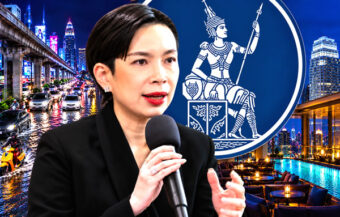
Thai banks and Finance Minister prepare for the worst as the Middle East Iran War continues to escalate
Anutin apologises as the economy is throttled by the Iran US war leaving ministers struggling to cope
The next 24 hours are considered critical. Potential military action by the United States and Israel could escalate tensions further. Retaliation by Iran is also expected against US bases and US Gulf allies. If that occurs, supply disruptions may intensify.
Therefore, governments worldwide are preparing contingency responses. Thailand has already begun its response. In short, it is battening down the oil tank storage hatches and monitoring oil sales and distribution tightly. The new cabinet acted immediately after taking office. Its first priority is energy stability and economic management.
In the meantime, economic projects and plans for 2026 are now seen as way off course. This crisis is seen as having both a short-term and long-term impact.
Join the Thai News forum, follow Thai Examiner on Facebook here
Receive all our stories as they come out on Telegram here
Follow Thai Examiner here
Further reading:
Oil and energy crisis deepens in Thailand as Prime Minister Anutin shows off new EV car to reporters
Anxiety about oil supplies and prices as economic growth in 2026 now dependent on the US Iran War
US Ambassador Seán O’ Neill briefed Prime Minister Anutin Charnvirakul at Government House on War
Visa waivers, discounted hotel stays and 2,000 baht a person per day for stranded tourists announced
Liquidity crisis or shortage of cash on the ground is shrinking Thailand’s economic growth prospects