฿400 billion emergency loan approved as energy crisis drives inflation to a 38-month high. Opposition warns of rising debt, weak oversight and unclear planning amid mounting cost-of-living pressure.
Thailand has launched a high-stakes financial response to a deepening global energy shock, approving a 400 billion baht emergency borrowing decree as surging fuel prices drive inflation, strain households, and threaten economic stability. Prime Minister Anutin Charnvirakul cast the move as urgent action to avert stagflation and protect vulnerable sectors, while outlining a dual strategy of immediate relief and energy transition. However, the decision has triggered sharp political backlash, with opposition figures warning of rising public debt, weak oversight, and unclear spending plans. Questions are also mounting over relief effectiveness, gaps in aid distribution and vague restructuring plans, setting up a widening clash over how Thailand confronts a severe cost-of-living crisis.
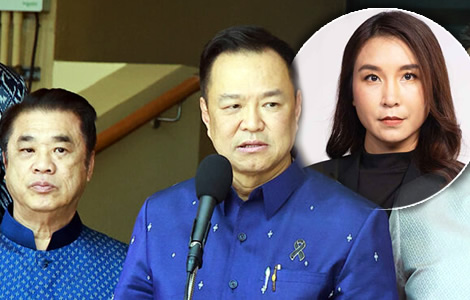
On May 5, 2026, Thailand’s cabinet approved an emergency decree authorising 400 billion baht in borrowing. The Finance Ministry will raise the funds to address a global energy crisis, Prime Minister Anutin Charnvirakul said.
Speaking at Government House, he said escalating conflict in the Middle East had intensified. As a result, global energy prices have surged sharply. Consequently, the shock has spread across the world economy.
Energy costs have driven up food prices and household expenses. Moreover, he said the rising cost of living has created urgent nationwide pressure. Therefore, the government moved to act without delay.
Government approves 400 billion baht emergency borrowing as global energy crisis drives inflation surge
“The government’s duty is to prevent Thailand’s economy from slipping into high inflation and a slowdown,” Anutin said. He added that the risk includes stagflation. Thus, he said swift intervention is required.
The government confirmed on Wednesday that inflation had reached a 38-month high of 2.89%.
The decree creates a special legal mechanism for urgent borrowing. It is designed for unavoidable circumstances. Accordingly, the funds will be deployed rapidly. Anutin said the money will ease pressure on households. At the same time, it will support economic activity. Furthermore, it will accelerate the transition to modern energy systems.
The government identified key groups for support. These include low- and middle-income earners. In addition, farmers and small businesses will be targeted. Sectors directly hit by rising energy costs will also receive assistance.
The policy follows two parallel tracks. First, immediate relief will reduce living costs. This includes lowering production expenses. In particular, agriculture will receive support for fertilisers and essential inputs. Second, structural reforms will reshape the energy sector. These aim to reduce reliance on fossil fuels. At the same time, they will strengthen long-term competitiveness.
Government outlines dual-track relief and reform plan targeting households, farmers and businesses
Prime Minister Anutin said the plan will guide Thailand through the crisis. Meanwhile, it will build resilience for the future. He also insisted fiscal discipline will remain strict. “The government is committed to standing alongside the people,” he said.
He added that all available measures will be used. However, the decision drew immediate criticism from opposition figures. Sirikanya Tansakul, deputy leader of the People’s Party, challenged the decree. She described the 400 billion baht borrowing as lacking detail. Furthermore, she warned it could push the public debt ceiling higher by 2027.
She questioned whether the full amount is necessary. In particular, she raised concerns about the borrowing limit. She said the ceiling may not need extension within the 2026 fiscal year. However, she added that the 2027 budget will likely require adjustment.
Therefore, she said the debt ceiling will inevitably rise. She urged the government to reconsider the scale of borrowing. Moreover, she referred to remarks by Finance Minister Ekniti Nitithanprapha. He had cited inflation as a driver of GDP growth. In addition, he said inflation could lower the debt-to-GDP ratio. However, she said this raises further questions about the need for such a large loan.
Opposition questions borrowing scale and warns of rising debt ceiling pressure by 2027 budget cycle
Sirikanya accepted part of the plan. Specifically, she supported 200 billion baht for urgent relief. She said it is necessary due to widespread hardship. However, she rejected the remaining 200 billion baht under the decree.
She said long-term restructuring is not urgent. Therefore, it should not bypass parliament. She cited Article 172 of the Constitution. It allows emergency decrees only in urgent cases. Accordingly, she said only the relief portion qualifies. She urged the government to submit the rest as legislation. This would allow parliamentary scrutiny. In addition, it would require clear project definitions.
Sirikanya said emergency powers must be used cautiously. She described them as bypassing parliamentary review. Therefore, she said they should be limited to genuine crises. She compared the plan to measures used during the COVID-19 crisis.
At that time, borrowing funded subsidies to stimulate the economy. However, she said the current energy crisis is different. She then criticised the proposed “half-half” co-payment scheme. The programme splits costs between the state and consumers. However, she said it has strict conditions and operational limits. She noted uncertainty over whether conditions will change.
Criticism targets co-payment scheme limits and calls for clearer relief measures amid rising costs
Currently, existing rules remain in place. Unless revised, she said the scheme may not deliver sufficient relief. She argued that rising costs affect all sectors. Therefore, limited subsidies may not be enough. She said broader conditions are required. She proposed direct cash support without restrictions.
She said current rules were designed for economic stimulus. However, they are unsuitable for a widespread cost-of-living crisis. She also warned of price effects. Stimulus measures can push prices higher, she said. In some cases, retailers may raise prices in response.
Furthermore, she questioned how aid will be targeted. She said registration systems can exclude eligible recipients. In particular, those without state welfare cards may miss deadlines. As a result, some vulnerable groups may not receive assistance. She highlighted gaps in current support measures.
Gaps in aid distribution leave farmers and fishermen exposed to high fuel and operating costs
Farmers have received only limited fertiliser assistance. However, they still face high fuel costs. Similarly, fishermen have not received compensation. Fuel remains a major share of their operating expenses.
Sirikanya criticised repeated reliance on the same schemes. She said policies should match the specific crisis conditions. Instead, she said the government continues to rely on a single approach. She said aid must reach those most in need. Otherwise, resources risk being misallocated.
She acknowledged the need for both short-term relief and long-term restructuring. However, she insisted the process must follow legal procedures. Therefore, long-term borrowing should go through parliament. This would allow more time for detailed planning. In addition, it would ensure transparency.
She criticised the lack of detail in restructuring plans. The government has mentioned solar energy projects. These include solar farms and rooftop installations. However, key details remain unclear. There is no data on capacity targets.
Lack of clarity on energy transition plans raises questions over funding, scope and implementation details
There is no clarity on funding mechanisms. It is unclear whether support will take the form of grants or loans. Therefore, she said the government should not rush. Long-term impacts require careful consideration. Emergency powers, she said, are not appropriate for such measures.
Thai government to steady the ship with a 500 billion loan decree as public finances come under pressure
People’s Party MP Sirikanya Tansakul agrees with higher borrowing to deal with the Trump tariff crisis
Liquidity crisis or shortage of cash on the ground is shrinking Thailand’s economic growth prospects
She cited previous borrowing decrees. These often lacked detailed spending plans. As a result, she described them as “blank checks.” She concluded that urgent relief should proceed first. Meanwhile, long-term measures should follow legal review.
She said parliamentary approval could be completed within three months. However, she added that implementation would still require time.
Join the Thai News forum, follow Thai Examiner on Facebook here
Receive all our stories as they come out on Telegram here
Follow Thai Examiner here
Further reading:
60-day visa regime to be ended confirms Minister responding to rising industry security concerns
Tourism boss warns Thailand it is facing a Chinese blacklist if another security controversy erupts
Visa waiver scheme questioned with another China Crisis for foreign tourism driven by security fears