Thai police say the heroin network exposed by airline hostess Ms Meena’s Melbourne arrest reaches far beyond those already arrested, as detectives pursue the organisers behind a trafficking route from Laos through Thailand to Australia and Taiwan.
The arrest of Thai airline hostess Ms Meena in Melbourne has exposed what investigators now believe is only the outer edge of a far larger international heroin trafficking syndicate stretching from Laos through Thailand to Australia and Taiwan. As Thai authorities dramatically widen their investigation, secure four new arrest warrants, make another arrest and intensify cross-border operations with Laos, police say those caught so far were merely couriers while the organisation’s leaders remain at large, prompting an increasingly aggressive hunt for the network directing one of the region’s most sophisticated heroin smuggling operations.
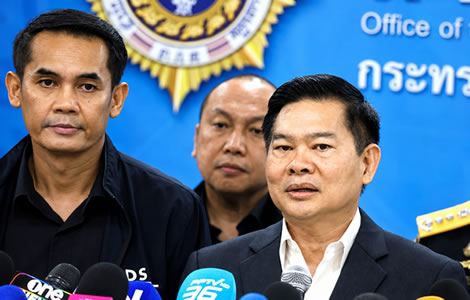
Thailand has dramatically expanded its investigation into the transnational heroin trafficking network linked to the arrest of Thai airline hostess Ms Meena in Melbourne on June 26, securing four new arrest warrants, making another arrest in Loei province and intensifying cross-border operations with Laotian authorities.
However, investigators say those arrested or wanted so far occupied courier roles within the organisation. The network’s leadership remains unidentified. Even so, officials believe those directing the operation remain active and are pursuing a much larger trafficking enterprise stretching from Laos through Thailand to Australia and Taiwan.
The latest developments emerged after senior officials met at the Office of the Narcotics Control Board (ONCB) in Bangkok on July 10. The meeting brought together the Department of Special Investigation (DSI), the Narcotics Suppression Bureau, the Bangkok Metropolitan Police and other agencies investigating the case.
DSI special case powers drive wider heroin investigation as police secure new warrants and expand operations
Afterwards, Police Lieutenant Colonel Suriya Singhakamol, Secretary-General of the ONCB, outlined the latest progress. He confirmed the DSI had formally accepted the investigation as Special Case No. 99/2569, allowing investigators to integrate evidence from multiple agencies and pursue the network more aggressively.
Previously, the ONCB disclosed evidence linking heroin trafficking activity to Bangkok’s Rang Nam, Lak Si and Ramkhamhaeng areas. Subsequently, investigators gathered enough evidence to obtain four additional arrest warrants from the Ratchadaphisek Criminal Court.
The warrants target three Laotian nationals and one Thai man believed to have transported heroin from Laos into Thailand before it entered the domestic distribution chain. Nevertheless, Police Lieutenant Colonel Suriya declined to identify the suspects because active operations continue in Laos.
Meanwhile, Thai investigators have worked closely with Laotian authorities since July 2. Police Lieutenant Colonel Suriya described the cooperation as excellent and said Laos fully recognises the seriousness of narcotics trafficking along the shared border. Accordingly, authorities expect further arrests soon. He also expressed confidence that the wanted suspects will not evade capture.
Police trace heroin route from Laos across the Mekong River into Loei before onward movement to Bangkok
According to investigators, the trafficking route began on the Laotian side of the Mekong River before crossing into Loei province.
Heroin had already been concealed inside ordinary parcels before leaving Laos. Investigators believe the packages crossed the river by boat before reaching a carefully selected handover point beneath a fig tree on the Thai riverbank. There, Thai couriers allegedly waited to receive the shipments before moving them deeper into the country.
Police identified those couriers as Mr Athit, a Thai national, and his Laotian wife, Ms Thatsaphon. The couple were arrested earlier during the investigation.
Afterwards, investigators say they arranged for the parcels to enter Thailand’s courier system before they were transported to Bangkok. From there, the packages were forwarded to recipients preparing shipments to third countries. Australia and Taiwan have both been identified as destination markets.
Police say wanted couriers are not syndicate leaders as investigators target organisers and overseas financiers
Notably, investigators are still determining whether the three Laotian suspects controlled the heroin or merely transported it across the border. Current evidence suggests they acted as cross-border couriers rather than senior organisers. However, Police Lieutenant Colonel Suriya believes the operation extends far beyond the four suspects now wanted.
“I have inside information about who is behind this heroin shipment,” he said. “We know they are Laotian, not of mixed heritage, and have a prior criminal record related to drug trafficking in Thailand.”
He declined to identify those individuals because investigations remain active. Instead, he said Thai and Laotian authorities are attempting to dismantle the entire organisation rather than simply arrest couriers. Investigators, therefore, continue targeting the source, middlemen and overseas distribution network simultaneously.
As part of this strategy, officers are tracing everyone involved in moving heroin from Laos into Thailand before it leaves for foreign markets.
Police Lieutenant Colonel Suriya said investigators are also identifying those receiving the greatest financial benefit from the operation. He believes the organisation behind the latest arrests is substantially larger than previously understood.
Statements, surveillance and forensic evidence strengthen case linked to repeated heroin deliveries
Evidence supporting the latest arrest warrants comes from several sources. Firstly, investigators obtained detailed statements from the arrested married couple. Secondly, officers collected additional evidence through surveillance and forensic examinations. Finally, investigators reviewed previous criminal activity linked to the suspects before seeking court approval.
In addition, Police Lieutenant Colonel Suriya said investigators have found evidence suggesting the trafficking route has operated repeatedly.
However, the precise number of deliveries remains unknown because couriers frequently changed once heroin entered Thailand. Even so, investigators have already identified between four and five individuals who each appear to have completed at least five deliveries. Authorities, therefore, believe many more participants remain unidentified.
Separately, one of the four suspects named in the latest arrest warrants has already been arrested. The suspect, identified only as Mr Klaew, was taken into custody in Loei province. Investigators allege he received heroin shipments arriving from Laos before passing them to the arrested married couple.
Network relied on river crossings, courier parcels and compartmentalised handovers to evade detection
Police also believe he maintained a close relationship with Ms Thatsaphon. Furthermore, investigators allege the pair regularly travelled together while posting heroin-filled parcels through domestic courier services.
On another front, the remaining three wanted suspects are believed to be in Laos. Authorities there continue efforts to locate and arrest them. Police Lieutenant Colonel Suriya again praised the level of cooperation received from Laotian investigators and said progress should follow shortly.
Investigators also disclosed more details about the organisation’s border operations. According to Police Lieutenant Colonel Suriya, boats crossed the Mekong River carrying parcels already loaded with heroin.
Heroin supplier higher in the supply chain arrested in northern Phayao province as police smash network
Thai Laotian couple arrested in Loei linked to heroin trafficking and the jailed Thai Airways hostess
The packages were transferred beneath the same riverside fig tree before entering Thailand. Afterwards, couriers transported them towards Bangkok through a structured chain of handlers. Finally, recipients prepared the drugs for shipment overseas.
Investigators described the method as a carefully organised hand-to-hand delivery system. Each participant handled only one stage of the journey. Consequently, no single courier controlled the complete operation. Police believe that the structure helped conceal the identities of those directing the network while limiting the exposure of individual participants.
Join the Thai News forum, follow Thai Examiner on Facebook here
Follow Thai Examiner on Google here
Receive all our stories as they come out on Telegram here
Follow Thai Examiner here
Further reading:
Bungling French drug dealer arrested at Phuket Airport after cocaine sachets found on concourse
Phuket Airport Immigration Chief rebuts UK tabloid coverage linked with the arrest of a UK tourist
24 year old New Zealand tourist arrested. Cocaine found inside his passport clearing Phuket Airport