Thailand’s Senate election scandal is approaching a defining moment. Investigators are examining 229 politicians, senators and ministers as allegations of collusion and an organised political network pile pressure on Prime Minister Anutin Charnvirakul’s government.
Prime Minister Anutin Charnvirakul’s government is facing its gravest political challenge since taking office as a sweeping investigation into the 2024 Senate election edges towards a defining Election Commission ruling that could send one of Thailand’s biggest constitutional cases to court. The inquiry now encompasses 229 politicians, senators and senior government figures, while opposition politicians, witnesses and academics have publicly urged investigators to examine ballot papers, CCTV footage and millions of election images they say could expose an organised network reaching into the heart of the country’s political establishment.
Prime Minister Anutin Charnvirakul’s government is approaching one of its most consequential political tests since taking office, with a major investigation into the 2024 Senate election moving towards a decisive stage before September.
The case has emerged as a serious threat to the administration at a difficult political moment. Economic growth remains sluggish. Recent National Institute of Development Administration (NIDA) opinion polls show the government losing support nationally.
Meanwhile, reports continue of divisions within the ruling Bhumjaithai Party. At the same time, persistent rumours point to a struggle for influence inside the Ministry of the Interior.
However, the Senate investigation now overshadows every other political challenge facing the coalition. Before September, the Election Commission must decide whether allegations of organised collusion should be referred to the Constitutional Court.
Election Commission faces defining decision as Senate collusion case moves towards possible court action
In parallel, the Department of Special Investigation (DSI) continues its criminal investigation after accepting the matter as a special case. That inquiry centres on allegations of criminal conspiracy and money laundering linked to the Senate election.
The investigation began while Pol. Col. Thawee Sodsong served as Minister of Justice. Since then, it has expanded steadily. Election Commission investigative committee number 26 concluded there was sufficient evidence to proceed against 229 individuals.
Those reportedly include sitting senators, government MPs, cabinet ministers and members of the ruling Bhumjaithai Party. However, committee number 36, appointed later, reached the opposite conclusion. It recommended that none of the same 229 individuals should face legal proceedings.
Consequently, the Election Commission now faces two fundamentally different recommendations from within its own investigative system. Its decision is expected before September. That ruling may determine whether one of Thailand’s largest political investigations reaches the Constitutional Court or ends without judicial scrutiny.
Rival Election Commission findings leave Senate investigation facing a pivotal constitutional crossroads
If the case proceeds and the allegations are ultimately upheld, the consequences could be extensive. Senior politicians, cabinet ministers and serving senators could all face legal action. Moreover, the proceedings could threaten the future of the ruling Bhumjaithai Party itself. The political stakes, therefore, have continued to rise as the Election Commission’s deadline approaches.
Against that backdrop, Parliament became the centre of attention on Sunday. Opposition politicians, academics, former election officials and witnesses gathered for a seminar marking the second anniversary of the Senate election. The event examined evidence collected during the investigation and urged both the Election Commission and the DSI to ensure the case reaches the courts.
The seminar was organised by the Opposition Coalition Coordination Committee. It was titled “2nd Anniversary of the Senate Election – In-depth Analysis of Evidence in the Senate Collusion Case.” Throughout the day, participants reviewed candidate lists, ballot papers, voting patterns and witness testimony. They also presented allegations involving hotel meetings, financial inducements and the organisation of candidates before polling took place.
Separately, four witnesses from different provinces gave public accounts of the alleged operation. They came from Maha Sarakham, Nakhon Phanom, Nong Bua Lamphu and Nakhon Si Thammarat.
Their testimony was presented alongside legal analysis from academics and former officials. Associate Professor Dr Prinya Thevanarumitkul of Thammasat University participated in the discussion. Former Election Commissioner Somchai Srisutthiyakorn also addressed the audience.
Parliament seminar hears witnesses and academics urge Senate election evidence to be tested in court
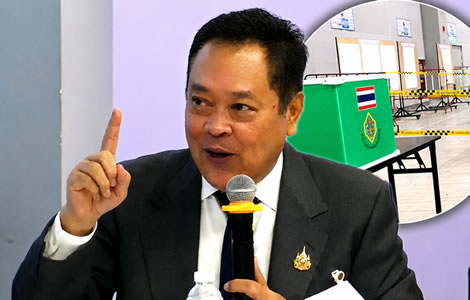
Among the principal speakers was Pol. Col. Thawee Sodsong, now leader of the Prachachart Party and a party-list MP. His party currently supports Prime Minister Anutin’s coalition. Previously, however, Thawee served as Minister of Justice in the former Pheu Thai-led government when the DSI first accepted the investigation as a special case.
Thawee argued that the allegations extended well beyond electoral misconduct. Instead, he described the investigation as concerning control of Thailand’s constitutional system.
According to him, the Senate occupies a unique position because it approves appointments to many of the country’s most powerful institutions. Those include the Constitutional Court, independent organisations, the Attorney General and senior judicial offices.
Notably, Thawee said Thailand’s constitutional structure effectively operates through four centres of power. He identified them as the Constitution, the government, Parliament and what he termed the “independent state”.
The final category includes the Constitutional Court, independent agencies and senior legal offices whose appointments require Senate approval. Consequently, he argued that control of the Senate could deliver influence far beyond Parliament itself.
Furthermore, Thawee said the Senate should not be viewed simply as the upper chamber. Rather, it acts as the gateway for appointments to key constitutional institutions. Those bodies supervise the exercise of state power.
Thawee says Senate appointments hold the key to wider control of Thailand’s constitutional institutions
Therefore, he argued, anyone controlling Senate appointments could ultimately shape institutions responsible for overseeing elected governments.
He claimed the Constitutional Court and the National Anti-Corruption Commission possess powers capable of fundamentally affecting elected administrations. Governments can be suspended from office. Ministers can be removed from their positions.
As a result, Thawee argued that the Senate election concerned much more than selecting 200 senators. It concerned influence over institutions capable of reshaping the country’s political balance.
According to Thawee, the issue became increasingly important as the previous Senate’s transitional period drew to a close. The new Senate consists of 200 elected members. Those senators participate in approving appointments across numerous constitutional bodies. For that reason, he argued that gaining influence over the Senate represented a strategic objective extending well beyond Parliament.
Thawee also reviewed the chronology of the investigation. The Senate election took place on May 26, 2024. Official results were announced on July 10 that year.
Approximately one year later, allegations of organised collusion became public following complaints and evidence gathered by investigators. Those complaints ultimately led to the DSI launching its special investigation.
Thawee traces alleged Senate network from election rules to special DSI investigation and court scrutiny
According to Thawee, testimony collected during that inquiry identified approximately six or seven organised groups. He said younger organisers carefully studied Election Commission regulations before developing methods to coordinate voting.
In particular, they examined candidate numbering and the operation of secret ballots. He argued those rules became central to the alleged operation.
Thawee referred specifically to Article 33 governing secret ballots. He also cited Article 122 concerning candidate numbering at provincial and national levels. According to him, assigning candidates numerical identities made coordinated voting significantly easier. Participants could simply follow prepared number sequences rather than candidate names. He described that arrangement as a sophisticated mechanism for organising votes.
On another front, Thawee questioned the administration of the Senate election itself. Fewer than 50,000 candidates entered the contest.
Nevertheless, he said the Election Commission spent approximately 206 million baht conducting the election. He contrasted that figure with expenditure associated with the 2023 general election. He argued the Senate poll therefore deserved much closer examination.
Responsibility for supervising the election rested at several levels. District chiefs oversaw district voting. Provincial governors supervised provincial rounds. Nationally, responsibility rested with the chairman and secretary-general of the Election Commission.
Accordingly, Thawee argued that any investigation should extend beyond candidates themselves. It should also examine officials responsible for administering the election process.
Thawee questions election spending and calls for scrutiny of officials overseeing the election
He further claimed testimony gathered during the special investigation linked approximately 69 MPs and associated political networks to the alleged operation. In his view, those links represented only the beginning of a much broader inquiry.
Moreover, he referred to forensic and mathematical evidence examined during Constitutional Court proceedings concerning the DSI investigation. Thawee said the court accepted that evidence as credible when determining whether the matter qualified as a special case.
Thawee said investigators initially identified financial evidence below the legal threshold for a special case. However, he said mathematical analysis traced the wider operation to a value exceeding 300 million baht. According to him, the Constitutional Court accepted that assessment. As a result, the DSI retained authority to pursue the investigation as a special case.
He also argued that many individuals remained outside the scope of current proceedings. Those included provincial governors, district officers and election officials responsible for supervising the voting process.
In his view, such a large operation could not have occurred without failures at multiple levels. Therefore, he urged investigators to widen their examination beyond candidates and senators.
Most significantly, Thawee claimed the Election Commission already possesses extensive evidence. According to him, investigators hold ballot papers, CCTV recordings and photographic evidence gathered throughout the election.
He also said the Commission controls approximately 200 million election images. That material, he argued, should allow investigators to reconstruct the entire voting process.
Thawee says ballot papers, CCTV footage and 200 million images already hold the key to the investigation
In particular, Thawee focused on the ballot papers. He claimed that 99% of voting slips within certain groups appeared virtually identical. The same candidate numbers allegedly appeared repeatedly. Likewise, the same marking patterns were said to occur across numerous ballots. He argued such consistency would be mathematically impossible in an independently conducted election.
Using a vivid comparison, Thawee said finding identical voting patterns by chance would be like finding “a single grain of sand in the universe.”
He maintained that repeated selections involving the same five consecutive candidate numbers could not reasonably occur without coordination. Moreover, he claimed CCTV footage already supported those conclusions. According to him, the evidence is already in the Election Commission’s possession.
For that reason, Thawee repeatedly called for the ballot boxes to be opened. He cited Election Commission Regulation 146, which prevents their destruction. Consequently, he argued the original ballot papers remain available for forensic examination. He insisted mathematicians would need only half a day’s work to verify the alleged voting patterns.
According to Thawee, experts could compare both the morning and afternoon ballots. They could then determine whether identical numerical sequences appeared across organised groups.
He further suggested that candidates supported by organised voting would record between 50 and 70 votes. By contrast, candidates outside those groups would largely fall into voting clusters between 18 and 20. He said those differences would become immediately apparent once the ballots were examined.
Thawee says legal action should target the wider political network rather than senators alone in the case
Thawee also claimed investigators were preparing seven legal cases involving political parties and MPs accused of assisting approximately 22 senators. According to him, most of those political figures now belong to the governing coalition. He further alleged that cabinet ministers were among those under scrutiny. Nevertheless, he stressed that the allegations still required judicial examination before any legal conclusions could be reached.
“I believe proving these charges will be very easy, taking less than two weeks,” Thawee said. “Once the allegations are confirmed, these individuals will be removed. Even though they have currently seized control, they still lack the authority of the judicial system. We must find a way to ensure this matter reaches the courts.”
Beyond the documentary evidence, the seminar also heard testimony from four witnesses drawn from different regions of Thailand. Each described what they alleged were organised efforts to recruit candidates before the Senate election. Their accounts formed a central part of Sunday’s proceedings. However, no official findings confirming those claims were presented during the event.
The first witness alleged that hotels in Pathum Thani had been booked to accommodate participants before the election. Rooms and meals were reportedly provided. Travel expenses were also covered. In addition, the witness claimed a prominent MP instructed organisers to recruit as many participants as possible.
Witnesses describe hotel meetings, candidate recruitment and pre-arranged voting before Senate poll
According to that testimony, each participant later received pre-arranged candidate lists. The witness said voting proceeded exactly as planned. Every candidate number allegedly matched the prepared sequence. Furthermore, the order reportedly remained unchanged throughout the process. The witness described the operation as highly organised.
The same witness also referred to discussions concerning future elections. According to the testimony, participants discussed political strategies extending beyond the Senate poll itself. The witness further claimed organisers spoke about recruiting members of influential families. They also allegedly discussed gaining influence over independent organisations through future political developments.
A second witness described approaching the Senate election from a different perspective. The individual worked in the tourism and hotel sector and had successfully advanced through the provincial stage. According to the witness, the original objective was simply to promote tourism policy through Senate participation.
However, the witness claimed organised groups soon attempted to recruit high-scoring candidates. A serving senator allegedly sought to persuade the witness to join one such network. Afterwards, the witness said a meeting was arranged at a hotel in Ayutthaya province. Although the witness attended briefly, the meeting ended before any agreement was reached.
Further witnesses allege payments, recruitment targets and pressure to remain silent after coming forward
Two additional witnesses described separate recruitment efforts. They claimed organisers requested that each participant recruit at least ten further candidates. Meetings again took place in hotels. Moreover, one witness alleged organisers promised an additional payment of 500,000 baht after completing the assignment.
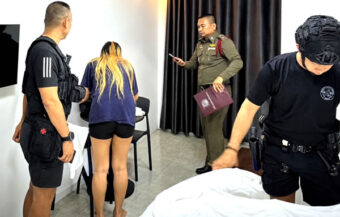
The final witness said all relevant information had already been provided to the DSI. During the seminar, the witness displayed twenty 1,000-baht banknotes. According to the testimony, those notes formed part of the recruitment payments. The witness also produced a shirt allegedly distributed during the operation.
More seriously, the witness claimed a relative of a cabinet minister organised the entire recruitment process. Before approaching investigators, the witness also alleged receiving an offer worth millions of baht. According to the testimony, someone connected to a prominent political party attempted to persuade the witness to remain silent. The witness further stated that participants had later been instructed to stop revealing additional information.
Separately, People’s Party list MP Parit Wacharasindhu outlined why the opposition considers the investigation constitutionally significant. Parit chairs the Opposition Coalition Coordination Committee. He argued that the expression “Senate collusion” understated the seriousness of the allegations. Instead, he preferred describing the case as “cheating the Senate.”
Parit warns Senate case reaches beyond collusion to the future of Thailand’s constitutional system
According to Parit, the evidence extends beyond organised voting. He alleged the process also involved financial inducements, benefits, hired candidates and paid participants. Consequently, he argued the investigation concerns the acquisition of state power through unlawful methods rather than electoral coordination alone.
Parit identified two broader constitutional issues. First, senators exercise significant powers over legislation, constitutional amendments and appointments to independent organisations. Therefore, he argued that senators elected through unlawful means could influence institutions responsible for supervising the state itself.
Second, Parit argued that the 2017 Constitution created structural weaknesses within the Senate selection system. According to him, those weaknesses made organised coordination possible. He warned that any political group controlling Senate appointments could also influence independent organisations responsible for investigating politicians. In turn, he argued, that could weaken constitutional oversight mechanisms.
Parit also expressed concern over the progress of both investigations. Election Commission committee number 26 recommended proceedings against 229 individuals. However, committee number 36 rejected those findings entirely. He described that contradiction as difficult to reconcile and said it had intensified public concern ahead of the Commission’s final decision.
He also referred to the seven Election Commissioners expected to decide the matter. According to Parit, four received Senate approval before assuming office. He noted that many current senators feature within the wider investigation. Nevertheless, he did not suggest that fact determined how the commissioners would vote.
Parit questions pace of DSI inquiry and urges investigators to pursue the full political network
In parallel, Parit questioned the pace of the DSI investigation. He noted that the agency accepted allegations involving criminal conspiracy and money laundering. However, he said earlier investigative plans envisaged indictments against only eight people after a lengthy inquiry. He suggested the investigation had slowed while awaiting the Election Commission’s decision.
Parit also referred to changes involving the Permanent Secretary of the Ministry of Justice. He said those changes had generated further public concern about the direction of the investigation. However, he presented no evidence linking the personnel decision to the Senate case.
According to Parit, Sunday’s seminar sought to place some of the available evidence before the public. Witnesses had already supplied much of that material to investigators. Even so, he argued the Election Commission and the DSI almost certainly possess considerably more evidence than opposition politicians.
He pointed to hotel records, CCTV footage and witness statements as examples of material available to investigators. Those records, he said, could easily be checked against candidate movements and meeting dates. If publicly available information already appeared substantial, he argued, official evidence should be stronger still.
“What he’s concerned about is that once the evidence is submitted, the investigating agencies might not work fairly and might cut short the process,” Parit said. “Presenting only the parts that can be disclosed to the public would allow society to collectively monitor the work of the investigating agencies.”
Opposition says investigators must follow evidence to the centre of the alleged Senate election network
He also argued that any eventual legal proceedings should not focus only on individual senators. Instead, investigators should examine the wider political networks and parties allegedly connected to the operation.
“What we don’t want to see is the sacrifice of a few individuals to protect those closer to the centre of power,” he said.
Meanwhile, the ruling Bhumjaithai Party has consistently rejected all allegations. Senior party figures have repeatedly denied organising Senate candidates or maintaining links with senators elected during the 2024 process. The party has also dismissed claims involving its MPs and cabinet ministers.
New evidence of a vast conspiracy behind the 2024 Senate election as former officials file police report
Former ministers cleared over roles in Department of Special Investigation of 2024 Senate election poll
No court has ruled that collusion occurred during the Senate election. Likewise, the Election Commission has yet to issue its final decision. The DSI investigation also remains ongoing.
Nevertheless, the coming weeks are expected to prove decisive.
Before September, the Election Commission must choose between two opposing investigative findings produced within its own organisation. One recommends proceedings against 229 individuals. The other recommends clearing every one of them.
That decision will determine whether one of Thailand’s most significant political investigations proceeds to the Constitutional Court or ends before reaching judicial examination.
Whatever the outcome, the Commission’s ruling will shape the next phase of the Senate investigation. It will also determine whether allegations involving politicians, ministers, senators and wider political networks receive full judicial scrutiny in one of the country’s most consequential constitutional cases in recent years.
Join the Thai News forum, follow Thai Examiner on Facebook here
Receive all our stories as they come out on Telegram here
Follow Thai Examiner here
Further reading:
Opposition and People’s Party leader attacks ‘blue regime’ on the 12th anniversary of the 2014 coup
Thammasat University legal scholar and 1992 protest leader warns another coup cannot be ruled out