Cash floods Thailand as election nears. Bank of Thailand probes unusual withdrawals, NHRC flags ฿160bn surge, politicians warn of vote buying as regulators tighten scrutiny as the February 8 general election approaches amid rising cash for votes fears.
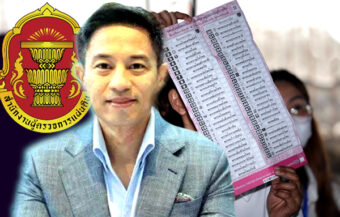
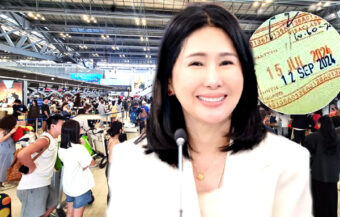
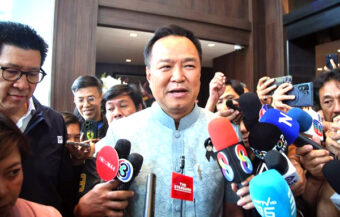
People’s Party party-list candidate Chaiwat Sathavorawichit warned on Sunday that up to ฿160 billion in cash may be circulating to target votes in the February 8 General Election. His warning echoed concerns raised by the National Human Rights Commission (NHRC) over developments unfolding nationwide. Meanwhile, on Tuesday, Bank of Thailand Governor Vitai Ratanakorn announced tighter surveillance of large cash withdrawals, particularly of ฿100 and ฿500 banknotes. However, he cautioned that factors other than election activity may explain the withdrawal of ฿160 billion from the financial system over the past four months, as cited by the opposition.
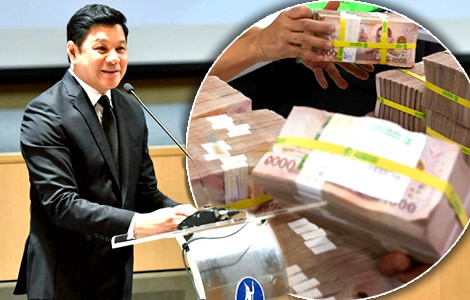
With the February 8 General Election campaign in high gear, attention has shifted to cash movements nationwide. In recent months, large volumes of cash have been withdrawn from Thailand’s financial system. As a result, scrutiny has intensified during the active campaign period. Notably, the withdrawals involve physical banknotes rather than electronic transfers.
In particular, the focus has centred on commonly used denominations. These include ฿100, ฿500, and ฿1,000 notes. Importantly, these notes circulate widely in daily transactions. At the same time, they are easily exchanged in large sums.
On Tuesday, the Bank of Thailand announced actions related to these withdrawals. Specifically, the central bank addressed movements involving these denominations. Moreover, it confirmed ongoing investigations into sharp fluctuations. These occurred mainly in September and December 2025.
Bank of Thailand flags unusual cash withdrawal patterns but urges caution while reviewing data
Accordingly, the bank stated that it is monitoring large swings in cash withdrawals. These swings were described as unusually high. However, the bank did not initially release precise figures. Instead, it emphasised caution in interpretation.
Meanwhile, the Bank of Thailand acknowledged that multiple factors may explain the movements. Therefore, it warned against linking withdrawals to a single cause. In its explanation, the bank pointed to systemic disruptions and seasonal spending patterns.
In September 2025, the banking system experienced a significant disruption. This followed the enforcement of strict anti–money laundering measures. Importantly, these measures targeted scam networks and mule accounts. As part of enforcement, banks closed numerous accounts nationwide.
Consequently, many account holders were affected. In some cases, customers lost access to funds. In other cases, online transactions were restricted. As a result, public confidence in digital payments weakened temporarily.
September banking disruption and account freezes pushed the public towards cash
Therefore, many individuals turned to cash. Cash became a preferred option during the disruption. Accordingly, withdrawals surged during this period. The Bank of Thailand has cited this shift as a central explanation.
On January 11, 2026, the Bank of Thailand clarified the September surge. It stated that concerns over expanded account-freezing measures drove the behaviour. People withdrew cash to store and spend offline. Additionally, many shops began accepting cash more frequently.
According to the bank, this situation was short-lived. By October 2025, payment behaviour returned to normal. Online transactions resumed typical levels. Cash reliance declined accordingly.
Nevertheless, December 2025 saw another increase in cash withdrawals. However, the bank linked this to seasonal demand. Typically, spending rises before Christmas. Similarly, New Year celebrations increase cash usage.
Central bank links December cash surge to seasonal spending and warns against misreading data
As a result, December often records higher cash circulation. The Bank of Thailand noted this pattern is consistent year to year. Therefore, it cautioned against treating December data as irregular.
Despite these explanations, oversight has increased. On January 13, 2026, the Bank of Thailand instructed commercial banks and state-owned financial institutions to cooperate. Specifically, banks were asked to monitor unusual cash exchange transactions during the election period.
At the same time, Governor Vitai Ratanakorn provided further details. He stated that banks were asked to flag suspicious cash exchanges. These include transactions involving ฿100 and ฿500 notes. Thresholds include exchanges exceeding 1, 2, or 3 million baht.
Importantly, the governor said the central bank cannot prohibit cash exchanges. However, it has requested cooperation in the investigation. Banks are being asked to report more transactions than before.
Bank of Thailand expands monitoring rules and asks banks to flag multi-million-baht cash exchange
Previously, such reports were sent mainly to the Anti-Money Laundering Office. Now, reporting requirements have expanded. According to the governor, the goal is to track money trails more closely.
Meanwhile, the Bank of Thailand is amending relevant regulations. These changes aim to allow deeper investigation of cash exchanges. However, officials said the review may take two to three months. As a result, amendments may not take effect before the election.
Nevertheless, the bank confirmed cooperation with AMLO. If suspicious transactions are detected, tracing will begin immediately. This process applies regardless of election timing.
The governor also addressed the September withdrawal data directly. He confirmed that September 2025 withdrawals were unusually high. He added that October typically sees an increase as well. However, at that time, the election date was not yet known.
Governor says high cash usage is common in elections. Unusual transactions will not be ignored
According to the governor, high cash usage is common during elections. Therefore, he said the situation would not be ignored. Recent discussions with banks reinforced cooperation requests. The focus remains on exchanges between ฿1 and ฿5 million.
In parallel, the Bank of Thailand expanded its oversight role. It announced broader inspections targeting so-called “grey money.” These efforts form part of addressing structural problems in the economy.
Speaking after a seminar on January 13, Governor Vitai Ratanakorn confirmed this expansion. He said banks were instructed to report cash exchanges. Particular attention remains on ฿100 and ฿500 notes.
He stated that such financial behaviour could be considered suspicious. He added that it may be linked to illicit activity. This includes vote-buying during election periods. These remarks marked a firmer public stance.
Human rights body warns of massive pre-election cash withdrawals raising concerns over electoral integrity
Meanwhile, the National Human Rights Commission (NHRC) also issued warnings. The NHRC stated that ฿160 billion was withdrawn in the four months before the election. According to the commission, this raised concerns about election integrity.
At the same time, political figures raised alarms publicly. On January 11, 2026, Chaiwat Sathavorawichit posted on Facebook. He is a party-list MP candidate for the People’s Party.
In his post, Chaiwat asked a direct question. He asked where ฿160 billion in cash had gone. He specified the four months before the election. The period matched July through November 2025.
He added that a senior banking figure had spoken to him quietly. According to Chaiwat, the source reported unusually large withdrawals. These came from various banks. The amounts reached hundreds of millions of baht.
Opposition candidate cites banknote data and political timeline while questioning the use of cash
Following the post, Chaiwat said he reviewed Bank of Thailand banknote statistics. He stated that the figures were shocking. From July to November 2025, over ฿160.8 billion was withdrawn.
In September 2025 alone, withdrawals reached ฿127 billion. According to Chaiwat, this was the highest monthly figure on record. He argued that the pattern did not match seasonal norms.
Chaiwat also linked the period to political events. For instance, he noted in July 2025, the Constitutional Court ordered the prime minister to cease duties. In August, the court ordered her removal from office. Consequently, in September, Prime Minister Anutin Charnvirakul was elected as Prime Minister. This was in a deal with the People’s Party that shocked observers and still raises questions. However, the deal fell apart in December, sparking a snap General Election
The People’s Party figure further questioned the Anti-Money Laundering Office (AMLO) and other agencies publicly. In particular, he asked what the cash was withdrawn for. He described the scale as dangerous. His comments circulated widely online.
Separately, the Election Commission of Thailand has taken visible action. It announced investigations into five video clips. These clips allegedly violate election laws.
Election commission probes campaign conduct and reviews video evidence of broader election violations
At the same time, the commission addressed campaign practices. It gave the Bhumjaithai Party approval to use outside campaign assistants. These individuals may be promoted as cabinet figures, under certain conditions.
On Tuesday, January 13, 2026, the Election Commission responded to four legal inquiries. These were submitted by the Bhumjaithai Party. The inquiries concerned campaign practices and legal compliance.
First, the commission ruled on personnel policy announcements. It stated that presenting potential cabinet figures is permitted. This is allowed under Section 74 of the election law. However, media use must follow regulations.
Second, the commission addressed non-member campaign assistants. It ruled that they may participate in rallies. This is permitted if details are properly reported. Compensation and duties must be disclosed.
Third, the commission ruled on campaign posters. It stated that non-party assistants cannot appear on posters. This applies unless they meet legal definitions. These include party leader or official candidate status.
Election watchdog reviews electronic campaigning and flags dozens of additional cases
Fourth, the commission ruled on debates and public programmes. Campaign assistants may participate if regulations are followed. However, participation must not present national governance policy improperly.
Later that day, Secretary-General Saweang Boonmee addressed the media. He spoke after attending a meeting of the E-War Room. The meeting included police and digital ministry representatives.
During the meeting, five video and audio clips were reviewed. These clips are related to electronic election campaigning. According to Saweang, violations would lead to correction or removal orders.
If the clips violate election or party laws, further action will follow. In such cases, matters will be forwarded for investigation. Procedures will follow election regulations.
Saweang also revealed additional cases. A total of 34 other issues are pending review. These include eight cases involving abuse of the monarchy. Another 26 involve inflammatory or aggressive language.
Constituency-level reports echo financial concerns as parties warn of large-scale vote buying in provinces
According to Saweang, these matters remain under review. Each case will be assessed individually. Actions will follow established legal procedures.
As election day approaches, oversight has intensified across institutions. Cash movements remain under investigation. Campaign practices are under scrutiny. Digital content is being reviewed.
So far, confirmed facts remain clear. Cash withdrawals rose sharply in specific months. Oversight agencies have responded. Investigations are ongoing. The election continues toward February 8.
Pheu Thai candidate calls on Election Commission to act. ฿1 billion for vote buying in Ubon Ratchathani
Questions asked about Pheu Thai’s failure to field candidates in Nakhon Nayok where it won in 2023
Former minister and party leader Sudarat warns of ฿20 billion plot by ‘Scambodia’ to take political power
Nonetheless, the reports from the financial authorities chime with reports on the ground at constituency level. Last week, a Pheu Thai Party candidate in Ubon Ratchathani estimated that ฿1 billion is being targeted to buy votes in key districts within the province. Watcharapol Chueakhong urged the Election Commission to act decisively. He warned that identity cards were being collected by middlemen, a tell-tale sign of vote-buying at play.
However, on a more positive note, Democrat Party leader Abhisit Vejjajiva, who has returned to politics after retiring following the 2019 General Election, has recently told reporters that he sees a stronger and more determined spirit among the public.
Certainly, while this may be so, the targeting of large funding at key localities by local power groups is difficult to prevent. It will undoubtedly skew the General Election result and final party tallies of seats won.
Join the Thai News forum, follow Thai Examiner on Facebook here
Receive all our stories as they come out on Telegram here
Follow Thai Examiner here
Further reading:
High powered, secretive meeting chaired by PM agrees robust action against Cambodian networks
Thailand and Cambodia face danger from ‘Dragon Head’ the Chinese mafia leader behind the scams
Cyber police and Money Laundering agency seek UK and US co-operation targeting Cambodian networks
United States, South Korea and United Kingdom act against Cambodian scam industry with Thai tie-ins
Ben Smith affair & allegations of links to Cambodian scam centres continues to rage in parliament