Thai finance official warns of simultaneous “economic waves” as output falls 0.36% in April, war-driven costs rise, and Thailand’s competitiveness weakens, while rising high-tech foreign investment signals a shifting economic direction amid mounting headwinds.
A senior Thai finance official has warned the economy is facing simultaneous “economic waves” as falling industrial output, surging war-driven costs, and shifting high-tech investment converge. Speaking in Bangkok, Assistant Minister Santithar Sathienthai made the comments as Thailand reported a 0.36% drop in April manufacturing output. He linked the decline to Middle East disruption, which has raised factory costs and weakened competitiveness. However, he also pointed to rising foreign investment in advanced industries as a key signal for Thailand’s policy direction. The mission, he declared, was higher productivity.

Top aide to Minister of Finance Ekniti Nitithanprapas and Assistant Minister of Finance Santithar Sathienthai has warned that Thailand is facing multiple economic waves simultaneously.
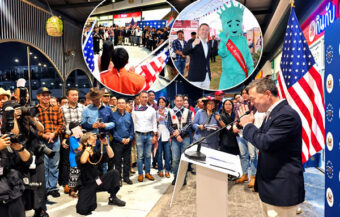
The statement was delivered in Bangkok on Thursday during a seminar organised by Prachachat Business. The event was hosted by Thailand’s Matichon Group, Prachachat’s parent firm and publisher.
Mr Santithar spoke as a senior economic official at the seminar. He said the economy is dealing with several overlapping pressures at the same time. Moreover, he described these pressures as simultaneous economic waves. However, he did not separate them into distinct categories. Instead, he grouped them under a broad economic challenge for the government.
Productivity push and inward investment drive amid Thailand’s simultaneous economic wave pressures
Therefore, he called for sustained efforts to increase national productivity. He said productivity improvement must apply across the economy. Moreover, he linked productivity directly to overall economic performance. However, he did not outline specific implementation measures except the need for stronger inward investment.
Certainly, he referred to recent investment trends into Thailand. He said inward investment has increased in high-tech industries. Moreover, he added that advanced technology sectors are also expanding. He described this as a key signal for government policy direction. However, he did not announce new policy actions.
Furthermore, he said these investment flows reflect structural changes in the economy. He did not name individual investors or countries. Instead, he focused on sectoral direction. Significantly, he emphasised the importance of high-technology investment.
Manufacturing output decline and Middle East war cost pressures weaken Thailand’s competitiveness
Meanwhile, fresh data from the Ministry of Industry covered manufacturing output for April. The figures showed a 0.36% fall in the manufacturing output index. Moreover, the decline was slightly higher than expected. However, no detailed breakdown by industry was provided.
In addition, the data reflected monthly industrial performance conditions. It showed a contraction in manufacturing output. Moreover, it represented the latest official reading for April. However, no revision to the figure was mentioned.
Furthermore, Mr Santithar linked the output decline to external pressures. He cited the Middle East war as a contributing factor. Moreover, he said it has increased factory costs for employers. As a result, production costs have risen across operations.
Consequently, he said Thailand has become significantly less competitive. However, he did not provide comparative data against other countries. Instead, he described the impact in general terms. Moreover, he focused on cost pressure transmission through factories.
Investment flows, output data and cost pressures move simultaneously across Thailand
Meanwhile, he repeated that multiple economic forces are acting at the same time. He said investment flows, production output, and cost pressures are all moving simultaneously. Notably, he grouped them under a single economic environment. However, he did not rank their importance.
In addition, inward investment trends continued to rise in high-tech sectors. He said these include advanced manufacturing and technology-driven industries. Moreover, he noted this as a continuing pattern. However, he did not provide figures for investment volumes.
Furthermore, he said these inflows should guide government policy direction. However, he did not announce specific fiscal or regulatory changes. Instead, he focused on broad strategic signals. Moreover, he linked them to long-term economic positioning.
The seminar was organised by Prachachat Business. It operates under the Matichon Group, a respected multimedia publisher. The event took place in Bangkok on Thursday at Siam Paragon in the heart of the capital. It particularly focused on economic conditions and policy outlook.
Economic brief follows his April appointment as Industry Ministry reports weaker than expected output
Mr Santithar addressed the forum in an official capacity. At length, this follows his appointment by Minister of Finance Ekniti Nitithanprapas in April. This came as the Finance Minister established a team of economic advisors and assistants. The purpose is to guide government policy.
He presented an assessment of current economic conditions. Moreover, he combined industrial data with investment trends. However, he did not introduce new government measures.
For instance, manufacturing data remained central to the discussion. The 0.36% decline in output for April has just been released by the Ministry of Industry. Undeniably, it represented slightly weaker-than-expected performance. However, no sector-level details were included.
Geopolitical Middle East war pressure raises factory costs and reduces Thailand’s competitiveness
In the meantime, external geopolitical conditions were also highlighted. Mr Santithar emphasised the Middle East war as a cost driver. It is understood that the disruption to supplies has significantly raised operating costs for factories. As a result, competitiveness has weakened.
Consequently, he said the country is under pressure from higher production costs. However, he did not quantify the cost increase. Instead, he described it as a general upward pressure. Moreover, he linked it to reduced competitiveness.
Thailand progresses 175 billion baht borrowing despite decree review by Constitutional Court
Stronger ties, AI investment and access to Europe for Thai travellers pushed as Anutin lands in France
Finally, he reiterated that Thailand is facing simultaneous economic pressures. He combined output contraction, rising costs, and shifting investment flows in one framework. Moreover, he said these forces are occurring at the same time. However, no policy announcements were made at the seminar.
Join the Thai News forum, follow Thai Examiner on Facebook here
Receive all our stories as they come out on Telegram here
Follow Thai Examiner here
Further reading:
Thailand progresses 175 billion baht borrowing despite decree review by Constitutional Court
60-day visa regime to be ended confirms Minister responding to rising industry security concerns
Tourism boss warns Thailand it is facing a Chinese blacklist if another security controversy erupts