Thailand’s alcohol law backfires, emptying bars and restaurants, confusing tourists and slashing revenue nationwide as hefty fines, unclear enforcement rules, and missing provincial committees cripple tourism, hospitality and small businesses across the country.
The downturn in the hostelry trade, foreign tourism and the wider economy is deepening fast. Nearly three days after the law took effect, there has been no government response to growing outrage. Not only tourism operators but small restaurants and alcohol retailers nationwide are protesting. A law once hailed as a liberalisation to boost the economy has instead backfired after lawmakers inserted hefty ฿10,000 fines and left enforcement to committees and regulations that do not exist. The result is a stark and avoidable failure of governance.

Thailand’s new Alcoholic Beverage Control Act has caused widespread confusion, steep fines, and visible business disruption across the country. The law, which took effect on November 8, 2025, was intended to liberalise alcohol sales. Instead, it has deepened uncertainty for tourism operators, restaurants, and hotels nationwide.
The new Act replaced the 2008 version. However, it failed to remove the 2 p.m. to 5 p.m. drinking ban in most cases. It still distinguishes between tourists and Thai nationals, though the difference is undefined. As a result, both groups face penalties if caught drinking during restricted hours.
Earlier this year, some People’s Party MPs warned of this outcome and called on the government to act.
Law retains old drinking-hour restrictions and leaves enforcement undefined as police await guidance
Under Section 32, violators face fines of up to ฿10,000. Establishments that serve alcohol outside legal hours can also be fined. The restricted times remain unchanged — from midnight to 11 a.m. and from 2 p.m. to 5 p.m. However, the absence of secondary legislation has left enforcement uncertain.
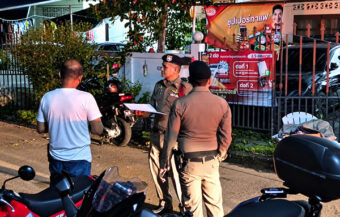
Consequently, local police and licensing officers remain unsure how to proceed. The law assigns regulation to local communities, but no provincial committees exist yet. Officials are waiting for secondary legislation that has not been issued.
In Khon Kaen Province, the impact appeared immediately. On Monday, a restaurant in Ban Ped Subdistrict reported a steep drop in customers. By 2 p.m., tables were empty. Regular customers, including foreigners, stopped drinking and left early.
Owner Ms. Sunita, a long-time operator, said her business had fallen by 100% since the law began. Normally, diners would eat, drink, and linger through the afternoon. Now, she said, they finish quickly, pay and go.
Restaurant owners report 100% losses as customers vanish fearing fines under new alcohol rules
“Customers are afraid,” she told reporters. “They think they can be fined for drinking after 2 p.m.” She said her restaurant’s food sales also fell, as customers no longer stayed to order side dishes or desserts.
The small business boss questioned why hotels could still sell alcohol while restaurants could not. She said the government’s “Half-Half Plus” economic program had lifted her revenue by up to 100% on some days. Now, she said, that gain was gone.
According to her, the new law damages small businesses across Khon Kaen. She said many owners cannot absorb the losses. Customers, she added, do not understand the new rules and feel nervous about enforcement.
Throughout the province, restaurant owners reported similar patterns. By mid-afternoon, venues were half-empty. Locals avoided ordering alcohol. Tourists appeared confused. Staff removed beer glasses from tables before 2 p.m.
Major tourist cities see same slump as foreign advisories warn travellers of risks and unclear penalties
In Bangkok, Phuket, Pattaya, and Chiang Mai, operators described the same situation. Bars closed sections early. Hotels cancelled afternoon promotions. Nightlife districts reported quieter traffic.
Meanwhile, foreign tourists have begun expressing concern. Australia issued an advisory warning travellers about Thailand’s new alcohol law. The embassy cited risks of fines and inconsistent enforcement. The United Kingdom and United States embassies are also monitoring developments.
Tourism operators fear the warnings could hurt high-season arrivals. The November-to-March period normally generates up to 50% of annual revenue. Yet this year, activity remains subdued.
Thailand has recorded a 7.2% drop in arrivals so far in 2025. The new law adds fresh pressure to what came as a shock slump in the foreign tourism industry. In effect, the kingdom’s legislators have delivered a body blow to the foreign tourism and indeed the wider domestic economy. Tourists now hesitate to order drinks, particularly in the afternoon or after midnight.
Parliament faces backlash after alcohol law backfires with unclear enforcement and economic fallout
It is a catastrophic outcome for a measure which was hailed earlier in the year as a step towards the liberalisation of alcohol as a boost to the economy. Parliament simply got it hopelessly wrong.
The Pheu Thai Party has called for urgent government action. Former party-list MP Chanin Rungthanakiat said the legislation lacks operational clarity. He said provincial committees must be created immediately to manage enforcement.
He proposed that each province set its own alcohol sales hours, licensing rules, and screening measures. Tourist-heavy areas such as Phuket could extend sales. Meanwhile, provinces with religious sensitivities could maintain shorter hours.
Mr. Chanin said these committees should include local officials, private-sector representatives, and social groups. He added that decentralisation is essential for smooth enforcement.
He also noted that the new law allows community producers to advertise their products under strict conditions. Educational promotion is now permitted. However, celebrity endorsements, event sponsorships, and indirect advertising remain banned. Businesses, he said, require secondary legislation to understand these boundaries.
Khao San Road bars and restaurants face sharp losses amid confusion over partial consumption penalties
The Khao San Road Business Association reported widespread confusion among its members. President Sanga Ruangwattanakul said restaurant and bar owners do not know how to interpret the new rules.
He said the biggest concern is the definition of partial consumption. If a tourist leaves half a bottle unfinished after 2 p.m., both the establishment and the customer may be fined.
“Operators are worried,” he said. “They don’t want to risk penalties. But they also cannot turn away paying customers.”
Khao San Road, he noted, relies heavily on European visitors. However, most of them are now avoiding alcohol purchases in the afternoon. This, he said, has reduced revenue significantly.
The Restaurant Business Association also raised the alarm. Its president, Sorathep Rojpojchanarat, said the fines apply to both drinkers and venues. He said restaurants are losing income during what should be the most profitable period of the year.
Peak tourism months hit by alcohol law confusion despite government efforts and past economic reforms
He said typical high-season months — November through January — generate up to 30% higher revenue. However, this year’s mid-November sales are far below normal.
Despite government stimulus programs such as “Half-Half Plus” and “Travel Good, Get a Rebate,” overall hospitality revenue remains weak. Operators say the alcohol law has offset any gains from those schemes.
The 2025 Alcoholic Beverage Control Act was the first major revision since 1992. It repealed the Revolutionary Council Announcement No. 253, which originally banned alcohol sales between 2 p.m. and 5 p.m. Yet, due to enforcement gaps, the same restrictions persist.
The Act prohibits alcohol advertising that exaggerates benefits or encourages consumption. It allows educational material but bans celebrity promotion, indirect marketing, and event sponsorship.
Section 32/1 permits educational contentwhile Section 32/2 restricts celebrity promotion. After that, Section 32/3 bans indirect promotion. Meanwhile, Section 32/4 forbids sponsorship. Finally, Section 32/5 limits the publication of promotional content.
Operators call for urgent clarification on advertising rules as government delays fuels deeper uncertainty
Industry operators say they need immediate guidance to comply with these sections. Without it, they risk unintentional violations and financial penalties.
Meanwhile, no provincial committees have been appointed. No secondary legislation has been issued. As a result, enforcement remains unclear across all regions.
Local officials continue to apply the old 2 p.m. to 5 p.m. rule by default. The law’s promised liberalisation has not materialised.
The Pheu Thai Party has submitted letters to Prime Minister Anutin Charnvirakul requesting action. The letters urge the formation of committees, the release of clear enforcement guidelines, and immediate coordination with provincial authorities.
Business associations, including the Thai Alcoholic Beverage Business Association, the Hotel Association, and nightlife operators, are joining the appeal. They are seeking emergency meetings with officials to clarify sales hours and penalty enforcement.
Foreign embassies issue alerts as tourists avoid alcohol and Thailand’s hospitality faces mounting loss
Embassies are closely monitoring developments. Officials say more countries could issue warnings if confusion continues. That could further discourage visitors from high-spending markets such as Europe and Australia.
Foreign tourists now report uncertainty about where and when they can drink. Some avoid alcohol altogether to prevent possible fines. Others say they prefer to drink privately inside hotels.
In Bangkok, bars have shortened operating hours. At the same time, in Phuket, restaurants now warn customers to stop drinking before 2 p.m. In Chiang Mai, hotel lounges have suspended daytime service.
Tourism operators say the situation has already damaged confidence. They warn that high-season spending could fall sharply if clarity does not come soon.
The 2025 law was expected to support small producers and tourism businesses. Instead, delays in enforcement have left them unsure of their obligations.
Mr. Chanin said decentralisation remains the only practical solution. However, it requires rapid action. Provincial committees must be established to define hours, manage sales, and issue clear instructions to law enforcement.
Industry pleads for fast decentralisation as lack of secondary laws weakens confidence
He said flexible enforcement in tourist-heavy provinces could sustain economic activity while respecting local norms elsewhere. Yet the continued absence of secondary legislation makes this impossible.
Across the industry, operators are demanding clarity. They say that without precise rules, they cannot plan operations or prevent penalties.
Tourism officials privately admit that uncertainty has disrupted business confidence. Hoteliers, bar owners, and restaurant managers are waiting for the government to act.
Alcohol law shoots foreign tourism in foot for High Season with stiff fines for visitors drinking up at watering holes
For now, Thailand’s alcohol law remains in limbo. Restaurants are emptying early. Tourists are drinking less. Embassies are watching closely.
A law meant to modernise alcohol control has, in practice, reimposed the same restrictions it was meant to remove.
Until secondary regulations are issued and provincial committees formed, Thailand’s hospitality industry will continue to operate under confusion, caution, and declining revenue.
Join the Thai News forum, follow Thai Examiner on Facebook here
Receive all our stories as they come out on Telegram here
Follow Thai Examiner here
Further reading:
Closure of Phuket bars and alcohol restrictions turn off prospective foreign tourists says survey
Blow for travellers: strict rules, no bars and entertainment venues allowed to open in Phuket