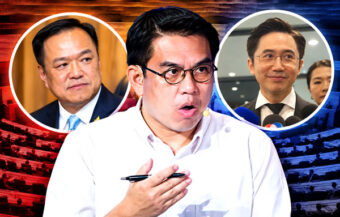
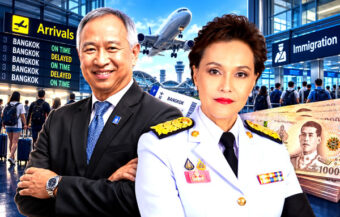
Anutin govt faces early pressure as new poll shows PM ranked 5th in cabinet approval. Technocrats Suphajee Suthumpun and Yotsanan Wongsawat lead ratings, highlighting weak confidence in politicians and a strong shift toward competence over politics.
A significant public opinion poll published at the end of last week suggests Prime Minister Anutin Charnvirakul faces difficulty asserting authority and maintaining his public profile. The Prime Minister was ranked fifth for competence shortly after his new government was installed just over a week ago. Questions have also been raised about the former government’s response to the US–Iran war, which flared up on February 28th. Both governments are led by Mr. Anutin Charnvirakul and share key figures in top ministries. The poll points to limited public confidence in political office holders, in contrast to technocratic competence.
Within days of taking office, the new government is already facing early political pressure. Moreover, internal tensions are emerging beneath the surface of cabinet operations. Public confidence in Prime Minister Anutin Charnvirakul has weakened since the February 8 general election.
At the same time, the administration was only sworn in just over a week ago. Consequently, attention has shifted rapidly toward early performance indicators.
A national opinion survey now provides the clearest available snapshot of sentiment. The poll was conducted by the King Prajadhipok’s Institute. It surveyed 2,000 respondents nationwide. Furthermore, data collection took place between April 8 and April 11. As a result, the findings represent an early-stage assessment of the cabinet.
Early poll shows cabinet rankings shifting as Anutin trails technocratic ministers in public approval ratings
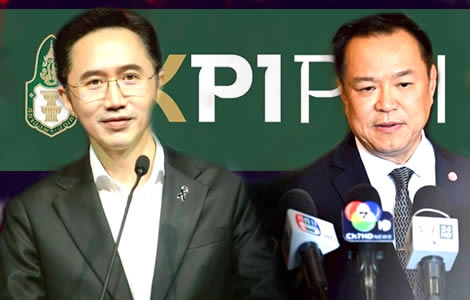
In the performance ranking, Anutin Charnvirakul placed fifth overall. He recorded 8 per cent support. Moreover, this positioned him behind several ministers in his own cabinet. In contrast, Deputy Prime Minister and Minister of Higher Education, Science, Research and Innovation Yotsanan Wongsawat ranked second with 11.5 per cent support. Consequently, he moved ahead of the prime minister in public approval.
Meanwhile, Commerce Minister Suphajee Suthumpun ranked first with 14.4 per cent support. She leads all cabinet members in the survey. Additionally, she was appointed by Anutin Charnvirakul during the formation of his earlier government. Her background is in business rather than party politics. Consequently, her profile differs significantly from traditional political figures.
Deputy Prime Minister and Foreign Affairs Minister Sihasak Phuangketkeow ranked third with 9.5 per cent support. Moreover, this placed him ahead of several senior political figures. At the same time, the spread between top-ranking ministers remains relatively narrow. As a result, early cabinet standings remain highly competitive.
Majority of respondents show uncertainty as outsiders outperform traditional political figures in the poll
The survey also shows that 24.2 per cent of respondents expressed no preferred minister. In addition, 19.5 per cent said they were undecided on performance expectations. Consequently, a large portion of the sample remains uncommitted. Moreover, this indicates that public judgment is still forming.
More significantly, 50.8 per cent of respondents stated that no minister currently offers clear hope. Furthermore, this figure represents the largest single response category. As a result, overall confidence in the cabinet remains limited. At the same time, this reflects a cautious public stance toward the new administration.
Preference patterns also show clear structural trends. Specifically, 37.2 per cent of respondents favoured ministers described as “outsiders.” These individuals typically have experience in both public administration and private industry. In contrast, only 6.8 per cent supported first-time ministers. Additionally, 3.2 per cent supported former ministers. Meanwhile, just 2.0 percent favored veteran members of parliament.
Technocratic preference grows as ministers are judged more on competence than political background
Consequently, the data indicates a strong preference for professional backgrounds. Issara Sereewatthanawut, secretary-general of the King Prajadhipok’s Institute, noted this trend. He stated that respondents prioritise professionalism over political experience. Moreover, he emphasised that administrative competence now carries greater weight. As a result, traditional political pathways appear less influential.
Performance expectation ratings reinforce the same pattern. Suphajee Suthumpun received 13.5 per cent support in this category. Meanwhile, Anutin Charnvirakul received 11.5 per cent. Consequently, both remain among the most closely watched figures in the cabinet. At the same time, expectations remain closely aligned with performance rankings.
The position of Yotsanan Wongsawat further reflects this shift. He ranks second in performance and holds strong approval ratings. Moreover, his profile is associated with academic and administrative expertise. Consequently, he is viewed as a competence-driven figure rather than a purely political one.
In contrast, Anutin Charnvirakul maintains formal leadership of the government. However, his ranking places him below several cabinet members. Moreover, this gap highlights a distinction between authority and approval. As a result, a leadership position does not automatically translate into public support.
Fragmented public opinion keeps cabinet rankings unstable, with narrow gaps across top ministers
At the same time, the survey shows limited consolidation of opinion across the electorate. No single group of ministers dominates all categories. Furthermore, rankings remain closely clustered among leading figures. Consequently, small shifts in sentiment could significantly alter positions.
Additionally, undecided responses remain a substantial component of the dataset. Combined non-preference and undecided categories account for a large share. As a result, public opinion remains unstable and fluid. Moreover, this suggests that evaluation is still in an early phase.
The preference for technocratic figures remains consistent across responses. Ministers with private sector or administrative experience rank higher overall. In contrast, traditional political categories receive lower support. Consequently, the survey reflects a shift toward performance-based evaluation.
External pressures and tight ranking margins reinforce uncertainty across cabinet performance measures
Issara Sereewatthanawut further stated that cabinet members must demonstrate tangible results. Moreover, he noted that public confidence depends on delivery rather than reputation. As a result, performance has become the central criterion in public assessment. At the same time, expectations remain high across multiple ministerial portfolios.
A key factor in the Thai poll may be the US–Iran war, which erupted on February 28th. The war has had a severe impact on the Thai economy. With confidence plummeting, the country has seen a rise in the cost of living and factory closures.
At the same time, many of the ministers in that government have now formed part of the newly formed government led by Prime Minister Anutin Charnvirakul. Confidence in the Prime Minister has suffered. However, the continued confidence in Commerce Minister Suphajee Suthumpun is notable.
Ranking margins, it must be said, among top ministers remain relatively close. Ms. Suphajee leads with 14.4 per cent support. Meanwhile, Yotsanan Wongsawat follows with 11.5 per cent. Additionally, Anutin Charnvirakul recorded 8 per cent. Sihasak Phuangketkeow holds 9.5 per cent. Consequently, the spread between top positions remains narrow.
Furthermore, this narrow distribution suggests ongoing competition within the cabinet. At the same time, small shifts in public perception could alter rankings. As a result, early standings remain unstable. Moreover, no minister has established a dominant lead across all indicators.
Public shifts toward competence as cabinet approval split widens across political and technocratic figures
The broader pattern highlights a consistent evaluation shift. Respondents increasingly appear to prioritise professional competence. Additionally, administrative experience is weighted above political seniority. Consequently, ministers with non-political backgrounds perform strongly in the public’s assessment.
Despite these trends, overall confidence remains limited. A majority of respondents do not identify any minister offering clear hope. Moreover, undecided responses continue to represent a significant portion of the sample. As a result, public sentiment remains fragmented and cautious.
Anutin’s second cabinet takes office amid Premier’s warning about the growing energy crisis over Iran
In summary, early cabinet performance data shows a lack of faith in the Thai political environment. Anutin Charnvirakul holds central authority but ranks behind several ministers in approval. The top two are seen as technocrats with less of a political background. For instance, Suphajee Suthumpun, the Minister of Commerce, drafted in from the business world, leads in public support.
Yotsanan Wongsawat also ranks ahead of the prime minister. Notably, he is a former academic. Consequently, it appears the Thai public wants to see competence in power as opposed to public representatives.
Join the Thai News forum, follow Thai Examiner on Facebook here
Receive all our stories as they come out on Telegram here
Follow Thai Examiner here
Further reading:
Oil and energy crisis deepens in Thailand as Prime Minister Anutin shows off new EV car to reporters
Anxiety about oil supplies and prices as economic growth in 2026 now dependent on the US Iran War
US Ambassador Seán O’ Neill briefed Prime Minister Anutin Charnvirakul at Government House on War
Visa waivers, discounted hotel stays and 2,000 baht a person per day for stranded tourists announced