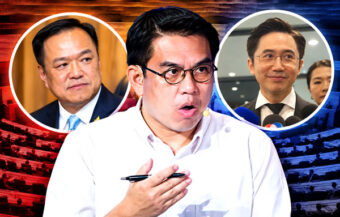
Coalition cracks burst into the open as Bhumjaithai torpedoes Pheu Thai’s constitution rewrite just hours before Parliament. The shock move stalls an 189-MP bid, fuels questions over Thaksin’s future influence and exposes a nascent struggle for power at the top.
A constitutional amendment backed by 189 MPs from seven parties has become the latest test of power inside Thailand’s ruling coalition after the dominant Bhumjaithai Party abruptly withdrew support on the eve of its parliamentary submission. The move stalled a flagship Pheu Thai initiative, exposed competing centres of influence within government and intensified scrutiny of both the coalition’s internal balance and the future role of newly pardoned former prime minister Thaksin Shinawatra.
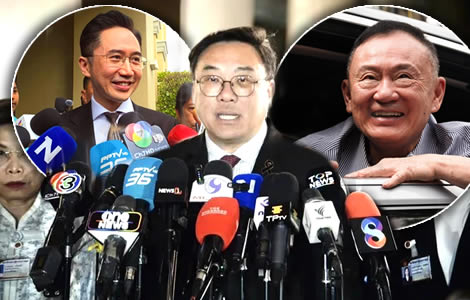
Thailand’s governing coalition has entered a period of visible strain after the Bhumjaithai Party abruptly withdrew support for a constitutional amendment proposal sponsored by its coalition partner, Pheu Thai.
The move came only a day before the draft was scheduled to be submitted to Parliament. As a result, a proposal that appeared to have gathered substantial backing was suddenly thrown into doubt.
The dispute has drawn attention far beyond the constitutional issue itself. Instead, it has focused attention on the balance of power within a coalition shaped by dramatic political changes over the past year.
Coalition strains expose shifting power dynamics between Bhumjaithai and Pheu Thai after upheaval
Following the collapse of the Pheu Thai-led administration, Bhumjaithai moved from the political periphery to the centre of power. It subsequently reinforced that position with victory in the February General Election. Consequently, Bhumjaithai now leads the government while Pheu Thai occupies a supporting role within the coalition.
The constitutional amendment proposal had appeared to be progressing smoothly. On June 2, Pheu Thai list MP Chaturon Chaisang publicly thanked 189 MPs from seven political parties who had signed in support of the initiative.
The party intended to submit the proposal to the Speaker of Parliament on June 4. Moreover, the breadth of support suggested the draft had achieved meaningful momentum inside the legislature.
That changed on June 3.
Bhumjaithai announced a resolution instructing party MPs who had signed the proposal to withdraw their names. The decision was communicated by Nan Bunthida Somchai, Deputy Minister of Digital Economy and Society and the party’s spokesperson.
Bhumjaithai cites Constitutional Court concerns as the reason for abandoning the amendment proposal
According to Ms Nan, the party had concluded that elements of the draft could conflict with an existing Constitutional Court ruling. Therefore, Bhumjaithai no longer wished to remain associated with the proposal.
The party’s concerns centre on the process for selecting members of a future Constitutional Drafting Committee. Bhumjaithai argues that the Constitutional Court has already ruled against the direct election of constitution drafters by the public.
However, party leaders maintain that public participation can still be incorporated during earlier stages of the process before Parliament makes final selections. Consequently, Bhumjaithai concluded that portions of Pheu Thai’s proposal may not be consistent with the court’s guidance.
To explain that position, the party turned to Nikorn Chamnong, a veteran politician and legal specialist. Mr Nikorn provided a detailed account of the party’s legal objections and sought to frame the decision as a constitutional rather than political matter.
Legal objections give way to political fallout as coalition disagreement erupts into public view
Yet politics quickly overshadowed legal arguments.
The withdrawal came less than twenty-four hours after Pheu Thai publicly celebrated support for the proposal. Furthermore, it occurred before the draft had even reached the Speaker of Parliament. The timing ensured maximum political impact. Instead of advancing a constitutional initiative, Pheu Thai suddenly found itself responding to questions about its standing inside government.
The episode also highlighted the unusual dynamics of the current coalition. Bhumjaithai and Pheu Thai serve together in the same administration. Ministers from both parties sit around the same Cabinet table. Nevertheless, one coalition partner publicly withdrew support from a proposal strongly identified with the other.
That development inevitably fuelled speculation about tensions beneath the surface of government.
Thai politics has often been characterised by shifting alliances, tactical manoeuvring and unexpected reversals. Against that backdrop, Bhumjaithai’s decision immediately attracted attention. The move was interpreted by some political observers as a demonstration of the party’s dominant position within the coalition. It also underscored the limits of Pheu Thai’s influence despite its continued importance to the government.
Pheu Thai seeks to limit damage as senior ministers downplay coalition tensions and discord
Pheu Thai leaders moved quickly to contain the fallout.
Labour Minister Julapun Amornvivat acknowledged the development but indicated he had not been caught off guard. He told reporters he was already aware of Bhumjaithai’s position before the resolution was announced. His comments suggested communication between the parties had continued even as the dispute unfolded publicly.
The government’s most extensive response came from Deputy Prime Minister Yotsanan Wongsawat. Speaking at Government House on June 4, Mr Yotsanan repeatedly sought to separate the constitutional dispute from broader government affairs. He argued that the issue belonged to Parliament rather than the Cabinet and therefore should not be viewed as a threat to coalition stability.
Mr Yotsanan said he was aware of the circumstances surrounding Bhumjaithai’s decision. However, he stressed that all sides would first need to be heard before conclusions were drawn. He confirmed that Pheu Thai would discuss the matter internally and decide how to proceed. Furthermore, he indicated that party leader Julapun Amornvivat would provide additional clarification following those discussions.
Reporters repeatedly pressed him on the political significance of the withdrawal.
Deputy Prime Minister insists constitutional dispute remains parliamentary and not governmental
Could a coalition partner’s refusal to support a major initiative indicate growing friction within government ranks?
Mr Yotsanan rejected that interpretation.
He argued that constitutional amendments are fundamentally parliamentary matters. Different parties, he said, are entitled to hold different positions. Therefore, disagreement over constitutional issues should not automatically be interpreted as a coalition dispute.
“There will be no problem,” he said.
The deputy prime minister also dismissed suggestions that intervention from Prime Minister Anutin Charnvirakul would be required. Mr Anutin serves not only as prime minister but also as leader of Bhumjaithai. Nevertheless, Mr Yotsanan argued there was no reason to elevate the disagreement into a Cabinet matter.
He repeatedly returned to the distinction between parliamentary affairs and executive government. According to Mr Yotsanan, the constitutional amendment process belongs to the former category. Consequently, he maintained that cooperation within government would continue unaffected.
Questions remain, however, regarding the future of the amendment itself.
Attention turns to the amendment’s future as support levels and parliamentary path look uncertain
Asked whether Pheu Thai still possessed sufficient support to advance the proposal, Mr Yotsanan said the situation remained under assessment. Parliament was continuing to consider the matter, he said. Once greater clarity emerged, Pheu Thai’s leadership would make a formal announcement regarding the next steps.
The constitutional dispute arises during a period of renewed political attention surrounding former prime minister Thaksin Shinawatra.
Mr Thaksin was released from prison on May 11. This week, he received a full Royal Pardon as part of celebrations marking Her Majesty the Queen’s birthday. Consequently, public discussion has again turned to his future role and influence within Thai politics.
Those questions have become more prominent amid perceptions that Pheu Thai has recently regained some political momentum. As a result, party leaders have sought to define the relationship between the former premier and the party’s current leadership.
Mr Julapun addressed the issue directly.
Asked whether party members intended to meet Mr Thaksin following the royal pardon, he said no such discussions were taking place.
“There is no discussion on the matter within the party,” he said.
Julapun rules out future role for Thaksin despite renewed attention after royal pardon granted
He then offered an unambiguous answer regarding the former premier’s future involvement.
“As for whether he will become involved with the party again, the answer is no.”
The Labour Minister said Pheu Thai had moved beyond a period when questions about outside influence dominated discussion of the party. Instead, he argued, the organisation would continue to operate according to principles developed over decades.
Mr Julapun pointed to the party’s political roots in the Thai Rak Thai movement. He said Pheu Thai possessed its own ideology, objectives and direction. Therefore, he insisted, there was no external domination of the party.
The comments represented one of the clearest public statements yet regarding Mr Thaksin’s future relationship with Pheu Thai. They also came at a moment when the party was confronting questions about both its political influence and its position within government.
Coalition partners project unity while a constitutional dispute sharpens focus on political influence
For now, neither coalition partner has suggested that the dispute threatens the administration’s survival. Both parties continue to insist that cooperation remains intact. Yet the events of the past week have offered a reminder of the realities of coalition politics in Thailand.
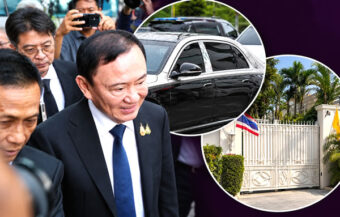
Former Prime Minister Thaksin gains his full freedom after Royal Pardon to celebrate the Queen’s birthday
Abhisit Vejjajiva calls for scrutiny of flagship AI project being pursued by Digital Economy ministry
A constitutional amendment supported by 189 MPs from seven parties appeared on course for parliamentary consideration. Then, within a matter of hours, support from the coalition’s leading party was withdrawn. The episode halted the proposal’s momentum and shifted attention to the relationship between the government’s two principal political forces.
Whether the dispute proves to be a short-lived disagreement or an indication of deeper tensions remains uncertain. What is already clear is that the constitutional amendment debate has become a test of political influence inside Thailand’s governing coalition. As Parliament considers its next steps, scrutiny will remain focused on how Bhumjaithai and Pheu Thai manage a relationship that remains central to the government’s future.
Join the Thai News forum, follow Thai Examiner on Facebook here
Receive all our stories as they come out on Telegram here
Follow Thai Examiner here
Further reading:
Attorney General’s move to appeal Thaksin acquittal on lèse-majesté charge to impact 2026 election