Thaksin Shinawatra’s May 11 parole is confirmed, but a committee-ordered ankle monitor sparks dispute. Despite age and health concerns, authorities insisted this week on tracking and strict probation. His Family objects. While removal is possible, it has not yet been officially approved.
Former Prime Minister Thaksin Shinawatra will walk free on parole on May 11, but a disputed order to wear an electronic monitoring ankle bracelet has triggered sharp questions from his family, lawyers, and officials, putting the final stage of his sentence under intense scrutiny. Despite qualifying for early release after serving most of his term, and despite being over 70 with chronic health conditions, authorities have imposed strict probation controls, including the tracking device, mandatory reporting, and supervision, while leaving open the possibility of review, political activity, and even early release through a royal pardon.
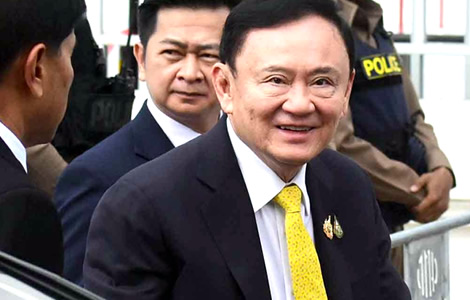
Questions over the requirement for an electronic monitoring ankle bracelet have intensified ahead of former Prime Minister Thaksin Shinawatra’s scheduled parole release on May 11.
However, the condition remains firmly in place following a confirmed decision by a Justice Ministry subcommittee. Therefore, Thaksin must wear the device throughout his probation unless it is formally reviewed and removed. Meanwhile, Thaksin, his family, and his legal team have all questioned the necessity of the measure, citing age and health concerns.
Lawyer Winyat Chatmontree said on April 30 that Thaksin accepted the parole decision. However, he raised specific concerns about the monitoring requirement. In particular, Thaksin is over 70 and suffers from chronic health conditions.
Concerns raised over ankle bracelet as Thaksin accepts parole but questions monitoring condition
Therefore, his legal team argues the bracelet may interfere with ongoing treatment. Thaksin also rejected any suggestion of flight risk. “If I wanted to escape, I wouldn’t have submitted myself to serve the sentence,” he was quoted as saying. At the same time, his legal team pointed to his established residence and past conduct as further evidence.
Meanwhile, the Shinawatra family has echoed those concerns. Paetongtarn Shinawatra visited him at Klong Prem Central Prison on Friday, April 30. She confirmed the family accepted the parole outcome.
However, she noted reservations about the bracelet requirement. “Normally, elderly inmates don’t need EM bracelets, but since the committee decided, we will follow the process,” she said. Nevertheless, she added that Thaksin’s immediate priority after release would be a full medical check-up.
The parole decision was reached on April 29 during a meeting of the Sub-committee for Parole Consideration. The session lasted more than three hours and included representatives from multiple agencies.
Parole panel approves 859 inmates, including Thaksin, under general criteria and special circumstance list
As a result, the panel approved 859 inmates nationwide for general conditional release. Thaksin was included under standard criteria. In addition, he was among 10 individuals approved under special circumstances. Accordingly, the Department of Corrections confirmed his release date as May 11, after serving seven months and 20 days in custody.
Thaksin was incarcerated on September 9, 2025. By early May, he had only 12 days remaining to complete two-thirds of his one-year sentence. Therefore, he qualified for parole under general rules. However, his full sentence is scheduled to conclude on September 9, 2026.
Consequently, he will serve a four-month probation period after release. During this time, the electronic monitoring condition remains in force unless revised.
Officials stated that the monitoring device may be fitted on the first day of release. At that point, probation officers are expected to meet him inside the prison. They will outline reporting obligations and conduct rules.
These conditions include regular reporting and strict compliance with probation terms. Furthermore, Thaksin is required to report to the Bangkok Metropolitan Probation Office on Wanglang Road. This office oversees his registered residence at Baan Chan Song La.
Probation terms set with reporting requirements and supervision linked to registered residence in Bangkok
Reporting frequency will depend on conditions set by probation officers. However, officials indicated it may occur monthly or every two months. Therefore, over the four-month period, he may report up to four times.
Meanwhile, probation officers will supervise his movements and ensure compliance with all conditions. A high-ranking source confirmed that supervision begins immediately upon release.
Justice Ministry sources noted that elderly prisoners over 70 are usually exempt from electronic monitoring devices. This is due to frequent health complications and treatment requirements. Therefore, such devices are rarely imposed in similar cases.
However, Thaksin’s case was subject to internal discussion within the subcommittee. As a result, the exemption was not applied. Officials did not disclose details of those deliberations.
Review option remains open for removal of ankle bracelet based on health and medical treatment needs
Despite the current requirement, a review remains possible. Therefore, Thaksin can request the removal of the bracelet during probation. Such a request must be submitted to the Department of Probation with supporting medical evidence.
If accepted, the department has the authority to remove the device. However, approval depends on the strength of the evidence presented. In past cases, similar requests have been granted due to medical interference or mental health concerns.
For example, devices have been removed when they disrupted treatment or caused acute distress. Additionally, cases involving panic attacks have been considered valid grounds. Each request is reviewed individually. A Justice Ministry source confirmed that health and treatment issues are key factors. However, officials stressed that the current condition remains binding unless formally changed.
Parole requests reviewed case by case with health and panic attacks cited but conditions remain binding
The Department of Corrections issued a formal document confirming the parole decision. It outlined both the reasons for release and the attached conditions. Specifically, it confirmed that Thaksin must wear the electronic monitoring bracelet until the end of his sentence.
Resolutions from the April 29 meeting have been forwarded to Klong Prem Central Prison authorities and probation officers. Consequently, the release process will proceed under those directives.
Meanwhile, questions have also been raised about Thaksin’s risk profile. Sources noted that he has a permanent residence and has shown no signs of attempting to flee. Therefore, his legal team argues the monitoring requirement may be unnecessary. However, officials have not revised the condition. The requirement remains in full effect.
Authorities also addressed potential activities during the probation period. A senior Justice Ministry source stated that parole rules do not prohibit political or advisory roles. Therefore, Thaksin may serve as an advisor or participate in organisational activities.
However, eligibility depends on the rules of individual entities. If an organisation prohibits individuals under probation, that restriction applies independently.
Possible early release through royal pardon remains as Thaksin serves final months under probation conditions
Finally, officials confirmed that Thaksin may be eligible for early release through a royal pardon. Such pardons are typically granted on significant national dates. Examples include June 3, July 28, and August 12, 2026.
Given his remaining four-month sentence, he could qualify. However, authorities stressed that such decisions fall under royal prerogative and cannot be influenced.
Paetongtarn visits her Dad former Premier Thaksin Shinawatra in prison. Says he’s under mental stress
Thaksin serves his prison term as a teacher to inmates at Khlong Prem without further pardon
For now, the parole conditions remain unchanged. Thaksin is scheduled for release on May 11. However, he must comply fully with all requirements set by the parole subcommittee. Therefore, the electronic monitoring ankle bracelet remains central to the terms of his release.
The reasons for the imposition of this condition on an older parolee are not clear. Certainly, it is a fly in the ointment as Thailand’s former prime minister looks forward to his release in the coming days.
Join the Thai News forum, follow Thai Examiner on Facebook here
Receive all our stories as they come out on Telegram here
Follow Thai Examiner here
Further reading:
Attorney General’s move to appeal Thaksin acquittal on lèse-majesté charge to impact 2026 election
Trump brokered peace pact between Thailand and Cambodia suspended after landmine attack this week
Prime Minister Anutin signs accord with Cambodia witnessed by US President Trump in Kuala Lumpur
Trump to oversee ground breaking new deal between Thailand and Cambodia on Saturday to map border