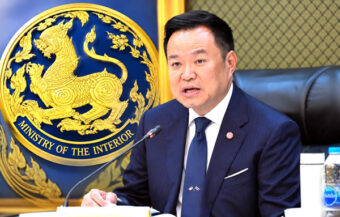
Thailand is scrambling to secure 2026 World Cup rights weeks before kickoff as PM Anutin Charnvirakul vows every match will air free despite a reported ฿1.3bn price tag and fierce rows over funding.
With less than a month before kickoff, Thailand is scrambling to secure broadcast rights for the 2026 FIFA World Cup after Prime Minister Anutin Charnvirakul vowed that every match would be shown free to Thai viewers despite the country still lacking a final agreement, mounting pressure over a reported ฿1.3 billion rights bill, fierce denials over taxpayer funding and urgent negotiations now involving the Public Relations Department and the National Broadcasting and Telecommunications Commission (NBTC) as officials race to avoid a repeat of the damaging controversies that disrupted Thailand’s 2022 World Cup broadcasts.
Prime Minister Anutin Charnvirakul on Tuesday declared that all Thais would be able to watch the 2026 FIFA World Cup free of charge. The statement followed a cabinet meeting at Government House.
Earlier, uncertainty had surrounded Thailand’s access to the tournament. However, Mr Anutin delivered the strongest assurance yet from the government. “It must be free,” the prime minister said after the meeting. Moreover, he confirmed that every match would be available to Thai viewers from June 11 to July 19.
Thailand remains one of the few countries still without confirmed World Cup broadcasting rights. Meanwhile, FIFA has already completed agreements in at least 175 territories worldwide.
Thailand remains among last nations without World Cup rights as pressure mounts before kickoff
Consequently, pressure has intensified on Thai authorities as the opening match approaches. The tournament begins in less than a month. Furthermore, the competition will span 16 cities across the United States, Canada and Mexico.
FIFA has also expanded the event to 48 teams and 104 matches. Mexico and South Africa will contest the opening match in Mexico City on June 11. Meanwhile, New York/New Jersey Stadium will host the final on July 19.
In addition, opening ceremonies are planned in all three host countries. Thai-born K-pop star Lisa is scheduled to appear during the Los Angeles ceremony on June 12.
The scale of the event has further intensified pressure on countries still without broadcasting arrangements. Consequently, Thailand’s unresolved position has drawn increasing scrutiny inside government circles.
Global World Cup rights costs leave Thailand scrambling as officials struggle to secure free access
Before Tuesday’s cabinet session, official messaging appeared uncertain and cautious. On Monday evening, Deputy Digital Economy and Society Minister Nan Bunthida Somchai refused to guarantee free broadcasts.
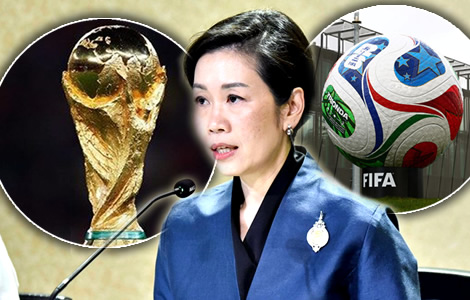
Speaking at Government House, Ms Nan said negotiations remained unresolved because of soaring rights fees. Furthermore, she stressed that the issue was affecting governments worldwide. According to Ms Nan, many countries were struggling with the rising costs demanded for World Cup broadcasting rights.
At the same time, she acknowledged that Thailand still lacked a final arrangement. Therefore, she could not confirm whether Thai audiences would watch matches free of charge. “I couldn’t answer that at this point,” she said.
Moreover, Ms Nan questioned which organisation would ultimately lead negotiations. She said responsibility could fall to either state agencies or private companies. Importantly, she also pointed to the absence of the NBTC “Must Have” rule covering the World Cup. Previously, such regulations forced major sporting events onto free-to-air television. However, without that mechanism, negotiations have become fully commercial and increasingly difficult.
Deputy minister warns soaring World Cup rights costs leave Thailand without guaranteed broadcasts
Ms Nan additionally warned that time was rapidly running out. The tournament begins within weeks. Furthermore, she confirmed that several agencies were still reviewing possible funding arrangements.
Meanwhile, she stated that no private company had formally committed to purchasing the rights independently. Her comments reflected growing uncertainty before Tuesday’s cabinet intervention.
However, the tone shifted sharply after the cabinet meeting concluded. Following the session, the government confirmed that the Public Relations Department and the National Broadcasting and Telecommunications Commission (NBTC) would lead the negotiation process.
The agencies were instructed to coordinate efforts to secure nationwide broadcasts. Moreover, officials stressed that viewers would not be charged to watch the matches.
At the centre of the controversy stands the reported cost of the rights package. Estimates have placed the figure near ฿1.3 billion. Consequently, reports quickly emerged claiming the cabinet had approved taxpayer funding for the purchase. Those reports triggered immediate criticism online and across political circles. However, government spokeswoman Rachada Dhnadirek forcefully denied the claims after the cabinet meeting.
Government rejects claims that taxpayers will fund Thailand’s expensive World Cup rights package
Ms Rachada insisted that no central government budget had been approved. Furthermore, she stressed that no taxpayer money had been allocated during Tuesday’s session. “The Cabinet did not approve any budget for the World Cup broadcasts,” she said.
In addition, she maintained that reports involving public funds were entirely false. According to Ms Rachada, the cabinet merely acknowledged coordination plans prepared by the Public Relations Department. Meanwhile, operational details would be announced later.
Reporters repeatedly questioned Ms Rachada about the reported ฿1.3 billion figure. However, she continued rejecting suggestions of direct state funding. She stated that “100%” of the financing would not come from government sources.
Instead, agencies would pursue alternative funding arrangements. Furthermore, she said the Public Relations Department would later clarify the exact financial structure. For now, officials declined to identify specific sponsors or contributors.
Government distances World Cup funding plans from economic criticism and taxpayer concerns nationwide
At the same time, criticism intensified online regarding reports involving billions of baht. Many comments focused on the economic pressure facing households and businesses. Consequently, Ms Rachada attempted to separate the football issue from broader economic concerns.
She stated that the government remained focused on public welfare programmes, including loan support measures and state welfare card assistance. Nevertheless, she maintained that World Cup broadcasts would proceed without affecting the central budget.
Attention has now shifted toward the financing model being prepared behind the scenes. Under the current proposal, the Public Relations Department and the NBTC will seek private sponsorship and advertising support. The arrangement resembles the structure used during the 2022 World Cup in Qatar. However, commercial conditions appear significantly more difficult this time.
Most matches will air overnight in Thailand because of the North American venues. Consequently, advertising opportunities may weaken considerably. Current schedules place matches at approximately 12.30am, 3.30am and 6.30am Thailand time. Those hours traditionally attract smaller advertising audiences and lower commercial returns. As a result, attracting sponsors may prove challenging despite the tournament’s popularity.
NBTC reviews funding options carefully after controversy surrounding Qatar World Cup broadcast disputes
Meanwhile, NBTC chairman Sarana Boonbaichaiyapruck confirmed that formal procedures remain incomplete. According to Mr Sarana, the Public Relations Department must first submit a detailed proposal. Only then can the regulator consider possible financial support. Furthermore, he identified the Broadcasting, Television and Telecommunications Development Fund as one potential source.
That same fund helped finance broadcasts during the 2022 World Cup in Qatar. However, the previous arrangement later generated major controversy. According to an NBTC source, regulators remain concerned about repeating earlier mistakes. Therefore, any proposal connected to the 2026 tournament will face close scrutiny.
During the 2022 tournament, one major sponsor secured exclusive IPTV rights for selected matches. Consequently, rival IPTV providers lost access to parts of the competition. Many viewers were blocked from watching certain games through competing services.
The dispute triggered widespread complaints and legal confusion. Furthermore, the controversy damaged confidence in the earlier broadcasting arrangement. Regulators now appear determined to avoid similar problems during the 2026 tournament.
Thailand races to finalise World Cup broadcast rights as opening match draws rapidly closer
At the same time, the clock continues to tick toward the June 11 opening match. Thailand still lacks a completed rights agreement, while most global markets have finalised deals months ago. Therefore, Thailand’s delay has become increasingly conspicuous internationally. Nevertheless, the government insists Thai audiences will not miss the tournament.
Tuesday’s cabinet meeting marked the clearest commitment yet from senior officials. However, several major questions remain unresolved.
Hoteliers and leading foreign tourism entrepreneurs ask government to help as industry crisis worsens
Tourism Minister sets Thailand a herculean ambition of securing the World Cup finals from 2038 onwards
World Cup all set to be available on free-to-air TV in a vital boost to the foreign tourism industry
Authorities have not disclosed the final financing structure. In addition, no sponsorship package has been publicly confirmed. Similarly, technical arrangements for broadcasting and streaming remain unclear.
Even so, negotiations are now moving under direct government supervision. The Public Relations Department and the NBTC have become the central agencies responsible for securing nationwide access before the tournament begins next month.
Join the Thai News forum, follow Thai Examiner on Facebook here
Receive all our stories as they come out on Telegram here
Follow Thai Examiner here
Further reading:
World Cup all set to be available on free-to-air TV in a vital boost to the foreign tourism industry
Flight connectivity dogs tourism recovery as Immigration Bureau warns travellers of delays
Travel to Thailand rebounding despite inflation and higher fares, now nearly 2 million a month
Thailand’s once mighty foreign tourism industry lastingly damaged with lower spends and numbers
Nightlife until 4 am as poll shows plans to move foreign tourism upmarket a ‘recipe for disaster’
Thai economy in an upswing with over 1 million foreign tourists in July powering higher GDP gains
Negative reaction and horror at Thailand’s plan to charge foreigners more than locals at hotels
Concern for the Thai baht and liquidity if Thailand does not move swiftly to raise interest rates
Prolonged Ukraine war to see Thai inflation at 6.3%, a stalled economy and a possible downgrade
Industry leaders and central bank all warn that foreign tourism must return to avoid a collapse
Fact – only 6,556 visitors arrived in Thailand last month compared to 3.95 million in December 2019