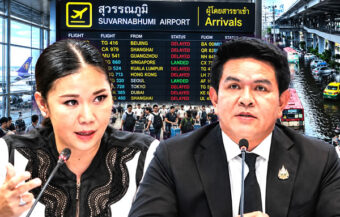
Thailand is set to scrap its expanded 60-day visa-free stay scheme in a sweeping immigration crackdown tied to illegal business activity and foreign crime concerns. Most visitors will soon receive only 30 days, while visa-on-arrival access is sharply reduced.
Thailand is preparing to slam the brakes on one of the world’s most liberal post-pandemic tourism policies after the cabinet approved a sweeping rollback of 60-day visa-free stays amid mounting alarm over illegal business activity, criminal networks and falling tourist numbers. The dramatic reversal will cut most visa-free visits back to 30 days, sharply reduce visa-on-arrival access, strip India of temporary visa-free privileges and restore tighter immigration controls across dozens of countries, while China and key strategic partners retain special bilateral exemptions. Ministers say the crackdown is driven by security, reciprocity and enforcement concerns as foreign arrivals continue slowing, marking Thailand’s toughest tourism entry overhaul since the post-Covid reopening.
Thailand’s cabinet on Tuesday approved a major overhaul of visa exemptions and visa-on-arrival rules for foreign visitors. As a result, the country will end its expanded 60-day visa-free stay programme introduced last year.
Instead, most eligible travellers will again receive only 30 days in Thailand without a visa. However, the new regime will not take effect immediately. Officials said a formal announcement will follow shortly. Afterwards, the changes will become law 15 days after publication in the Royal Gazette.
Tourism and Sports Minister Surasak Phancharoenworakul confirmed the decision after Tuesday’s cabinet meeting. He said Thailand would return to immigration arrangements used before July 2024.
Thailand scraps expanded 60-day visa-free stay as ministers cite abuse, crime and security concerns
Previously, nationals from 56 countries received a 30-day visa exemption. Then, last July, authorities expanded the programme dramatically. As a result, visa-free stays doubled from 30 days to 60 days. In addition, eligibility expanded from 56 countries to 93 countries and territories.
However, Thai authorities have for months signalled growing concern over the policy. Officials said the longer permitted stay produced unintended consequences. Chief among them was the rise in foreigners operating businesses illegally in Thailand.
Moreover, authorities linked the extended stays to increased criminal activity involving foreign nationals. Consequently, pressure steadily grew inside several ministries for a policy reversal. Tuesday’s cabinet resolution now formally ends the expanded 60-day arrangement.
Mr Surasak did not provide an enforcement date. Instead, he said the cabinet decision would first be circulated to all relevant agencies. Nevertheless, travellers already inside Thailand will not be immediately affected. Likewise, visitors arriving before implementation will retain their existing entry conditions until expiry. Therefore, immigration authorities will continue applying current visa conditions during the transition period.
Foreign ministry confirms tighter visa categories with fewer exemptions and reduced arrival access
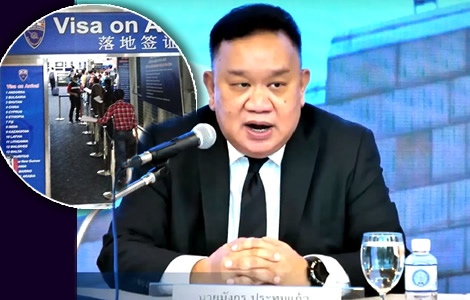
Later on Tuesday, Director-General of the Department of Consular Affairs Mungkorn Pratoomkaew outlined further details during a Ministry of Foreign Affairs briefing. He said the revised framework would eliminate overlapping visa privileges.
Instead, each country or territory will fall under only one visa category. Moreover, the 60-day visa exemption will be revoked entirely for all 93 countries and territories currently covered by the programme.
Under the revised framework, 54 countries and territories will qualify for a standard 30-day visa exemption. Previously, officials referred to 57 countries under the programme. However, Mr Mungkorn declined to identify the three countries removed from eligibility. Meanwhile, a separate 15-day exemption category will remain for selected states. In addition, Thailand will maintain a sharply reduced visa-on-arrival system.
Officials said several factors drove the changes. These included reciprocity, security concerns and administrative confusion. According to the Foreign Ministry, overlapping schemes complicated immigration enforcement and confused tourists.
Thailand reviews wider visa structure as officials weigh security risks and economic considerations
Furthermore, authorities said future visa decisions would consider both economic and security impacts. Mr Mungkorn added that the Visa Policy Committee would oversee future revisions. The committee operates under the Ministry of Foreign Affairs.
Separately, Foreign Minister Sihasak Phuangketkaeow recently confirmed a broader review of Thailand’s visa system. That review extends beyond tourist visas alone. Authorities are also examining whether Thailand still needs its large number of visa categories. Additionally, officials are considering whether several categories should eventually be merged.
The revised country lists reveal significant regional adjustments. In Europe, 29 countries will continue receiving a 30-day visa exemption. These include France, Germany, Italy, Spain, Switzerland and the United Kingdom. Furthermore, Austria, Belgium, Czechia, Denmark and Finland remain eligible. Likewise, Greece, Hungary, Iceland, Ireland and the Netherlands continue under the programme. In addition, Norway, Poland, Portugal, Romania, Slovakia and Slovenia retain eligibility. Sweden, Ukraine, Latvia, Lithuania, Luxembourg, Liechtenstein and Estonia also remain included.
India loses visa-free entry as Thailand sharply cuts arrival access and short-term tourist exemptions
Across Asia and Oceania, Australia, Japan, Malaysia and Singapore continue receiving visa-free entry for 30 days. Meanwhile, Indonesia, New Zealand and the Philippines also retain eligibility. In addition, Bhutan, Brunei, Georgia, Israel, South Korea, Taiwan and Turkey remain included under the revised framework.
In the Middle East, Bahrain, Jordan, Kuwait, Oman, Qatar, Saudi Arabia and the United Arab Emirates retain exemptions. Meanwhile, Canada and the United States continue qualifying from the Americas. South Africa remains the sole African country on the 30-day exemption list.
Three countries will instead receive only a 15-day visa exemption. These are Seychelles, the Maldives and Mauritius. At the same time, Thailand’s visa-on-arrival programme faces one of its sharpest reductions in years. Previously, 31 countries qualified for visas on arrival. Now, only four countries remain eligible. These are Azerbaijan, Belarus, Serbia and India.
India’s position remains particularly significant. Under the 60-day programme, Indian nationals received visa-free entry for up to two months. Previously, Indian visitors had to apply and pay for a visa on arrival in Thailand. Now, authorities say India will again fall under visa-on-arrival rules. However, officials admitted that operational details remain unclear.
China keeps a 30-day exemption while Thailand retains bilateral deals with selected foreign partners
Thailand will also continue honouring several bilateral visa agreements outside the standard framework. Most notably, China retains its 30-day visa exemption arrangement with Thailand. In addition, Hong Kong, Macau, Laos, Mongolia, Russia, Kazakhstan, Timor-Leste and Vietnam remain under similar bilateral arrangements.
Meanwhile, Cambodia and Myanmar continue under separate 14-day exemption agreements. However, Myanmar’s arrangement applies only to air arrivals. Several countries will also continue receiving significantly longer stays under bilateral agreements. Argentina, Brazil, Chile, Peru and South Korea retain 90-day visa exemptions. Consequently, those agreements remain untouched despite broader tightening measures elsewhere.
The overhaul comes as Thailand confronts slowing tourism momentum. Foreign tourist arrivals reached 12.9 million by May 17 this year. However, that figure marked a 3.3% decline from the same period last year. Meanwhile, total arrivals this year are expected to weaken further.
Tourism slowdown deepens as Thailand prepares stricter visa controls and shorter visitor stay periods
Last year, Thailand recorded 33 million foreign arrivals. That figure represented a 7% annual decline. Now, the National Economic and Social Development Council forecasts arrivals will fall again to 32 million this year.
The 60-day visa-free programme was originally introduced to accelerate post-pandemic tourism recovery. Initially, the policy simplified travel and expanded market access across dozens of countries. However, concerns steadily mounted inside Thai authorities over enforcement and oversight.
Hardline foreign tourism confirmed by new minster. More charges, shorter visas and mandatory insurance
Visa entry period to go from 60 to 30 days. Agreement in principle as foreign tourism numbers fall by 10%
Officials increasingly argued that the longer stay period encouraged abuse of visa privileges. At the same time, overlapping exemptions created growing inconsistencies across immigration rules.
Tuesday’s cabinet decision now marks a decisive reversal of that policy expansion. Once implemented, Thailand will return to a tighter visa structure centred on shorter stays, stricter categories and bilateral agreements.
Join the Thai News forum, follow Thai Examiner on Facebook here
Receive all our stories as they come out on Telegram here
Follow Thai Examiner here
Further reading:
60-day visa regime to be ended confirms Minister responding to rising industry security concerns
Tourism boss warns Thailand it is facing a Chinese blacklist if another security controversy erupts
Visa waiver scheme questioned with another China Crisis for foreign tourism driven by security fears
Tourism cryptocurrency sandbox payment plan is bound to face stiff opposition from the central bank