Ex-Finance Minister Sommai Phasee blasts 20 years of Thai governance, citing corruption and grey capital, while praising Malaysia’s rapid economic growth, British-style legal system, efficient urban planning, low energy costs and superior public services.
In a scathing assessment of Thailand’s governance on Monday, former Finance Minister Sommai Phasee slammed the country’s development as falling behind Malaysia. Sommai, 81, who served in General Prayut Chan-o-cha’s first cabinet under the National Council for Peace and Order (NCPO), blamed Thailand’s stagnation on entrenched corruption and the unchecked spread of grey capital. He went further, arguing that Malaysia’s faster progress stems from its colonial legacy and stronger British-style legal and political systems. Sommai singled out Thailand’s lacklustre airports, Thai Airways and chaotic urban planning as evidence of decline. He warned bluntly: for every step Malaysia moves forward, Thailand takes one backwards.
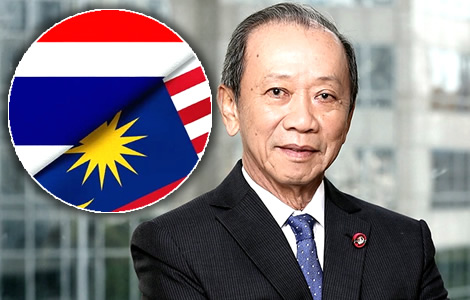
Sommai Phasee, former Minister of Finance in the first government of General Prayut Chan-o-cha, has warned that Thailand is regressing. He highlighted the national threat posed by grey capital and corruption. His comments followed a visit to Malaysia and its capital, Kuala Lumpur, last week. During the visit, Sommai assessed Malaysia’s economic and social progress. He reported that the country is advancing while Thailand appears to lag.
Malaysia has a population approximately half that of Thailand. In 2024, its GDP reached $422 billion, compared to Thailand’s $526 billion. Therefore, Malaysia’s GDP is 80% of Thailand’s total. However, per capita, Malaysia stood at $11,867, while Thailand reached only $7,345. Previously, both countries were considered economically comparable. Nevertheless, Sommai said Malaysia’s growth now surpasses Thailand’s, placing the Thai economy behind in Southeast Asia.
Sommai highlights Thailand’s economic lag and Malaysia’s per capita growth advantage in Southeast Asia
Sommai made these statements public on Monday, November 10, 2025, via Facebook. His post, titled “Thailand May Be Doomed by Grey Thailand,” addressed concerns about the grey economy. He explained that businesses from Myanmar and Cambodia, including red and grey enterprises, influence Thailand. These businesses involve activities such as drug trafficking, human trafficking, online lotteries, gambling dens, call centres and scams. Consequently, money laundering and investment distortions affect Thailand annually.
Sommai described the grey economy as embedded in economic, political, and administrative systems. He stated that it is difficult to remove and is resistant to government interventions. He emphasised that the problem is structural and affects all levels of administration.
He travelled to Kuala Lumpur after a decade-long absence. He stated the trip allowed him to observe Malaysia’s growth firsthand. He contrasted Malaysia’s development with Thailand’s stagnation. Sommai said each year Malaysia moves forward, while Thailand falls behind. Over the past ten years, he estimated that Thailand is 20 steps behind Malaysia.
On his flight to Kuala Lumpur, Sommai noted the quality of Malaysia Airlines. He said it surpassed Thai Airways in multiple areas. He added that private carriers like Bangkok Airways and VietJet perform better than Thai Airways. He reported that Thai Airways fares remain higher than those of private competitors. Consequently, they are not aligned with major shareholder interests, he said.
Ex minister criticises Thai Airways inefficiency and praises Malaysian Airlines for superior service
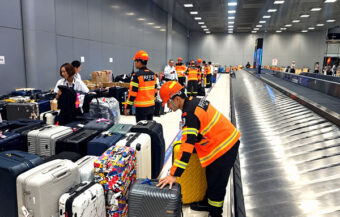
Upon arriving at Kuala Lumpur International Airport, Sommai observed the facility’s grandeur. He said the airport is well-managed and highly maintained. In contrast, he noted issues in Thailand with airport services and infrastructure. He stated that management problems at Thai airports reduce operational efficiency and passenger experience.
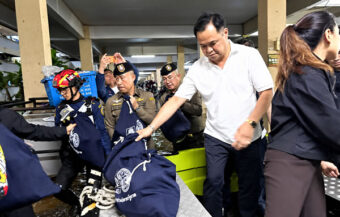
During his stay, Sommai checked into a hotel in the city. He noted wide, clean sidewalks, minimal trash and organised public spaces. He reported that commercial areas were free from excessive stalls or clutter. In addition, he observed very few advertising billboards, contrasting this with Bangkok. Sommai questioned whether Bangkok city regulations could improve public space management and tax systems.
Sommai took an evening two-hour bus tour of Kuala Lumpur. He reported light traffic and efficient road networks. He noted no bottlenecks in the city centre. During the tour, he observed tall buildings with modern designs. He cited Petronas Twin Towers at 88 floors and Merdeka 118 at 118 floors and 678.9 meters. He said these structures reflect national investment in urban planning and infrastructure.
Sommai: Malaysia’s urban planning and architecture outpace Thailand in infrastructure investment
He visited Jalan Alor, a 600-meter pedestrian street. He observed bustling crowds from 6 p.m. until midnight. Both Malaysians and foreigners were present. He reported smiling faces and active commercial activity.
Sommai stated Malaysia’s rapid development contrasts sharply with Thailand’s. He emphasised that 20 years ago, both countries were at similar development levels. He noted Malaysians appear to enjoy higher living standards and greater stability.
Sommai attributed Malaysia’s growth to its administrative and governance systems. He said the country maintains strict policing and local administration. Foreign business entrants undergo thorough government scrutiny. Politicians are regulated, and domestic interests receive priority.
He emphasised legal frameworks as another factor. Malaysia uses a British-influenced system. Lawyers operate effectively and transparently. He contrasted Thailand’s political environment, noting multiple former prime ministers have faced legal prosecution.
Ex-Finance chief emphasises Malaysia’s governance, legal oversight and strict administrative controls
Sommai also reported energy policy differences. Gasohol 95 costs two ringgit per litre in Malaysia, about 16 baht. In Thailand, the same fuel costs 32 baht per litre. He added that cooking gas is also cheaper in Malaysia. As a result, household net income is higher, savings are greater, and debt levels are lower. Consequently, public consumption grows steadily without government stimulus.
Sommai highlighted differences in infrastructure and urban planning. Kuala Lumpur’s streets, sidewalks, and public spaces are organised and functional. Traffic flows efficiently, and city planning reduces congestion. He contrasted this with Bangkok, noting significant traffic bottlenecks, disorganised sidewalks, and cluttered commercial areas.
He reported that Malaysia enforces strict oversight on foreign investment. Regulatory frameworks protect domestic economic interests. He said these systems reduce grey economy influence compared to Thailand.
Sommai contrasts Malaysia’s energy pricing, urban planning and investment regime with Thailand’s
Analysts later provided detailed comparisons of GDP and per capita income. Thailand’s total GDP is higher at $526 billion, but per capita income is $7,345. Malaysia’s total GDP is lower at $422 billion, yet per capita income is $11,867. These measures indicate differences in household welfare and economic efficiency.
He noted that urban management affects public life. Kuala Lumpur maintains clean streets, organised commercial districts, and efficient transportation. Thailand faces challenges in congestion, infrastructure maintenance, and regulatory enforcement.
Sommai said energy costs contribute to economic efficiency. Lower prices in Malaysia support disposable income and household savings. Higher energy costs in Thailand limit savings and reduce public spending.
He emphasised structural problems in Thailand. Grey capital and corruption affect multiple sectors, including politics, business, and administration. He reported that government interventions have limited success in resolving these issues.
He outlined Thailand’s economic and governance challenges while noting Malaysia’s advantages
Sommai described Thailand’s grey economy as deeply embedded. He said corruption and business influence distort administration and policy. Structural challenges continue to affect efficiency, investment, and development.
During his visit, he highlighted Malaysia’s infrastructure, public services, energy pricing, and legal oversight. He reported that all these factors contribute to faster growth and higher standards of living.
Sommai’s career includes appointments as Minister of Finance in September 2014, Deputy Minister of Finance from 2006 to 2007, and Director-General of the Fiscal Policy Office from 1997 to 1998. His analysis draws on decades of experience in finance and policy implementation.
Ex minister compares Malaysia’s maintained public spaces and urban efficiency to Thai congestion issues
He emphasised Malaysia’s governance model. Strict oversight, administrative efficiency, and legal frameworks reduce corruption and improve economic stability. Thailand, he said, struggles with entrenched grey economic activity and political influence.
Sommai concluded that Malaysia’s development reflects infrastructure investment, governance, legal oversight, energy policy, and urban management. Thailand’s comparative stagnation is influenced by higher energy costs, inefficient public services, and grey capital influence.
Sommai’s observations document differences in urban infrastructure, traffic management, public services, energy pricing, legal oversight, and governance. His comparisons focus on concrete metrics rather than opinion.
Sommai summarises Malaysia’s governance and economic efficiency compared to Thailand’s weaknesses
He emphasised that Thailand faces ongoing structural challenges across economic, political, and administrative systems. Grey capital, corruption, and inefficiencies continue to affect development.
Sommai’s visit and subsequent reporting provide detailed comparative data between Thailand and Malaysia. His statements focus on infrastructure, economic indicators, urban planning, public administration, and energy policy.
Alcohol law debacle continues to decimate not only tourism industry but also wider grassroots economy
Alcohol law shoots foreign tourism in foot for High Season with stiff fines for visitors drinking up at watering holes
PM Anutin tells Anti Money Laundering Office to act decisively on scammer funds to prevent sanctions
Battle with scammers rages within Royal Thai Police as Big Joke continues fight against alleged corruption
Finally, his analysis highlights differences in household savings, energy costs, GDP per capita, urban management, and regulatory enforcement. Malaysia demonstrates higher efficiency and urban development compared to Thailand. Certainly, his ultimate conclusion is that Thailand labours under weaker governance. In contrast, Malaysia benefits from a legacy of British colonialism, which brought with it British jurisprudence and administrative efficiency.
Finally, Thailand is being targeted by illicit activities in countries such as Myanmar, Cambodia and Laos. Notably, all these activities are particularly linked to Chinese criminality and influence. These activities remain unchecked and, in fact, have grown to monstrous proportions.
Join the Thai News forum, follow Thai Examiner on Facebook here
Receive all our stories as they come out on Telegram here
Follow Thai Examiner here
Further reading:
Closure of Phuket bars and alcohol restrictions turn off prospective foreign tourists says survey
Blow for travellers: strict rules, no bars and entertainment venues allowed to open in Phuket