US-Israel blitz kills Iran’s Supreme Leader, sparks revenge threats and street chaos. Flights axed, gold surges and Thailand scrambles to shield oil and tourist markets as the Middle East war risks widening into a prolonged, volatile conflict.
Thailand is bracing for the fallout from the US-Iran war that erupted on Saturday and culminated in the elimination of Iran’s Supreme Leader, Ayatollah Ali Khamenei. The United States and Israel launched sweeping air strikes, backed by covert operations against the regime in Tehran, in what is widely seen as a drive toward regime overthrow. This dramatically raises the prospect of a prolonged and unpredictable conflict that could drag on for weeks or even months. Already, the war has produced an unprecedented scenario in which neighbouring Arab countries have come under sustained missile barrage. The shockwaves are being felt in Thailand, where flight cancellations are mounting as Middle East transit hubs are hit. At the same time, the gold market is poised for a sharp surge in prices. Meanwhile, Thai authorities are moving to monitor citizens in the Middle East and safeguard the kingdom’s strategic oil reserves against further disruption.
The long-simmering Middle East conflict escalated sharply on Saturday when the United States and Israel launched joint air strikes on Iran. As a result, an already volatile regional struggle expanded dramatically.
Immediately, Thailand began assessing the economic and security fallout. In response, Bangkok moved to prevent anticipated shocks to its energy supply and tourism sector.
Specifically, officials focused on securing strategic oil reserves and preparing evacuation plans. A war room at the Ministry of Foreign Affairs is reportedly monitoring events in real time.
Thailand activates crisis response as US-Israel air strikes on Iran trigger regional instability that may last weeks
Therefore, initially, the government ordered contingency measures to rescue any stranded Thais in the Middle East. At the same time, emergency planning was activated to protect the kingdom’s oil supply, which is critical to powering the economy.
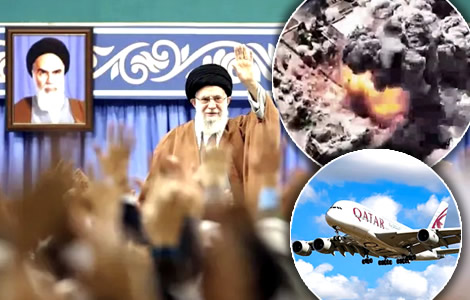
Meanwhile, within 24 hours of the strikes, Iranian state television confirmed the death of Supreme Leader Ayatollah Ali Khamenei. According to the broadcast, he was killed in the initial wave of US-Israeli attacks.
Consequently, Iran suffered its most significant leadership loss since the 1979 Islamic Revolution. Khamenei had ruled for 36 years after assuming power in 1989. Previously, he succeeded Ayatollah Ruhollah Khomeini, who led the revolution against Shah Mohammad Reza Pahlavi. Since then, Khamenei has stood at the apex of Iran’s political and religious system.
On Saturday, US President Donald Trump urged Iranians to rise up. He described the operation as a liberation moment. Furthermore, he predicted that removing the “head” would swiftly collapse the “body.” However, Tehran signalled immediate defiance. On Sunday, Iranian President Masoud Pezeshkian declared that seeking revenge was the country’s duty and legitimate right. In addition, he included other senior officials killed in the assault.
Israeli media detail rapid decapitation strike as Tehran vows retaliation and defiance after leader is killed
Israeli media detailed the speed and scale of the attack. Channel 12 reported that up to 30 high-ranking Iranian officials were killed within the first half-minute. Similarly, the Channel 12 website stated that the assassination occurred in the opening move of a broader offensive.
Moreover, Israeli political and security officials emphasised that the campaign had only begun and could last several days. Several outlets highlighted meticulous planning and close coordination between Israeli and US forces. They also stressed the precision of the intelligence used in the operation.
Nevertheless, some Israeli analysts warned of future strains. Yoav Limore of Israel Hayom said disagreements between Washington and Tel Aviv could widen. He noted that Israel is prepared for a protracted conflict lasting weeks or longer.
However, he questioned whether President Trump would maintain the same patience. Likewise, Nahum Barnea of Yedioth Ahronoth argued that the war may be one of choice for the United States. By contrast, he described it as necessary for Israel. At the same time, he warned that US public opinion could shift if the war escalates or drags on.
Grief and celebration divide Iran as mourners gather while statues are toppled as trump pushes regime change
Inside Iran, reaction was sharply divided. Early Sunday, state television announced Khamenei’s death in an emotional broadcast. Subsequently, footage from Tehran showed mourners gathered in a central square.
Many wore black and wept openly. At a rally, one man said he was filled with hatred toward Israel and America. He vowed that the blood of the leader would be avenged. Similarly, a woman said she had hoped the reports were false. Instead, she said, they were confirmed.
Conversely, celebrations erupted in other cities. In Dehloran in Ilam province, a statue was toppled. In Karaj near Tehran, people danced in the streets. Meanwhile, in Izeh in Khuzestan province, crowds celebrated openly.
In Galleh Dar in southern Iran, a monument to Ayatollah Ruhollah Khomeini was knocked down. Fires burned in the traffic circle where it once stood. In a video, a man shouted greetings to a new world as cheers followed.
Past protests and deep unrest resurface after the killing of Iran’s supreme leader seeking the Shah’s return
Elsewhere, celebrations were recorded in Lapuee in southern Iran. There, people gathered outside the home of Pooya Jafari, a 15-year-old shot dead during anti-government protests in January. Previously, thousands were killed in a crackdown during that unrest.
It marked the deadliest turmoil since 1979. Historically, Khamenei’s rule faced repeated waves of dissent. Student protests erupted in 1999 and 2002. Later, unrest shook the country in 2009. More recently, the 2022 “Woman, Life, Freedom” protests followed the death of a young woman in morality police custody.
A 33-year-old woman from Isfahan told Reuters she cried with joy and disbelief. Then, she joined others dancing in the street. She expressed hope that Khamenei’s death could signal the end of the Islamic Republic.
Many Iranians, particularly exiles abroad, want to see the return of the Pahlavi dynasty and the Shah.
However, she declined to give her name for fear of reprisal. In contrast, Atousa Mirzade, a primary school teacher in Shiraz, voiced concern. She said she could not celebrate a killing by a foreign power. Moreover, she feared chaos and bloodshed similar to Iraq. Therefore, she said she preferred the Islamic Republic to instability.
Loyalists regroup as attacks continue and fears rise of scorched earth retaliation
Similarly, Hossein Dadbakhsh, a 21-year-old university student in Mashhad, vowed revenge. He said he was ready to sacrifice his life. Furthermore, he warned that Israel and Trump would pay a heavy price.
Despite the visible celebrations, the regime’s supporters remain active. On Sunday, signs emerged that loyalists were regrouping. They are estimated to represent roughly 15% of the population. As in Venezuela, they are organising to survive. First, they are seeking to consolidate control over government offices. At the same time, security forces remain deployed across key locations.
Meanwhile, waves of Israeli and US attacks continued. In addition, there were suggestions of elite Israeli and US forces operating on the ground in Iran. Israeli officials stressed that the operation was ongoing and could expand. Notably, Iran had shifted policy after last year’s attacks by Israel and the United States. Furthermore, the Islamic Republic is understood to have received arms from China. Consequently, the military balance has evolved.
Airspace disruption and escalation fears hit Thailand as flights are cancelled
On Sunday, sources warned of further escalation. Specifically, they said the regime could adopt a scorched earth policy if it perceived an existential threat following Khamenei’s removal. Such a move would have unpredictable consequences both within Iran and across the Middle East. Therefore, regional governments began reviewing contingency plans.
As the conflict widened, regional airspace was disrupted. Key Middle East choke points were targeted amid what was described as a more aggressive Iranian response. Consequently, commercial aviation was directly affected. Flights crossing or originating in the Middle East were cancelled. As a result, Thailand experienced immediate disruption.
In particular, ten flights carrying foreign tourists to Phuket were cancelled within 24 hours. The cancellations were confirmed at Phuket International Airport. Consequently, tourism operators moved quickly to assess the impact.
Mr Adit Chairattanannon, Secretary-General of the Thai Tourism Business Association, confirmed the cancellations. He said escalating tensions would inevitably affect Thailand’s tourism sector. Already, trip cancellations were being observed.
Tourism sector urges urgent measures as air routes and markets face disruption
Previously, intermittent clashes had not significantly affected Thailand. However, he said the situation had changed because air routes and commercial flights were now directly impacted. If the conflict persists, he warned, the impact will intensify for both tourists and businesses. Therefore, he called for urgent government measures.
First, he said stranded tourists must receive immediate assistance. He proposed a plan covering the first seven to 20 days. This would detail cooperation between the private sector, government and airlines.
Second, he urged that hotels and airlines must not withhold deposits in cases of cancellations or postponements. Instead, postponements should be permitted nationwide under a consistent standard. Third, he stressed the need for clear communication regarding tourist safety, noting that Thailand is not directly involved in the conflict.
In addition, he proposed establishing a permanent joint working group between the government and the tourism private sector. This body would have formal procedures and begin work immediately.
Long haul markets at risk as gold surges and the baht may strengthen further despite war shock
Its purpose would be to manage both current disruptions and future uncertainties. Looking ahead, Mr Adit said the impact could become clearer in the second to fourth quarters of 2026. Long-haul markets may be particularly affected.
Consequently, the government may need to allocate more marketing budget to near-haul markets to compensate.
He acknowledged that 2026 may see a shift in the balance between near and long-haul tourists. Instability in the Middle East could slow arrivals from affected regions. Nevertheless, long-haul tourists remain a stronger revenue source because they stay longer and spend more per capita.
Gold market disruption and volatile currency movements deepen Thailand’s exposure
Therefore, if the conflict does not drag on, they remain critical to tourism income. However, if fighting persists, urgent discussions with airlines will be required to maintain uninterrupted access.
Financial markets also reacted. On Sunday, disruption was reported in Thailand’s gold market. Sellers were refusing to sell in anticipation of a surge in prices on Monday.
Major war breaks out between United States and Iran causing chaos for air travel to Thailand at this time
US attack on Iran and Gulf of Hormuz threats spark fears of an oil price shock and more economic pain
In turn, rising gold prices are likely to strengthen the baht. Thus, currency markets are adjusting rapidly to this unpredictable geopolitical development.
Overall, Saturday’s attack and the killing of Iran’s Supreme Leader have raised the stakes. This has been planned for weeks. America and Israel seek regime change. Military operations continue on both sides. However, political reactions or developments within Iran could decide the matter. Air travel is set to remain disrupted.
Markets are facing heightened volatility. Meanwhile, Thailand is implementing contingency plans to shield its economy. As events unfold, the situation remains fluid and highly uncertain.
Join the Thai News forum, follow Thai Examiner on Facebook here
Receive all our stories as they come out on Telegram here
Follow Thai Examiner here
Further reading:
Liquidity crisis or shortage of cash on the ground is shrinking Thailand’s economic growth prospects
Thai Minsters engage with US trade chief Jamieson Greer in Paris at global OECD ministerial meeting
Commerce Minister meets US trade boss Jamieson Greer in Korea. Paul Chambers case still dogs talks