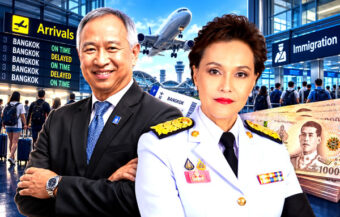
Trump hails Iran war as tankers burn, casualties mount and oil choke sparks global shock. Flights halted, markets rocked and Thai tourism reels as the Persian Gulf crisis deepens.
The US President and the United States military continue to pour new resources into the widening conflict with Iran, targeting the leadership of the Islamic Republic, its armed forces and maritime resources in the Gulf. The war has severely hit Thailand’s foreign tourism sector, cutting the ground from under the kingdom’s lucrative long-haul market with Europe. Last year’s arrivals from this market helped the challenged Thai economy cope with a 7% fall in arrivals. Now Thailand faces another year of tourism decline.
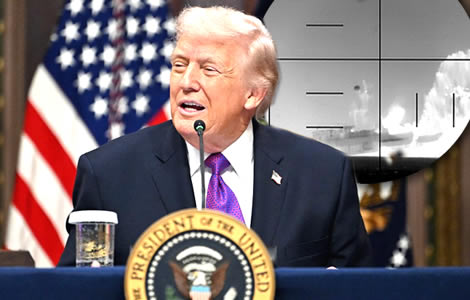
Donald Trump was upbeat and bullish on Thursday about the ongoing war on Iran being waged by United States and Israeli forces. The US leader gave the efforts a score of 15 out of 10 as the United States continues to pour more troops, planes and maritime resources into the all-out conflict with Iran.
The US–Iran war widened sharply on Thursday after Iranian forces attacked a US tanker in the Persian Gulf beyond the Strait of Hormuz. Oil was reported in the water while two Indian crew members were believed to have been killed. A second tanker is reported to have been hit off the coast of Kuwait and is taking on water.
The assaults followed the sinking of the Iranian naval frigate IRIS Dena off Sri Lanka earlier on Wednesday. Consequently, hostilities have soared across key shipping lanes.
Naval casualties mount after Sri Lanka strike as regional sea lanes become an active war zone
Sri Lankan authorities recovered 87 bodies from the sea. Meanwhile, more than 60 people remain missing. In addition, 32 sailors were rescued by Sri Lankan forces. As a result, the naval strike marked a significant expansion of hostilities.
The conflict began on Saturday with US-Israeli strikes that killed Iran’s supreme leader. Since then, fighting has spread across multiple fronts. Thereafter, Iran launched retaliatory attacks on Gulf states hosting US military bases.
At the same time, Israel expanded operations into Lebanon. Israeli forces also moved into border towns. Consequently, tens of thousands were displaced in recent days. According to reports, at least 75 people have been killed in Israeli strikes in Lebanon. Meanwhile, state media confirmed new strikes in south Beirut and Beddawi near Tripoli. In addition, a drone strike on a vehicle in southern Lebanon killed three people. Israel did not immediately comment on those incidents.
Explosions in Tehran and strikes across region signal a rapid widening of multi-front conflict
On Thursday, fresh explosions were reported in Tehran. Iranian authorities said air defences were activated. Simultaneously, Israel announced a large-scale wave of strikes on infrastructure in the capital.
Earlier, Iran had fired missiles toward Israel. As a result, explosions were heard in Jerusalem. However, there were no immediate reports of casualties there. Across Iraq, Iran targeted Kurdish groups.
Ali Larijani, secretary of Iran’s Supreme National Security Council, warned separatist groups against action. Subsequently, a representative of an exiled Iranian Kurdish group said one member was killed. Thus, the war continued to widen geographically.
Across the Gulf, regional states reported incoming threats. Qatar evacuated residents living near the US embassy in Doha. Earlier, it said it thwarted attacks on Hamad International Airport. In Kuwait, casualties were reported, including an 11-year-old girl.
Gulf states intercept missiles as energy infrastructure and bases face direct threats
Furthermore, the United Arab Emirates, Saudi Arabia and Qatar said they intercepted Iranian missiles. Saudi authorities added that a drone targeted the Ras Tanura refinery.
Meanwhile, Turkey said a missile launched from Iran was destroyed by NATO air defences near its airspace. A Turkish official stated the missile appeared aimed at a British base in Cyprus. Consequently, Turkey summoned the Iranian ambassador. In addition, its foreign minister urged Iran to avoid steps that would further spread the conflict.
At sea, the disruption intensified. Iran’s Revolutionary Guards claimed closure of the Strait of Hormuz. According to market intelligence firm Kpler, oil tanker transits through the strait have fallen by 90%.
The chokepoint carries about a fifth of global crude oil flows. As a result, fears of surging energy prices mounted quickly. Off Kuwait, a tanker was struck by a large explosion, according to the UK Maritime Trade Operations agency. The blast caused an oil spill. Consequently, maritime insurance premiums and shipping risks rose across the region.
Global markets react as oil flows plunge and major powers weigh emergency measures
Meanwhile, global governments moved to cushion economic shocks. South Korea activated a $68 billion market stabilisation fund.
At the same time, China reportedly instructed refiners to halt exports of diesel and gasoline. In addition, Beijing announced plans to send a special envoy to mediate in the conflict. However, no further details were provided.
In Washington, the US Senate rejected a resolution aimed at limiting President Donald Trump’s authority to continue strikes. The measure failed largely along party lines. Even so, it would have faced a presidential veto if passed.
Iran’s official IRNA news agency reported that 1,045 military personnel and civilians have been killed since the war began. However, AFP could not independently verify the figure.
Iran also said more than 150 people were killed in a strike on a school in Minab. Many of the reported victims were children. US officials said they were investigating the reported deaths.
Separately, US authorities confirmed that six American soldiers have died in the conflict. Thus, casualty figures on multiple sides continue to climb.
Oil prices surge and flights halt as Thailand’s tourism sector faces renewed crisis conditions
As markets reacted, oil prices climbed on supply concerns. Meanwhile, airlines suspended or rerouted flights across the Middle East. Since Feb 28, thousands of flights have been cancelled. Airspace closures disrupted major routes between Europe and Asia. Consequently, airfares increased amid tightening capacity. In turn, higher fuel costs added pressure on carriers already adjusting schedules daily.
Therefore, Thailand’s tourism sector has felt an immediate impact. The country depends heavily on long-haul visitors, particularly from Europe and the Middle East. Now, disruptions have reduced arrivals in key destinations.
Presently, tourist areas report fewer visitors than last year. In addition, the number of stranded foreign tourists within the kingdom is increasing. Hotels are coordinating with airlines and authorities. Immigration procedures have also been temporarily adjusted.
The situation recalls 2020, when COVID-19 closed Thailand’s airspace. At that time, international arrivals collapsed for months. Similarly, current airspace disruptions are limiting travel flows. However, this crisis is driven by armed conflict and energy disruption rather than a health emergency.
Long-haul targets at risk as operators warn of deeper downturn in 2026 arrivals than in 2025
In 2025, long-haul arrivals reached a record 10.8 million. Nevertheless, overall foreign arrivals fell 7.3% to just under 33 million. Long-haul markets were among the few bright spots.
This year, the Tourism Authority of Thailand set a target of 11.6 million long-haul arrivals. Total arrivals were projected at 36.7 million. However, tourism operators now expect 2026 long-haul arrivals to fall short of last year’s level.
Sanga Ruangwattanakul, president of the Khao San Road Business Association, said the sector would be hit by this new storm. He added that arrivals could dip more severely than last year. Higher oil prices are feeding inflation worldwide. Consequently, airline operating costs are rising. Airfares are increasing as seat supply tightens. Moreover, insurance and rerouting expenses are adding to ticket prices. As a result, long-haul travel is becoming more expensive.
Mr Sanga warned that prolonged tension would affect the second and third quarters. In particular, he cited the Songkran holiday period. That festival usually attracts significant numbers of European tourists. Roughly 80% of Khao San Road visitors are European. The remaining 20% come from Asia. If high airfares persist, European arrivals may decline. Therefore, Thailand’s long-haul segment faces heightened risk.
Pattaya exposed as hotels brace for higher costs and softer European demand
In the east, Pattaya remains heavily reliant on long-haul markets. During high season, long-haul travellers account for 40% of visitors. In the low season, they account for 20%. Morrakot Kuldilok, president of the eastern chapter of the Thai Hotels Association, said most long-haul guests have postponed trips rather than cancelled bookings.
Meanwhile, Indian, Chinese and Russian markets continue to send visitors via direct flights. As high season nears its end, immediate impact remains contained.
However, operators are increasingly concerned about long-term costs. Electricity bills, oil prices and food costs are rising. In addition, weaker economic conditions in source markets may reduce travel budgets. If so, the next high season could see reduced long-haul demand. European tourists typically stay longer than short-haul visitors. Consequently, they spend more per trip. Fewer European arrivals would lower average expenditure and occupancy rates.
Thapanee Kiatphaibool said an urgent plan is required to counter the situation. In the short term, the agency aims to boost domestic travel. It plans to encourage Thais to holiday within the country rather than overseas.
In the longer term, Thailand seeks to position itself as a stronger aviation hub. The latter, of course, is at this time only an aspiration. Indeed, this crisis highlights Thailand’s dependence on the Gulf flight hubs, which have become linchpins of traffic from Europe to Asia.
Chiang Mai assists stranded passengers as visa relief and flight flexibility are announced
The strategy includes increasing direct flight connections. In addition, authorities plan to expand medical tourism services for visitors seeking refuge from conflict-affected regions.
Northern Thailand is also managing disruption. Hotels in Chiang Mai are assisting stranded tourists after airspace closures. The Chiang Mai–Abu Dhabi route operated by Etihad Airways was suspended. Flight EY427, which operates four days a week, was cancelled following emergency closures.
Consequently, provincial authorities conducted a survey at Chiang Mai Airport. The review involved the tourism office and tourist police. Officials described the situation as manageable.
Chiang Mai Airport continues normal operations with international-standard security measures. Meanwhile, coordination continues among relevant agencies. Etihad Airways has opened a passenger service counter in Chiang Mai, operating daily from 05:50 to 08:05.
Passengers can obtain updates and rebooking assistance at the counter. The airline is offering flexibility for tickets purchased on or before Feb 28, 2026. Travel dates until March 10 are covered. Passengers may change flights without fees for travel before March 31. Alternatively, they may request refunds under general policy.
Visa relief extended as Thailand braces for prolonged instability and market volatility
Immigration authorities have introduced temporary relief measures. Foreigners whose permission to stay expired from Feb 28 onwards may depart without paying overstaying fines. However, those seeking temporary extensions must first pay fines under existing law. Thereafter, officials may grant extensions of up to 30 days at a time. This regulation remains in effect until further notice.
Thailand’s tourism industry entered 2026 reliant on long-haul European markets. Those markets helped offset overall declines in 2025. Now, that support base is exposed to rising costs and travel disruption.
Meanwhile, oil shipments through the Strait of Hormuz remain curtailed. Airspace closures persist across parts of the Middle East. Financial markets remain volatile.
US Ambassador Seán O’ Neill briefed Prime Minister Anutin Charnvirakul at Government House on War
Prime Minister Anutin urges calm as real fears grow over a volatile and dangerous war in the Middle East
Visa waivers, discounted hotel stays and 2,000 baht a person per day for stranded tourists announced over Iran war
The head of the International Monetary Fund, Kristalina Georgieva, warns that the world may face a prolonged period of flux. She said the global economy’s resilience may again be tested. Consequently, uncertainty now extends beyond the battlefield to the economy and, significantly, the potential for further geopolitical escalation.
China faces mounting economic strain as conflict deepens and its role in Iran scrutiny intensifies
This war is causing considerable impact on China. Indeed, it is also clear that China has been arming and industrialising Iran’s war machine since its dismal performance last year.
For Thailand, tourism forecasts are being revised. Operators are monitoring bookings daily. Airlines are adjusting routes and capacity. In summary, the widening war has disrupted shipping, aviation and energy flows. As a result, long-haul tourism faces immediate and sustained pressure. The coming quarters will determine the scale of the downturn.
For the wider economy, Bank of Thailand Governor Vitai Ratanakorn warned on Wednesday that the escalating uncertainty was furthermore a threat to financial stability within the world’s banking system.
Join the Thai News forum, follow Thai Examiner on Facebook here
Receive all our stories as they come out on Telegram here
Follow Thai Examiner here
Further reading:
US Ambassador Seán O’ Neill briefed Prime Minister Anutin Charnvirakul at Government House on War
Visa waivers, discounted hotel stays and 2,000 baht a person per day for stranded tourists announced
Liquidity crisis or shortage of cash on the ground is shrinking Thailand’s economic growth prospects
Thai Minsters engage with US trade chief Jamieson Greer in Paris at global OECD ministerial meeting
Commerce Minister meets US trade boss Jamieson Greer in Korea. Paul Chambers case still dogs talks