A Navy rifle officially destroyed in 2020 allegedly resurfaced in a bid to kill an MP. Now Kamolsak Leewamae says hidden phone records, US-supplied weapons and missing links may expose the masterminds behind one of Thailand’s most serious and nakedly political attacks.
An assassination attempt on a sitting MP has become one of Thailand’s most politically charged investigations after claims that a weapon used in the attack was destroyed by the Royal Thai Navy six years ago. Narathiwat MP Kamolsak Leewamae is demanding answers over an M16 rifle that allegedly resurfaced after disposal, other US-supplied firearms and 11 telephone numbers he says could lead to the masterminds behind the March 20 ambush. With former military personnel implicated and seven suspects arrested, the case now raises serious questions over one military weapon used, missing evidence and who or what was behind the hit.
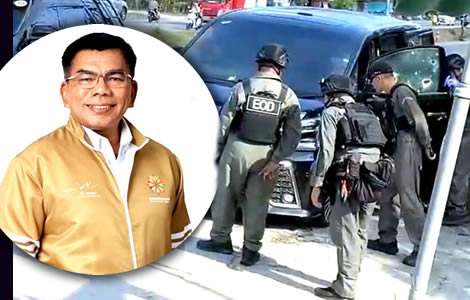
Fresh questions have emerged in the attempted assassination case involving Narathiwat MP Kamolsak Leewamae. This time, the focus is on two firearms allegedly used in the attack. One of them was reportedly destroyed by the Royal Thai Navy in 2020. Yet six years later, it allegedly resurfaced in a shooting targeting a sitting Member of Parliament.
The claims were raised publicly by Mr Kamolsak on Sunday, June 7. They came days after Prachachart Party leader and former Justice Minister Thawee Sodsong highlighted concerns over military weapons linked to the case.
As a result, scrutiny has shifted beyond the gunmen already arrested. Attention is now centred on the origins of the weapons and the progress of the investigation. In short, the trail that may lead to the real masterminds behind the attack.
Questions mount after allegedly destroyed Navy rifle resurfaces in attack on Narathiwat MP
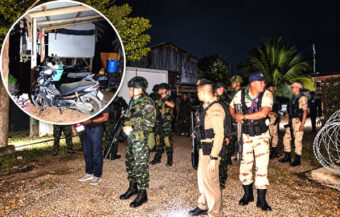
The March 20 attack remains one of Thailand’s most significant political violence cases in recent times. Gunmen ambushed Mr Kamolsak outside his residence in Narathiwat during the early hours of the morning. He survived the assault.
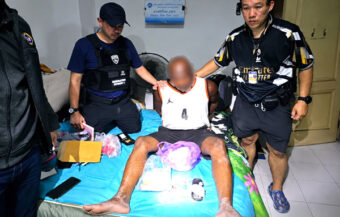
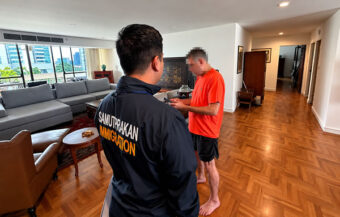
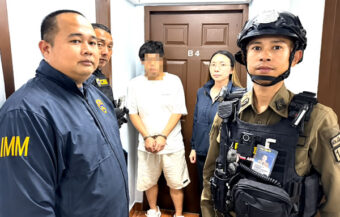
However, his driver and a police escort suffered serious injuries. Investigators later described the operation as highly organised. Seven suspects have since been arrested. Even so, the individual believed to have ordered the attack is understood to remain at large.
Mr Kamolsak has now filed a complaint with the House Committee on Law, Justice and Human Rights. He is seeking explanations from several agencies connected to the case. These include investigators, the Royal Thai Navy, the Department of Rights Protection and a mobile network provider. In his view, the attack was meticulously planned. Yet he believes the investigation has slowed despite multiple arrests.
Notably, the MP has focused attention on 11 telephone numbers linked to the case. He describes them as critical evidence. According to Mr Kamolsak, the numbers could help identify those who planned and directed the operation. He also claims to have received information suggesting attempts are being made to keep some of the numbers out of official investigation files.
MP says 11 phone numbers may hold the key to identifying those behind the March 20 assassination plot
That allegation has become one of the most sensitive aspects of the inquiry. Mr Kamolsak noted that investigators operating in the southern border provinces normally maintain extensive telecommunications databases.
Such records often play a central role in security cases. Against that background, he questioned why the numbers have not featured more prominently in the investigation.
Separately, he raised concerns about what he described as efforts to prevent the case from reaching its ultimate target. He told the committee that evidence should be examined fully and transparently. The MP believes the telephone records may provide important links between suspects already arrested and individuals who remain unidentified.
The most explosive issue, however, concerns the weapons themselves. According to Mr Kamolsak, one of the firearms used in the attack was an M16 rifle. Investigators reportedly checked records held by the Royal Thai Navy’s Ordnance Department. What they found raised immediate questions.
The rifle allegedly appeared on a destruction list compiled in 2020. It was one of 40 firearms scheduled for disposal. The weapons were reportedly classified as deteriorated and unsuitable for continued use. Consequently, they were recorded as destroyed.
Navy faces scrutiny after firearm marked destroyed in 2020 allegedly reappears in shooting case
Yet one of those rifles allegedly reappeared in 2026 during the attack on the Narathiwat MP. More strikingly, forensic examinations reportedly found the weapon remained in good working condition. That finding has become a central issue in the case.
In response, Mr Kamolsak publicly challenged the Navy to explain what happened. He questioned the fate of the remaining 39 firearms listed in the same batch. He also asked who currently possesses those weapons and how the destruction process was carried out.
“This isn’t just my issue anymore. It needs to be loudly questioned to the Navy: What happened to the other 39 guns in the same batch, and who now owns them? How were these guns destroyed? Why did guns that were supposedly dead come back to life and start shooting people?”
Those remarks have intensified attention on the military inventory records. They have also raised questions about the chain of custody surrounding the weapons. The discrepancy between official records and forensic findings remains unresolved.
On another front, investigators are examining a second firearm connected to the attack. According to Mr Kamolsak, the weapon carries English-language markings. Those markings indicate it was supplied by the United States military to the Thai armed forces. He questioned how such a firearm eventually found its way into the hands of the attackers.
Questions raised over the second weapon supplied by the US military and later used by attackers
As part of this, the MP has called for a fuller accounting of the weapon’s history. The issue has added another dimension to an investigation already involving former military personnel and allegations concerning state-owned assets.
Mr Kamolsak is a three-term MP representing Narathiwat Constituency 5 for the Prachachart Party. Before entering parliament, he worked as a human rights lawyer. He became widely known through his involvement in sensitive security and rights cases in Thailand’s Deep South.
Prachachart Party leader urges parliament to deepen enquiries into attempted assassination of sitting MP
Police enquiry widens into attempted murder of MP Kamolsak Leewama. Navy promises full co-operation
The attempted assassination quickly attracted national attention. Investigators later identified links to former Marines. Two naval officers were also implicated in the case. Meanwhile, police continued pursuing leads relating to the wider network behind the operation.
For now, the investigation remains active. The telephone records remain under scrutiny. The firearms issue continues to generate questions. At the same time, the suspected mastermind has yet to be either identified or apprehended. Neither has the motivation for the attack been identified. Until those issues are resolved, the case is likely to remain under intense public and political scrutiny. A source of unease for the government of Prime Minister Anutin Charnvirakul.
Join the Thai News forum, follow Thai Examiner on Facebook here
Receive all our stories as they come out on Telegram here
Follow Thai Examiner here
Further reading:
Police enquiry widens into attempted murder of MP Kamolsak Leewama. Navy promises full co-operation
Former Speaker piles pressure on the government over gun attack on Prachachart Party MP Kamolsak
Prime Minister Anutin apologises for comments made by army commander in South to mend fences
Southern army units robustly deny any involvement in attempted assassination of Prachachart Party MP
Prime Minister Anutin condemns cowardly attack on Southern Muslim MP who voted for him on Thursday