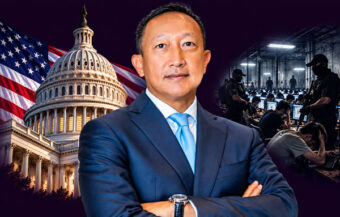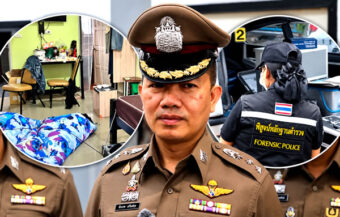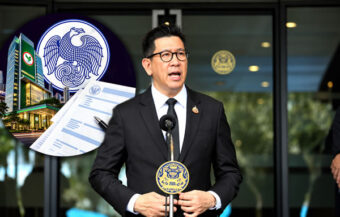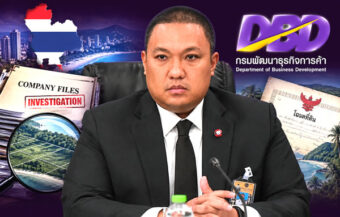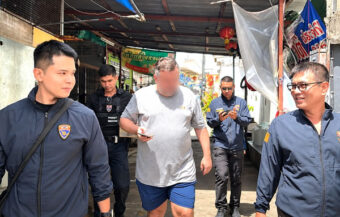
PM Anutin Charnvirakul landed on Koh Phangan as 300 officers raided firms, land plots and businesses in a huge crackdown on suspected foreign nominee networks. Investigators say nearly 68% of companies on Koh Phangan and Koh Samui involve foreign investors.
Prime Minister Anutin Charnvirakul arrived on Koh Phangan on Wednesday as hundreds of police, DSI investigators and land officials launched one of Thailand’s biggest crackdowns on suspected illegal foreign business networks, raiding companies and land plots amid allegations of nominee ownership, hidden foreign control and proxy shareholders across the island’s tourism economy. The operation came as authorities revealed that nearly 68% of registered businesses on Koh Phangan and Koh Samui involve foreign investment. Meanwhile, investigators widened their probes into high-value firms, suspicious land holdings, and concealed ownership structures linked to Israeli, French, British and Russian investors.
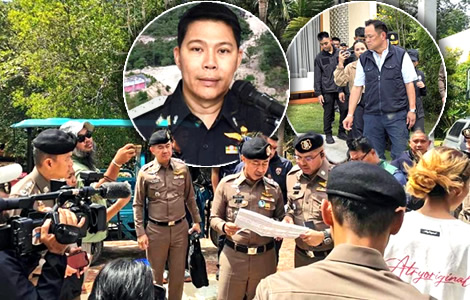
Prime Minister Anutin Charnvirakul arrived on Koh Phangan on Wednesday as authorities intensified a major crackdown on suspected illegal foreign business operations. His visit coincided with sweeping raids across the island targeting companies, land holdings and business operators suspected of breaching Thailand’s foreign ownership laws.
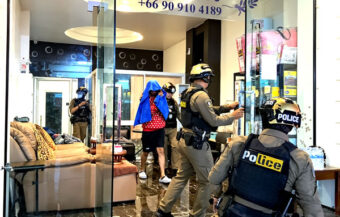
Meanwhile, nearly 300 police officers, investigators and land officials launched coordinated operations at multiple locations. Officers searched 27 companies connected to 37 plots of land. Investigators suspect the firms used Thai nominee shareholders to conceal foreign ownership and circumvent restrictions under Thai law.
In addition, police arrested one foreign national accused of operating a business reserved exclusively for Thai citizens. Three Thai nationals were also detained at the same premises. Authorities believe the operation involved proxy ownership structures designed to disguise effective foreign control.
Investigators widen Koh Phangan nominee probe after raids target firms, land plots and investors
Consequently, investigators are now examining financial records, shareholder documents and ownership transfers connected to the businesses under scrutiny.
The raids marked the latest phase of a widening enforcement campaign across southern Thailand. The crackdown began last September after Mr Anutin’s first government entered office. Since then, enforcement operations have intensified sharply across major tourism centres.
Specifically, authorities have focused on Koh Phangan, Koh Samui and Phuket. However, officials also confirmed that future investigations will expand into Krabi, Phang Nga, Pattaya and Hua Hin as authorities broaden the nationwide operation.
According to Surat Thani governor Chumpot Wannachatsiri, officials had already received 29 formal complaints concerning foreign business operations on Koh Phangan. Most complaints involved allegations that Thai nationals acted as nominee shareholders on behalf of foreign investors.
Authorities link dozens of suspects to nominee complaints as scrutiny expands across Koh Phangan
Consequently, investigators linked 62 suspects to 21 active complaints. Those under scrutiny include both foreigners and Thai citizens suspected of facilitating nominee arrangements and concealed ownership structures.
At the same time, Department of Land director-general Pornpot Penpat confirmed legal action against 12 companies accused of illegal foreign land ownership. However, investigators are examining a total of 47 companies for possible violations.
Mr Pornpot said foreign companies currently own land across Koh Phangan. Nevertheless, he rejected suggestions that foreigners dominate the island’s property market. According to the Department of Land, title documents cover only 38% of Koh Phangan. Furthermore, foreign companies occupy about six per cent of those documented plots. Therefore, officials argued that fears of widespread foreign control remain overstated despite rising public concern.
Even so, concern over foreign business activity has intensified significantly in recent months. Local complaints increased as authorities uncovered increasingly complex ownership structures.
Investigators uncover increasingly complex nominee networks as agencies intensify coordinated probes
Moreover, investigators reported growing evidence of interconnected business networks operating through Thai nominees. Consequently, multiple agencies have expanded information-sharing operations and joint investigations.
Wednesday’s operation unfolded only hours before Mr Anutin arrived on the island with senior government officials. The delegation travelled to Koh Phangan to review enforcement measures and assess official responses to local complaints.
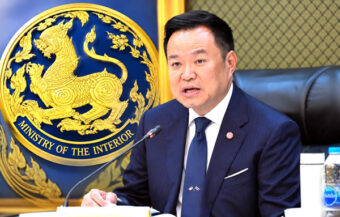
Mr Anutin said it was his first official visit to the island. Moreover, he declared that the government was serious about suppressing illegal foreign business operations. “Foreigners should arrive on Koh Phangan as happy visitors and must not be here to take over occupations from local people and cause them trouble,” the prime minister said during the visit.
Earlier, the Department of Special Investigation, or DSI, announced major new investigations involving Koh Samui and Koh Phangan. On Tuesday, DSI director-general Pol Maj Yuthana Praedam confirmed formal investigations into 34 companies suspected of operating nominee structures for foreign investors.
DSI launches investigations into 34 firms suspected of concealing foreign ownership structures nationwide
Authorities believe the firms used Thai shareholders to conceal foreign control and bypass legal restrictions under Thailand’s Foreign Business Act.
The investigations followed high-level meetings between the DSI, the Department of Business Development and security officials. Consequently, agencies established a coordinated framework for future enforcement operations.
Officials said the crackdown followed direct orders from the prime minister and the justice minister. Therefore, investigators accelerated reviews of company registrations, shareholder records and financial structures across key tourism provinces.
Meanwhile, investigators revealed that large-scale data analysis uncovered widespread nominee risks across tourism areas. Authorities examined thousands of company records and shareholder structures during the initial phase of the operation.
In addition, officials cited complaints from local residents concerning the exploitation of local resources and alleged disregard for Thai law. As a result, the DSI and DBD launched a strategic audit targeting suspected nominee firms operating in major tourist destinations.
Authorities classify thousands of island companies by risk as nationwide investigations accelerate
Koh Samui and Koh Phangan became the first locations selected for intensive investigation. Authorities analysed data covering more than 11,426 registered companies across the two islands. Subsequently, investigators classified firms into high, medium and low-risk categories. Officials said the categorisation allows more systematic investigations and faster identification of companies requiring immediate scrutiny.
The DSI later confirmed that the inquiry will expand nationally. Future investigations are expected in Phuket, Krabi, Phang Nga, Pattaya and Hua Hin. Authorities signalled that further coordinated raids remain likely as investigations progress.
On Tuesday, Mr Yuthana disclosed additional details about the inquiry process. Following intelligence exchanges with the DBD, the DSI assigned its security crime bureau to lead formal investigations.
Furthermore, the DBD submitted information on 34 companies holding assets exceeding 100 million baht each. Authorities believe many of the firms require deeper examination because of unusual ownership structures and shareholder arrangements.
Investigators scrutinise wealthy firms and shareholder finances for evidence of nominee structures
Investigators have already identified around 20 companies for immediate scrutiny. Those firms possess substantial assets and complex shareholder structures. Now, investigators are examining ownership proportions, investment histories and financial backgrounds linked to Thai shareholders. Authorities want to determine whether shareholders possess sufficient declared income to justify their investments.
Importantly, investigators described financial credibility checks as central to the nominee inquiry. Officials will compare reported income against multimillion-baht investments and shareholder holdings.
In addition, authorities are reviewing whether company ownership changed suspiciously during operations. Investigators suspect some firms repeatedly altered shareholder structures to conceal effective foreign control.
Overall, the inquiry seeks to determine whether Thai shareholders genuinely own the businesses. Alternatively, investigators will determine whether shares were merely held on behalf of foreign nationals. Officials cautioned that detailed verification procedures require significant time. Nevertheless, authorities signalled that enforcement operations will continue aggressively across multiple provinces.
Authorities examine restricted business sectors and weaknesses in Thailand’s registration systems
Mr Yuthana also confirmed that the companies under investigation operate across several industries. However, investigators must still determine whether business activities fall within sectors restricted under Thai law.
Under Thailand’s Foreign Business Act of 1999, certain industries remain reserved for Thai nationals. Therefore, nominee arrangements involving restricted sectors could trigger criminal prosecution and special investigations.
Meanwhile, authorities acknowledged weaknesses within Thailand’s company registration system. The DBD currently operates digital platforms for company incorporation and shareholder reporting. Specifically, the “DBD Biz Regist” platform handles company registration and shareholder changes. Additionally, the “DBD e-Filing” system processes financial statements and shareholder lists.
Officials said the systems can identify unusual ownership patterns and suspicious shareholder activity. For example, investigators can detect individuals controlling shares in multiple companies beyond their apparent financial capacity.
Foreign investment in Surat Thani reveals extensive international ownership across the tourism sector
However, authorities have reportedly admitted that nominee company structures can still be established within a single day. Consequently, enforcement agencies continue racing to identify suspicious registrations before operations expand further.
Data released by the DBD showed extensive foreign investment involvement across Surat Thani province. Officials described the figures as unusually high for major tourism centres. According to official records, 11,649 out of 21,717 registered companies in Surat Thani involve foreign investors. That figure represents approximately 53.6% of all registered firms.
French investors account for the province’s largest foreign business group. They are linked to 2,365 companies, or roughly 20% of foreign-invested firms. Meanwhile, British investors participate in 1,446 companies.
Russian investors are linked to 1,205 firms, while Israeli investors hold interests in 1,147 companies. In addition, German investors participate in 608 companies, while Chinese investors are linked to 569 firms. American investors hold interests in 444 companies. Furthermore, Australian investors participate in 335 firms, while Italian investors are linked to 258 companies and Belgian investors to 222 businesses.
Koh Phangan records a high concentration of foreign-linked firms, as Israeli investors lead activity
Koh Phangan recorded even higher concentrations of foreign investment activity. Authorities found that 3,213 of the island’s 4,761 registered companies involve foreign investment. Consequently, foreign-linked firms account for approximately 67.48% of all registered businesses on the island.
Israeli investors represent Koh Phangan’s largest foreign investor group. They are involved in 720 companies, or about 22% of foreign-linked firms. Meanwhile, French investors participate in 426 companies, while British investors hold interests in 359 firms. Russian investors are linked to 306 businesses.
In addition, German investors participate in 194 companies, while American investors are involved in 144 firms. Italian investors hold interests in 89 companies. Authorities also identified Ukrainian, Australian and Belgian investors among major foreign business participants on the island.
Koh Samui foreign investment figures reveal a dominant European and international business presence
Koh Samui showed similarly high ownership concentrations. According to investigators, 8,213 out of 12,050 companies involve foreign investment. Therefore, foreign-linked firms account for approximately 68.16% of all registered businesses on the island.
French investors dominate Koh Samui’s foreign business sector. They participate in 1,937 companies, representing about 24% of foreign-linked firms. Meanwhile, British investors hold interests in 1,077 companies, while Russian investors participate in 885 firms.
Chinese investors are linked to 478 businesses. Israeli investors participate in 419 companies, while German investors hold interests in 406 firms. American investors are involved in 291 businesses. Additionally, Australian investors participate in 273 companies, while Swiss investors hold interests in 173 firms and Italian investors in 169 companies.
Thai authorities expand nationwide crackdown as investigations target foreign-linked island businesses
Combined, Koh Samui and Koh Phangan host 11,426 foreign-invested companies. Those firms represent nearly 68% of the 16,811 registered businesses across both islands.
Authorities also noted recurring patterns among investor nationalities operating across the two islands. Consequently, investigators are now reviewing cross-shareholding arrangements and interconnected ownership structures spanning multiple sectors and jurisdictions.
Crackdown on foreigners working ramped up as 89 foreign children found at illegal Koh Phangan school
High tech online drug networks a key challenge for police on Koh Phangan as Israeli drug lord is arrested
Blitzkrieg on foreign firms and enterprises on Koh Phangan continues with French owned resort busted
Wednesday’s operation marked one of Thailand’s largest coordinated crackdowns on suspected nominee businesses in tourism provinces. Multiple agencies participated simultaneously in land, business and shareholder investigations. Moreover, authorities signalled that additional raids remain imminent as investigations expand across Thailand’s tourism sector.
Join the Thai News forum, follow Thai Examiner on Facebook here
Receive all our stories as they come out on Telegram here
Follow Thai Examiner here
Further reading:
Blitzkrieg on foreign firms and enterprises on Koh Phangan continues with French owned resort busted
Russian-Chinese Koh Phangan alliance to sell drugs to foreigners. Accused entered Thailand illegally
Crackdown aimed at upending foreign business trade moves from Koh Phangan to Phuket. Four arrested
Crackdown to wipe out foreign business abuses and ownership on Koh Phangan & Koh Samui intensifies